Tradition, craftsmanship and the taste of home
La spoja ((pasta) It is one of the most authentic symbols of Romagna cuisine.
Silky, springy, thin and strong, it forms the basis of many traditional dishes: tagliatelle, cappelletti, lasagne, maltagliati and strozzapreti. Its preparation, documented in Romagna as early as the year 1000, is a domestic ritual that has been handed down for centuries, an age-old tradition that combines craftsmanship, patience and a love of good food.
A thousand-year-old tradition
In farmhouses and villages across the Romagna plain, making pasta dough was a time for socialising.
The women would gather round the large wooden chopping board, with her apron tied round her waist and the rolling pin – or s-ciadur, as they say in the local dialect – ready to roll out the dough.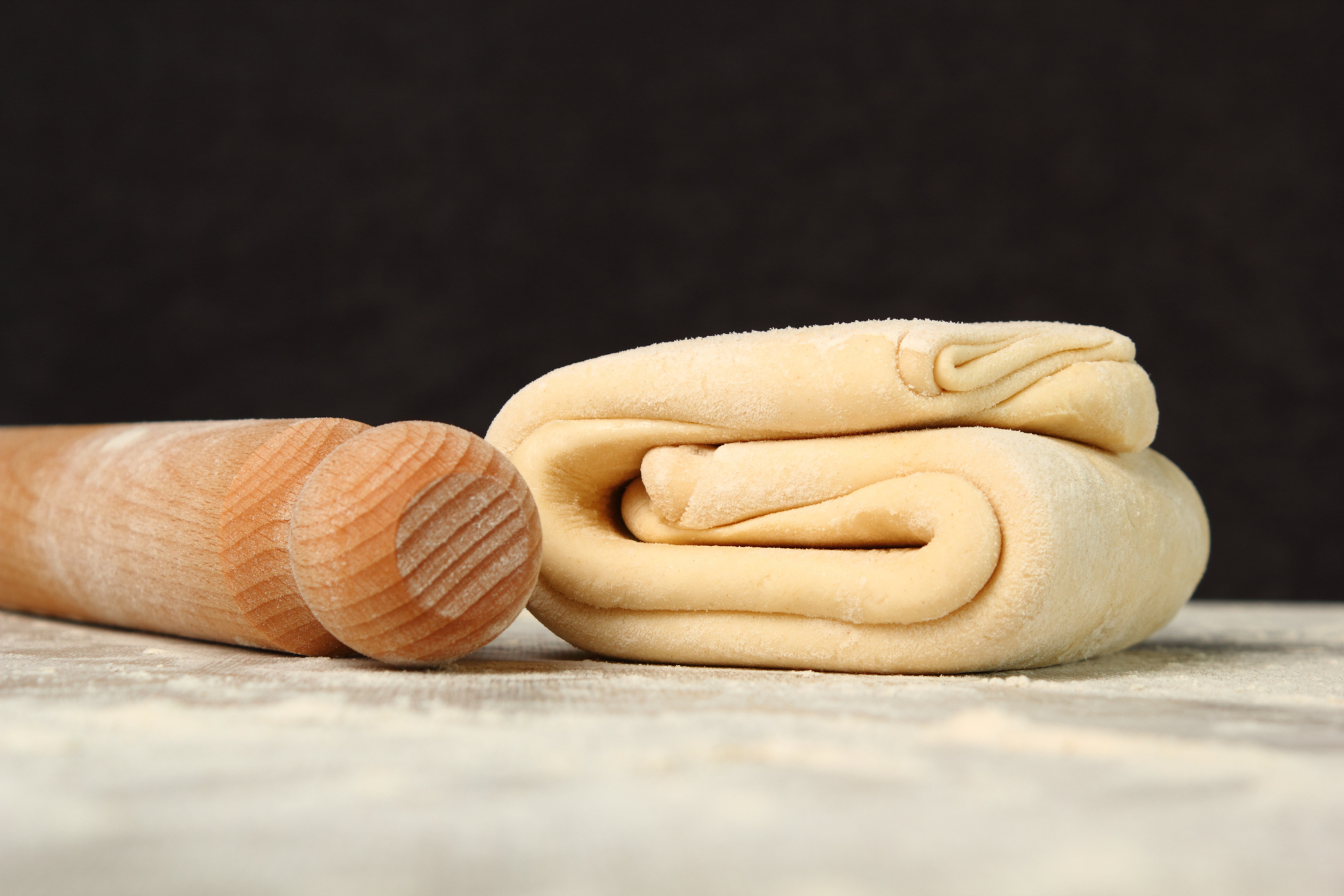
The flour was poured into a ‘well’, the eggs cracked into the centre and kneaded with expert movements until the mixture was smooth, elastic and fragrant.
The pastry had to ‘sing under the rolling pin’ – a sign that it had reached the right consistency – and look shiny and even, ready to be cut into strips, folded or filled according to the recipe.
The result was (and still is today) the very heart of Romagna’s cuisine: a pasta that embodies the age-old expertise of the hands, the quality of the ingredients and the value of taking one’s time.
Ingredients and preparation
Serves 4:
-
300 g of soft wheat flour
-
3 medium eggs
Procedure:
The essential tools are the chopping board (é tulir), the pastry board and the rolling pin (s-ciadur).
Place the flour in a mound on the chopping board, crack the eggs into the centre and begin to mix them in slowly with a fork.
It is then kneaded vigorously by hand for at least ten minutes, shifting your weight from your right wrist to your left, until you have a smooth, soft yet firm dough.
If it’s too soft, add a little flour; if it’s too hard, add a few drops of water.
The pastry is ready when the following appear on the surface tiny air bubbles, which indicates that it has reached the right level of elasticity.
At this stage, roll it out with a rolling pin, taking care to apply even pressure with your hands to create a thin, even circle. This is the most delicate and fascinating part of the process, where the sfoglina’s skill is revealed in all its precision.
The sfogline: guardians of tradition
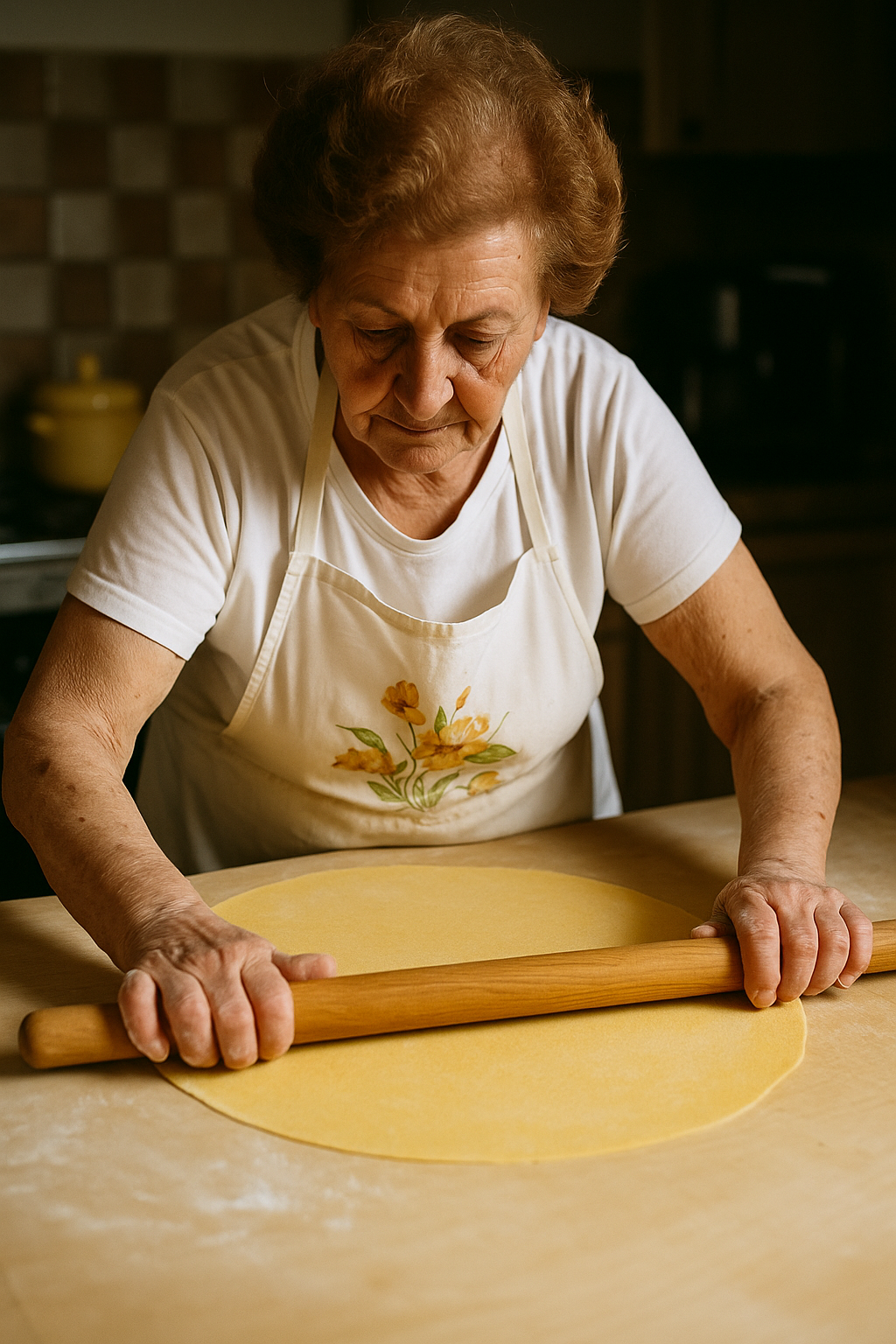 In Emilia-Romagna, and particularly in Romagna, the art of making homemade pasta is inextricably linked to the figure of the pasta makers: women who, through their skill, experience and dedication, preserve the secrets of this ancient tradition.
They are the true champions of home cooking, capable of transforming a few simple ingredients into culinary masterpieces.
In the past, the sfoglina was an indispensable figure in family life.
There was never a party, wedding or celebration without her.
The most skilled were called upon to work in the homes of the nobility or the middle classes to prepare cappelletti, tortellini, tagliatelle and lasagne in large quantities, working for hours at the chopping board with swift, precise movements, accompanied by chatter and the aromas of cooking.
Today, the sfogline continue to be a symbol of Romagna’s identity, women who, with their hands and hearts, keep the culture of ‘handmade’ alive, countering the speed of modern life with the ritualistic slowness of everyday gestures.
The Sfoglia Festival in Massa Lombarda
To celebrate this centuries-old tradition, Massa Lombarda Every year, at the end of August, a folk festival entirely dedicated to pasta makers and their art.
During the event, the participants knead and roll out the dough in front of the audience, demonstrating the technique and grace of their craft.
The squares fill with the scent of food, laughter and steaming dishes: tagliatelle with ragù, cappelletti in broth, tortelli and lasagne prepared according to traditional recipes.
The Sagra della Sfoglia is not just a food festival, but a a celebration of collective memory, a way of showcasing the culinary and cultural heritage of a region that has turned simplicity into an art form.
A heritage to pass on
The art of making puff pastry is much more than just a recipe: it is a form of material culture, a language that tells the story of the families, the countryside and the women who, for centuries, have nourished the Romagna region with their own hands.
In an age when cooking is becoming increasingly fast-paced and industrialised, the sfoglina represents the the gentle resilience of artisanal knowledge, the beauty of slow, deliberate movements, and the ability to transform humble ingredients into a symbol of identity and conviviality.
Making a pastry is a way of remembering where we come from, and of recognising that the true wealth of a land lies not only in its flavours, but in the the passion with which they are passed down.