In Rimini and throughout the Romagna region, Easter has a distinct scent: that of freshly baked bread. More than just a sweet treat, the Romagna Easter loaf is a true symbol of local tradition, telling the story of the region’s rural and family life.
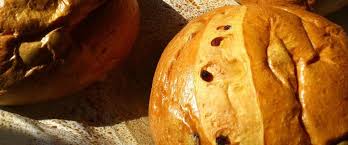
Often compared to the more famous Easter ‘colomba’, this loaf differs from it in shape, texture and, above all, the way it is eaten. It is not just a dessert to round off a meal, but a a food enjoyed in good company, the star of the Easter breakfast, where sweet and savoury come together in a surprising way.
According to tradition, in fact, the loaf is Enjoy it on Easter morning, along with blessed hard-boiled eggs and cold meats. A combination that may seem unusual today, but which has its roots in an ancient rural culture, where nothing was strictly separated and every food had symbolic significance: eggs represented rebirth, whilst enriched bread marked the end of the Lenten fast.
A dessert that reflects tradition
The Easter loaf is a A rich yet simple yeast-raised dough, made from flour, eggs, sugar and natural flavourings such as lemon or orange. The addition with raisins It offers a delicate sweetness – never overpowering – making it perfect both for enjoying on its own and as an accompaniment to more savoury flavours.
Unlike the mass-produced colomba, this loaf has a more rustic appearance: a a rounded shape, with a slightly engraved surface and one a firm yet soft texture. Every family has its own version, passed down from generation to generation, with slight variations in the ingredients or preparation times.
It is precisely this simplicity that makes it authentic: a dessert that finds its origins in the home, in the slow, deliberate gestures of its preparation, and in the waiting time whilst it rises.
How to make a Romagna-style Easter loaf
Making a loaf of bread takes time and patience, but the result is well worth the wait. The process is similar to that of making large yeast-raised baked goods, but it is more manageable even at home.
Ingredients
- 500 g of Manitoba flour
- 140 g of sugar
- 3 eggs
- 1 sachet of vanilla essence
- 100 g of sultanas
- 250 g bread dough
- 30 g butter
- grated lemon (or orange) zest
- 20 g fresh brewer’s yeast
- 1 pinch of salt
Preparation
- To begin, combine the flour, sugar, vanilla essence and grated zest, arranging the mixture in a well on a work surface. Add the eggs, softened butter, crumbled yeast and bread dough to the centre.
- At this stage, knead the dough vigorously until it has a smooth, even consistency. It is important to take your time with this stage, as this is precisely where the structure of the cake develops.
- Next, add the raisins – which have been soaked beforehand and thoroughly squeezed dry – and mix them evenly into the dough.
- Once ready, the dough is left to prove for about 4 hours in a warm, draught-free place, covered with a tea towel or cling film. This step is essential for producing a soft, well-risen loaf.
- Once the first proving is complete, shape the loaf and place it on baking paper. Brush the surface with beaten egg and make a shallow cut: a traditional technique that also helps the bread to bake properly.
- This is followed by a second proving for about an hour, after which the loaf is ready to be baked at 180°C for 30–40 minutes, until golden brown.
The result is a fragrant cake with a golden crust and a soft centre, perfect for sharing.
The taste of Easter in Romagna
La Easter loaf It’s not just a recipe, but an experience. It’s the aroma that fills the house, the time spent together in the kitchen, and the wait for the dough to rise, which becomes part of the ritual.
Even today, in many families in Rimini, making it means to keep a link with the past alive. And for those visiting Romagna over the festive season, sampling the local cuisine is one of the most authentic ways to experience the local culture.
Because, after all, Easter in Rimini begins just like this: with a a slice of bread, a hard-boiled egg and the simple pleasure of being together.