Art, power and spirituality at the heart of the city
Duration
- Half a day: 3–4 hours
- Full day: 6–7 hours (including a lunch break and museum admission)
Difficulty
- Easy
- A flat route, entirely on foot, suitable for everyone. Comfortable shoes are recommended.
Starting point
Church of St Augustine
Detailed itinerary
1) Church of St Augustine
Duration of visit: 30–40 mins
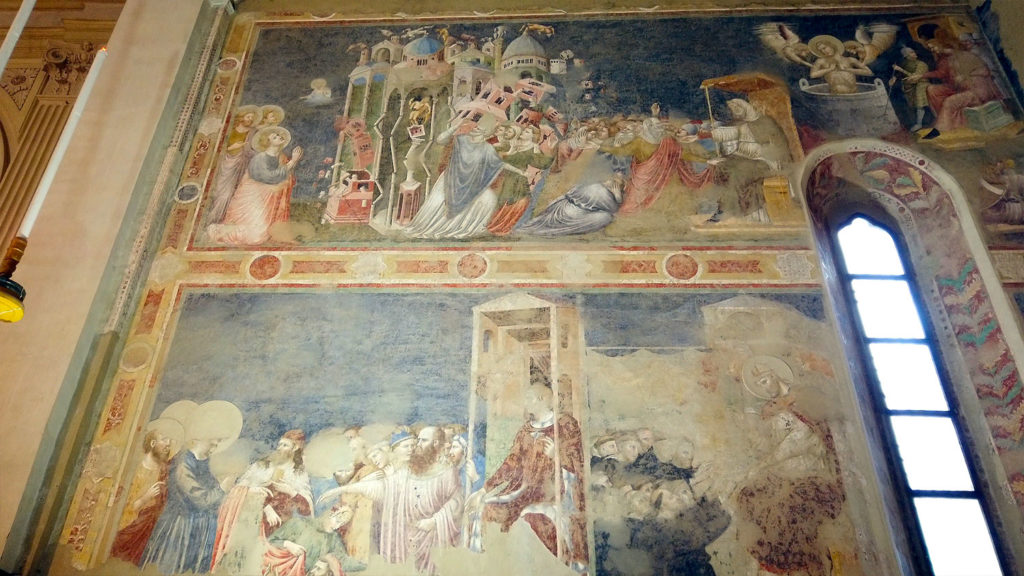
The tour begins at one of the most iconic sites of 14th-century Rimini. Whilst the interior now reflects Baroque tastes, the apse, external walls and bell tower retain their medieval layout. Inside, visitors can admire the frescoes of the 14th-century Rimini School, which are among the most important examples of art inspired by Giotto. A perfect introduction to the spirituality and figurative style of the Middle Ages in Rimini.
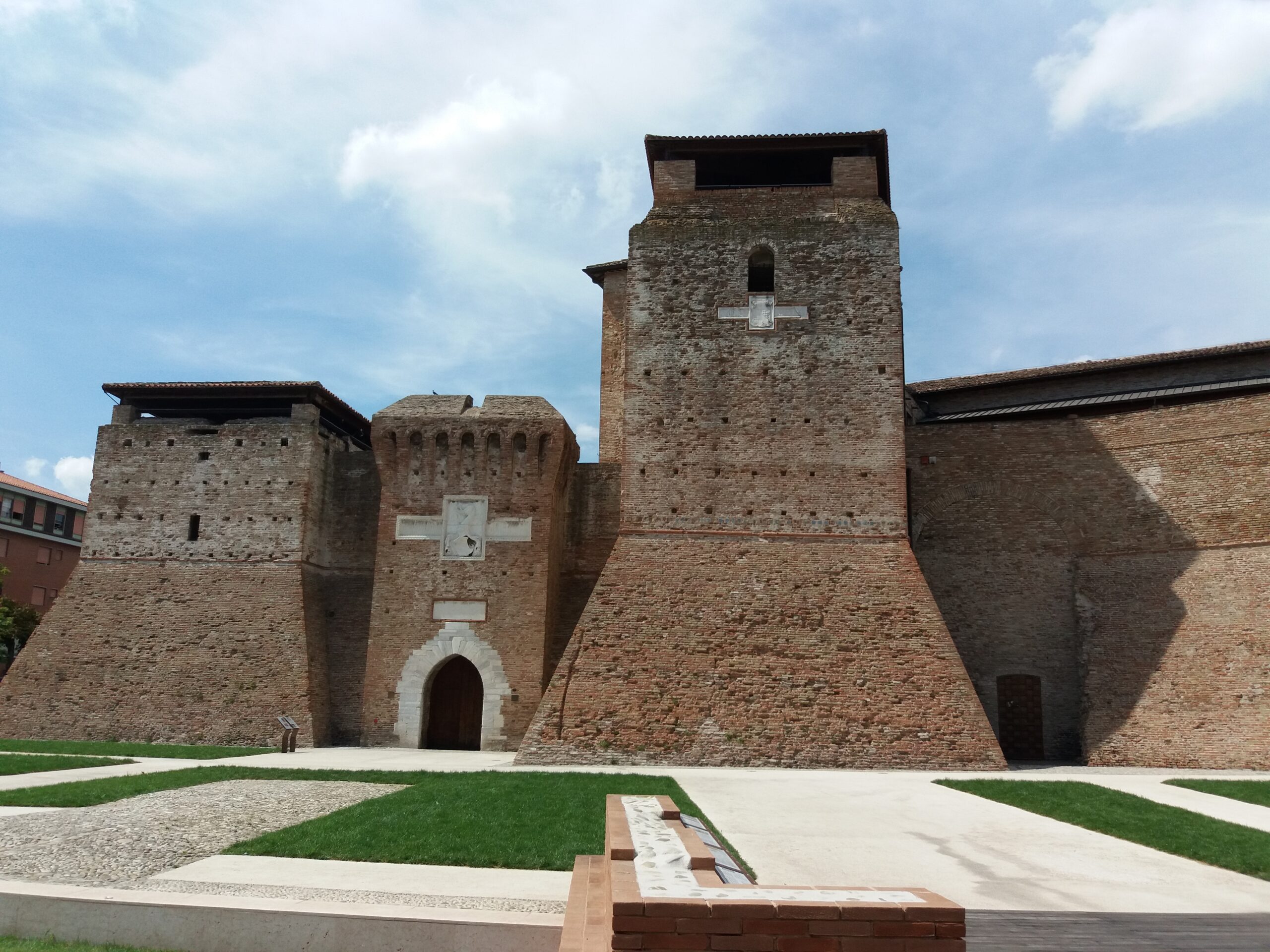
2) Castel Sismondo (external viewing)
Duration of visit: 20–30 mins
A short walk to Castel Sismondo, the fortress commissioned by Sigismondo Pandolfo Malatesta. The walls bear witness to the aristocratic and military character of 15th-century Rimini: power, control of the territory and political ambition.
3) Piazza Cavour
Duration of visit: 25–35 mins
As the civic heart of the medieval town, Piazza Cavour was home to the Podestà’s residence in 1330. Here, the administrative and public life of medieval Rimini is brought to life, amongst palaces, markets and assemblies.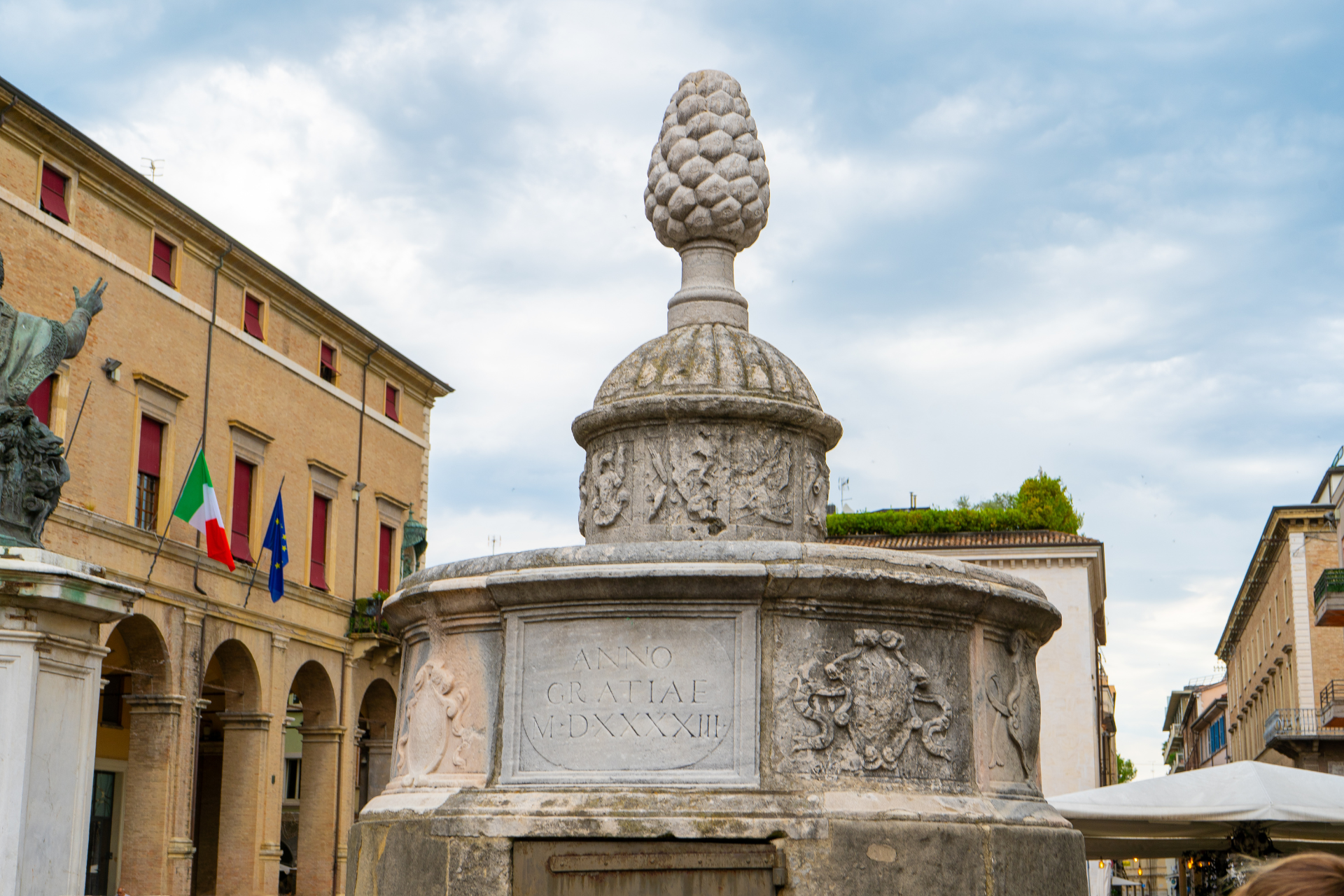
4) Santa Colomba, the Malatesta Temple and the City Museum
Duration of visit: 45–60 mins (including queuing)
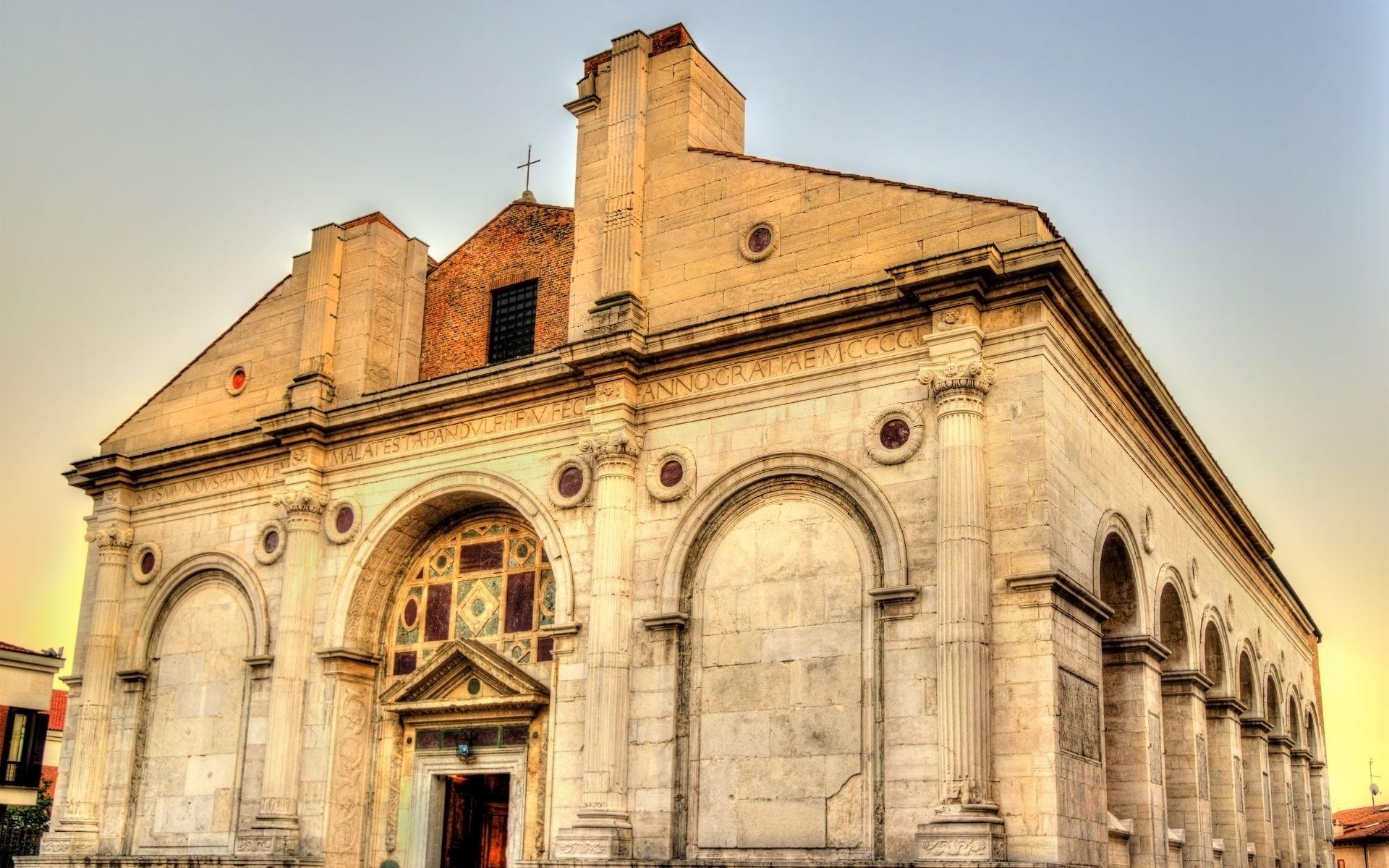
Just a short walk away stood the ancient Cathedral of Santa Colomba, which no longer exists. Traces of it live on in the Tempio Malatestiano, where Giotto’s Crucifix is kept, and in the City Museum, which houses artefacts and historical records that help to reconstruct medieval religious life in Rimini.
5) Porta Galliana and the ancient harbour
Duration of visit: 20–30 mins
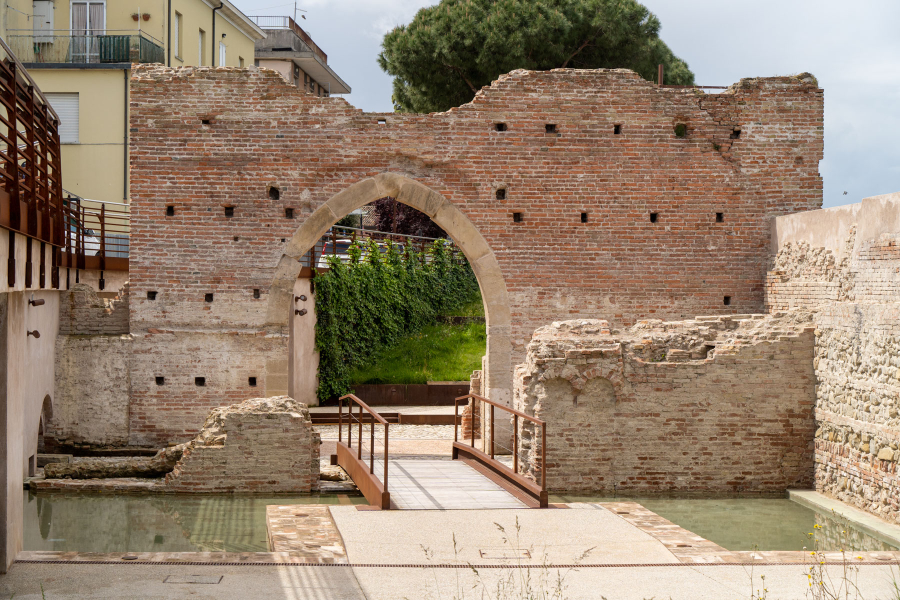
The tour ends near Porta Galliana, one of the medieval gates overlooking the area of the ancient harbour. Here, Rimini’s mercantile and maritime heritage comes to the fore: a city open to trade, relations and exchanges, already reaching beyond its walls.
Lunch break (full-day option)
We recommend eating in Borgo San Giovanni or the historic centre, where you can enjoy traditional Romagna cuisine. After lunch, you can return to the museums or explore the theme of Giotto and the Rimini School in greater depth.
Practical advice
- Clothing: comfortable; shoulders covered when entering the church
- Ideal time of year: spring and autumn; in summer, it is best to go in the morning or late afternoon
- Bookings: recommended for museums and guided tours
- Accessibility: flat route; please check individual museum entrances
Who is it recommended for?
- Visitors interested in medieval history and art
- Families and small groups
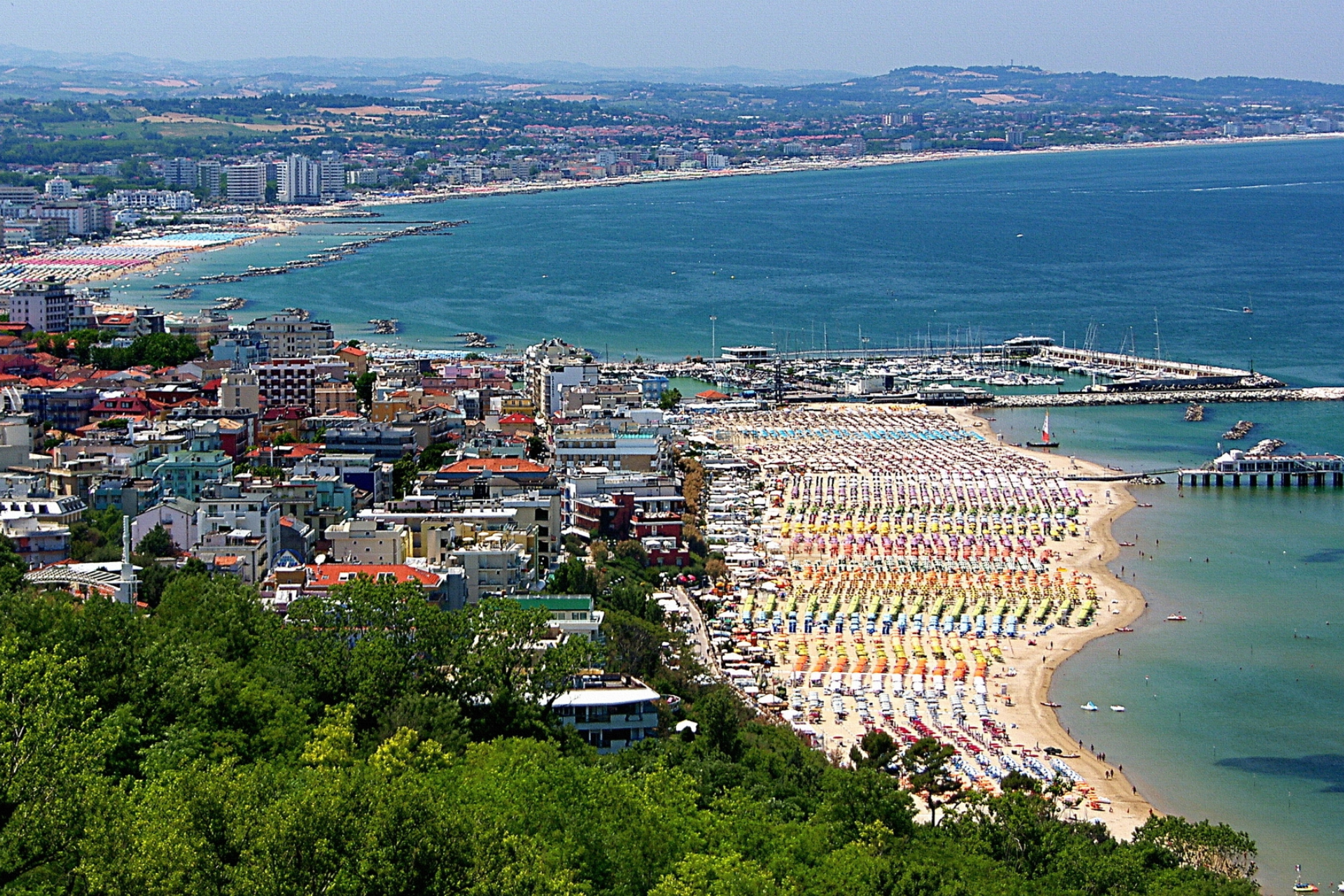
- For those who want to discover a different side to Rimini, beyond its seaside reputation