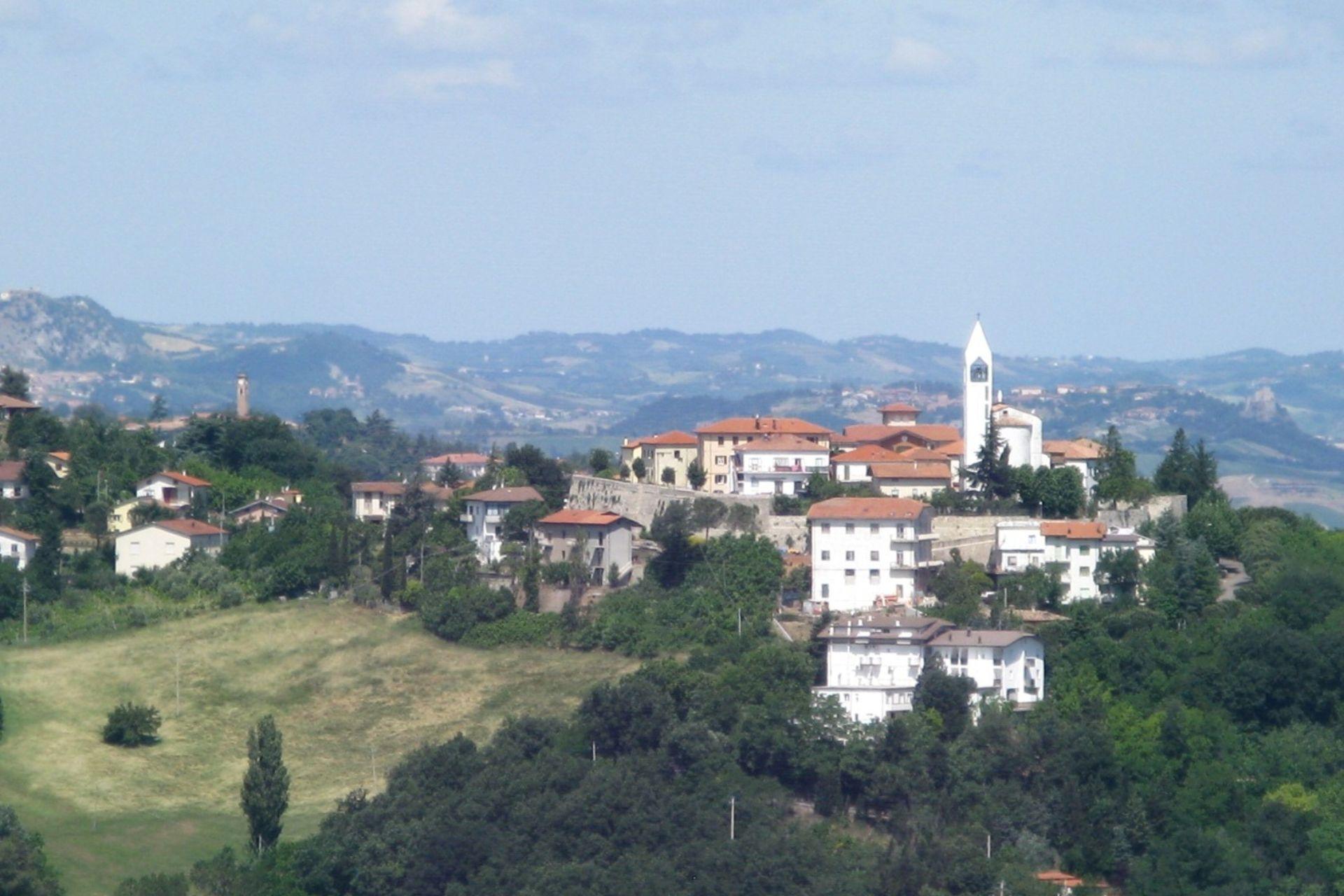
 The village, situated on a plain in the Conca valley, is considered the ‘capital’ of the entire valley; it is a major industrial centre (famous for its pasta factories) and a venue for festivals and fairs (the oldest of which is the one dedicated to St Gregory on 12 March, when, in addition to the festivities, a livestock fair is also held).
A town centre since Roman times, it developed into a town around the year 1000, when the Abbey of San Gregorio was built.
Over the centuries, the Conca River’s flooding has on several occasions forced the inhabitants to abandon the village, but in the early 20th century, Morciano was repopulated and redeveloped, whilst retaining the ancient, agrarian character of the historic centre (brick-paved streets, low-rise buildings and terraces overlooking the river).
Piazza del Popolo is the heart of the city, and is also home to the Town Hall (with its clock tower and volute-decorated balconies), the Palazzo del Fascio (the party headquarters during the height of the regime), and a fountain (dating from 1900 and depicting Mercury flanked by four lions).
From the square, following a narrow street paved with smooth bricks, you reach the old village and arrive at Piazza Umberto I, where you can visit the church of San Michele Arcangelo (inside, the three naves were rebuilt in the late 19th century after being destroyed by a flood of the River Conca),
the Chapel of the Blessed Virgin (dating from the 12th century, with an octagonal plan); in the same square there is also a plaque commemorating Giuseppe Garibaldi’s visit in September 1859.
Modern art is also present in Morciano; in fact, a sculpture of *Il Pomodoro* (*Colpo d’ala*) stands in Piazza Boccioni.