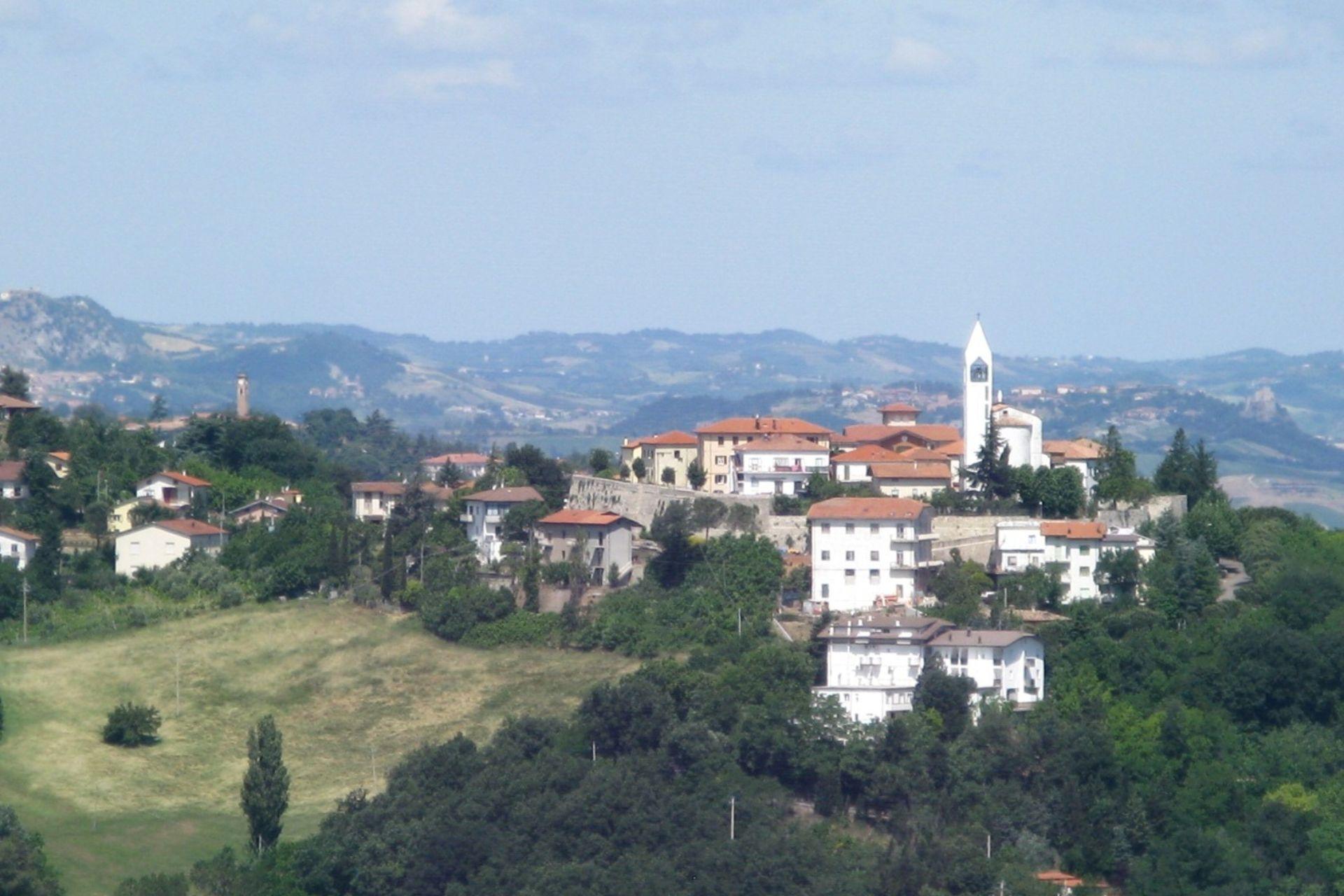
Gemmano (in the Romagna dialect Zman o Scmen) is a small Italian municipality with a population of around 1,140, situated in the province of Rimini, in Emilia-Romagna. It lies to the south of the provincial capital, in a hilly area overlooking the Conca Valley, offering truly breathtaking panoramic views.
History
The origins of Gemmano date back to the Middle Ages. For a long time it belonged to the archbishops of Ravenna, until in 1356 it was conquered by Galeotto Malatesta, thus coming under the control of the powerful family from Rimini. It remained under their control until 1504, when it passed to the Papal States.
Gemmano is also remembered for the fierce fighting during the World War II, particularly in 1944, during the Battle of the Gothic Line, which caused extensive destruction and numerous civilian casualties.
Symbols
The municipal coat of arms, officially granted by decree of the President of the Republic on 22 September 2014, depicts:
‘A light blue background with three green hills at the bottom, the central hill surmounted by a human arm clad in red with a silver cuff, holding a gold ring set with a red stone between its index finger and thumb.’
The banner The municipality’s flag is a bicolour flag of white and green.
Monuments and places of interest
- Onferno Caves: a karst complex of environmental and scientific importance, now a nature reserve. The caves are home to a colony of bats and offer guided tours and educational workshops.
- Shrine of Our Lady of Carbognano: a place of worship set amidst nature, a pilgrimage destination.
- War Memorial: in memory of the victims from Gemmano who perished during the Second World War.
Shrine of Our Lady of Carbognano
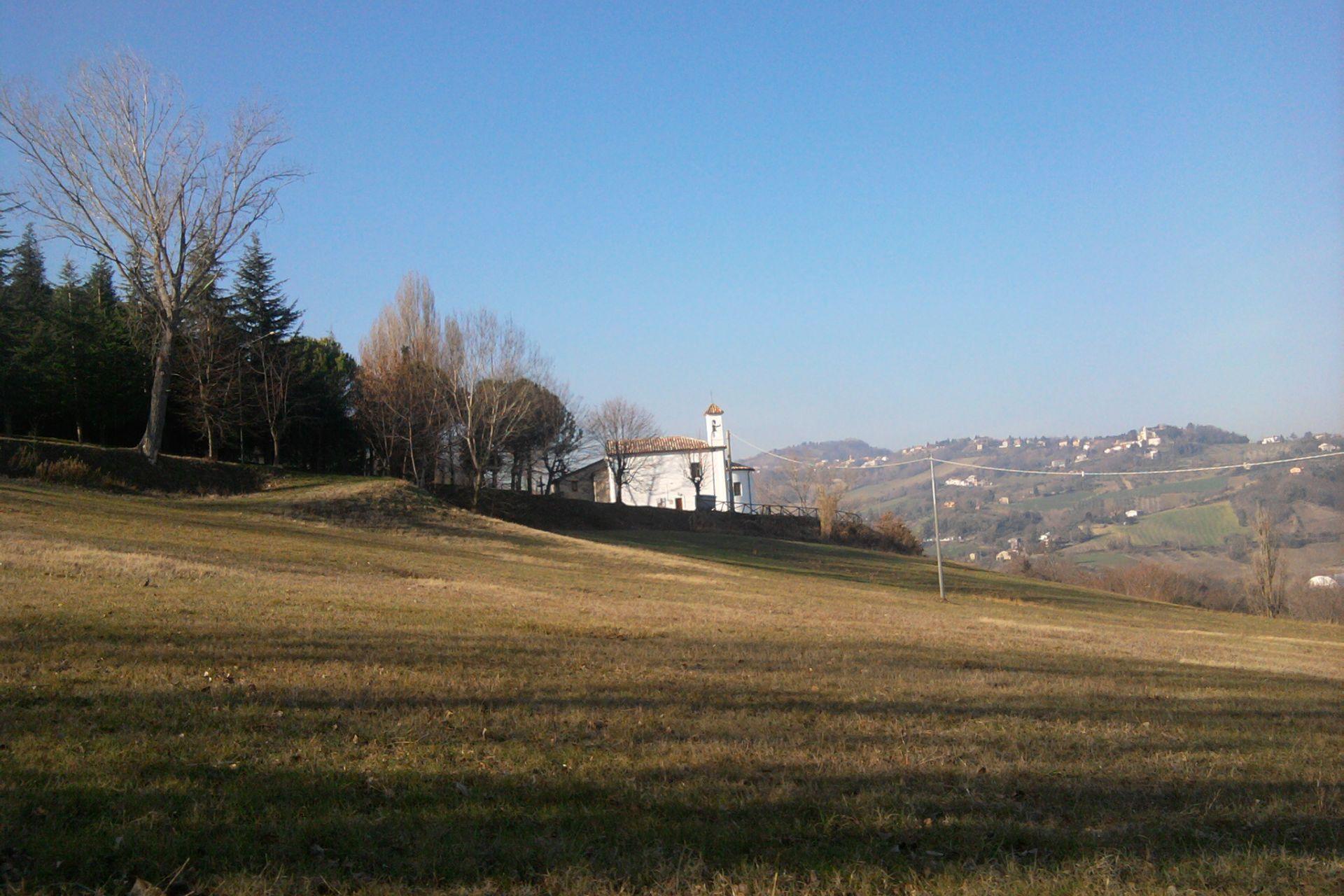
The Shrine of Our Lady of Carbognano It is situated in the municipality of Gemmano, on the hillside overlooking the River Conca. The small, white and unassuming church is nestled in a rural setting that invites contemplation and peace.
History
According to tradition, the sanctuary stands on the ruins of a Roman temple dedicated to the god Pan, built by the the Carbonia clan. Around 1260, the Franciscans built a small friary there dedicated to St Francis. The consecration to the Virgin Mary took place in 1500, marking the beginning of a strong popular devotion which, over time, made the sanctuary an important spiritual centre in the valley.
In the 19th century, the people elected Saint Vincent Ferrer as its patron saint. In recent years, the little church has undergone major restoration work and has been adapted to accommodate pilgrims.
Festivals and celebrations
- Fava Bean and Cheese Festival (1 May): a traditional local festival featuring a religious procession, food stalls and live music.
- Pappardella with Wild Boar Festival (Ferragosto): a popular food and wine event, featuring traditional dishes from the Romagna region.
- ‘Il Mare in Collina’ Festival (August): a summer event dedicated to fish, now in its 14th year.
Food and nature
Gemmano has preserved an authentic culinary tradition that is deeply rooted in the local area. Among the typical dishes, the following stand out: pappardelle with wild boar saucethe pit-aged cheese, the piadina romagnola and specialities made with fresh broad beans, which take centre stage at local festivals. All this is accompanied by local wines such as Sangiovese and Trebbiano Romagnolo.
The Gemmano area is also ideal for numerous hiking activities: from the footpaths winding through the hills dotted with villages and farmhouses, to guided walks in the Onferno Nature Reserve, perfect for families, nature lovers and photographers.