Cesena (Čiṣéna (in the Romagnolo dialect) is an Italian municipality in 95,915 inhabitants, the provincial capital of Forlì-Cesena together with Forlì, in Emilia-Romagna.
Founded around the 5th century BC by the Umbri, Cesena it became a thriving centre during the Roman thanks to its location on the Via Emilia, and even today it retains, almost intact, a vast Roman centuriation in the surrounding plain. Among its notable monuments, the Malatestiana Library, built in 15th century, the first European public library and the only perfectly preserved example of monastic humanities library, both in terms of the building itself and its furnishings and book collection. This excellence has earned it a place in the register of the UNESCO Memory of the World Programme.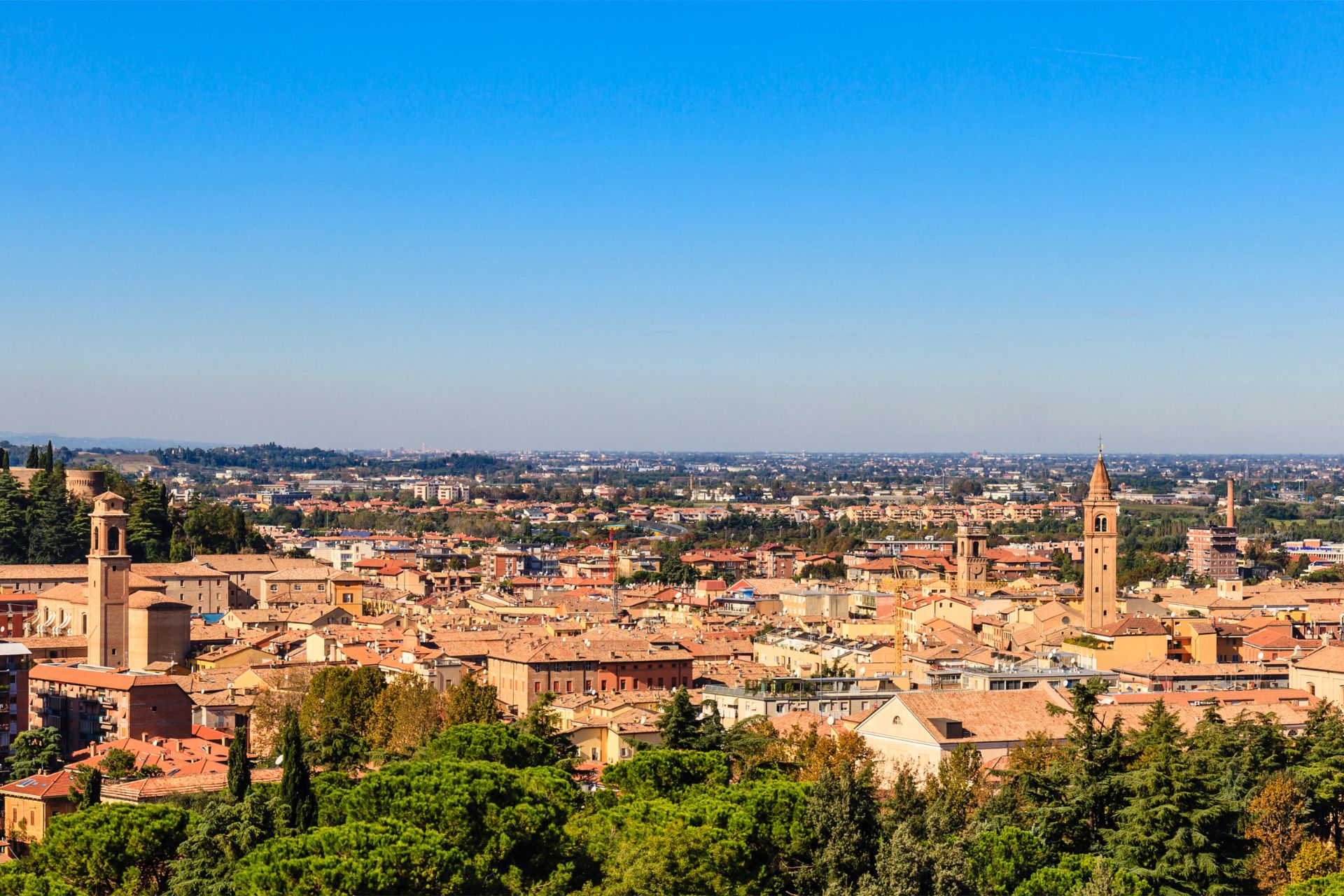
Cesena It is a dynamic centre in the field of agricultural, commercial e industrial, with a particular specialisation in the following sectors fruit and vegetable, food e mechanical. From 1989 it also houses a branch of theUniversity of Bologna.
The city is also the seat of the bishop of the Diocese of Cesena-Sarsina.
Physical geography
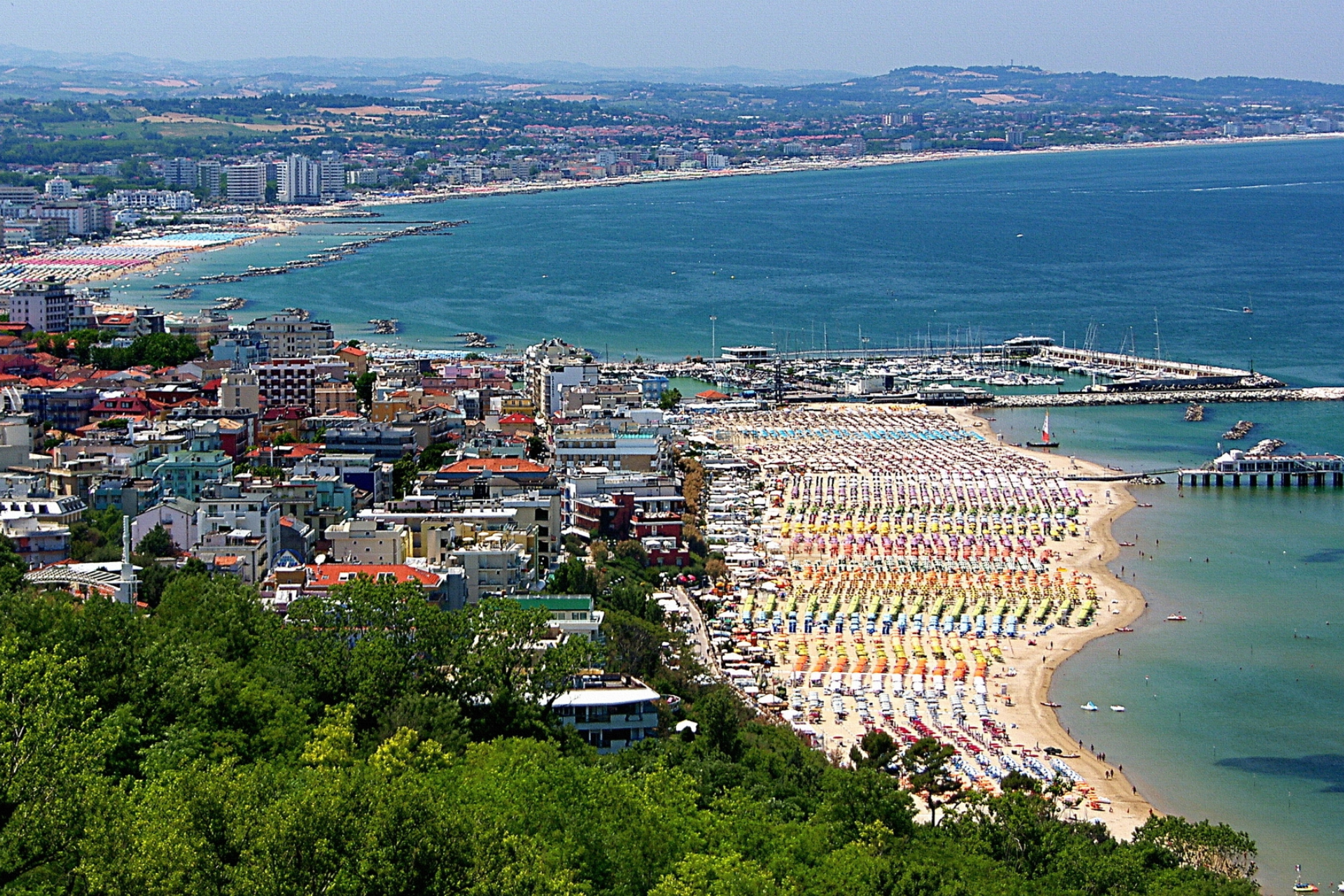
Situated in the heart of the Romagna, Cesena is situated halfway between the Adriatic Sea, about 15 km, and the the hills of the Tuscan-Romagnolo Apennines. The municipal area, which covers 249.5 km², borders to the north with Cervia e Ravenna, east with Cesenatico, Gambettola, Longiano e Montiano, to the south with Roncofreddo, Saraceno Market e Sarsina, and to the west with Civitella di Romagna, Meldola e Bertinoro.
The town centre is situated at an altitude of 44 metres above sea level, whilst the whole region has an average of 97 metres above sea level, passing through the 5 metres of the ditch at Valley at 480 metres of Mount Cavallo. The the River Savio It runs through the city, shaping the landscape, which extends as far as the basins of the the River Ronco and the the Bevano stream to the north-west and on the left-hand side of the the Pisciatello stream to the south-east.
Economy and culture
Cesena It is an important centre agricultural e industrial, with a strong focus on the following sectors fruit and vegetable, food e mechanical. From 1989 is home to a branch of theUniversity of Bologna, thereby contributing to the city’s cultural and scientific development.
Origin of the name
The etymology of the name Cesena (in Latin Caesena) is generally attributed to the Etruscans Keizna, which is likely to be of anthroponymic origin, bearing witness to the city’s ancient roots.
History
‘And that one whose banks are lapped by the Savio, just as it lies between the plain and the mountain, between a life of tyranny and a life of freedom.’ (Dante Alighieri, Inferno, Canto XXVII)
The Savio Valley and the surrounding hills, which stretch across Cesena, have been inhabited since theNeolithic period, as demonstrated by the artefacts found in the area of the Basilica of Monte and to Borello. The first settlement most likely came into being thanks to the Umbri around the 6th–5th centuries BC. Cesena, together with Forlì, was the epicentre of the settlement of the The Senones, one of the main Celtic peoples of the Cisalpine Gaul. With the arrival of the Romans, the small settlement grew into a village, but fell into decline with the fall of theRoman Empire and suffered raids by the barbarians.
Conquered by the Goths by Theodoric, it was subsequently recaptured by the Byzantines and, halfway through the 6th century, he joined theExarchate. Following the campaigns of Pepin the Short at 8th century, Cesena returned to the territories under the control of papal, forming the first nucleus of what would become the State of the Church. In Two hundred, the city wavered between local freedoms and submission to the Church or to local dignitaries. In the 1333, Cesena came under the rule of the Forlì family of the Ordelaffi, but their rule came to an end in 1357 from the papal legate, Cardinal Albornoz, who managed to subdue the city despite the fierce resistance of The Ubaldini Family.
In February 1377, Cesena was drawn into the war between the Florentine Republic and the Papal State. The Cardinal Robert of Geneva, future antipope Clement VII, he ordered a massacre to prevent the city from falling into the hands of the Florentines. The massacre was carried out by Breton mercenary militias, led by the English commander Giovanni Acuto, which razed Cesena to the ground, causing the deaths of more than 5,000 inhabitants.
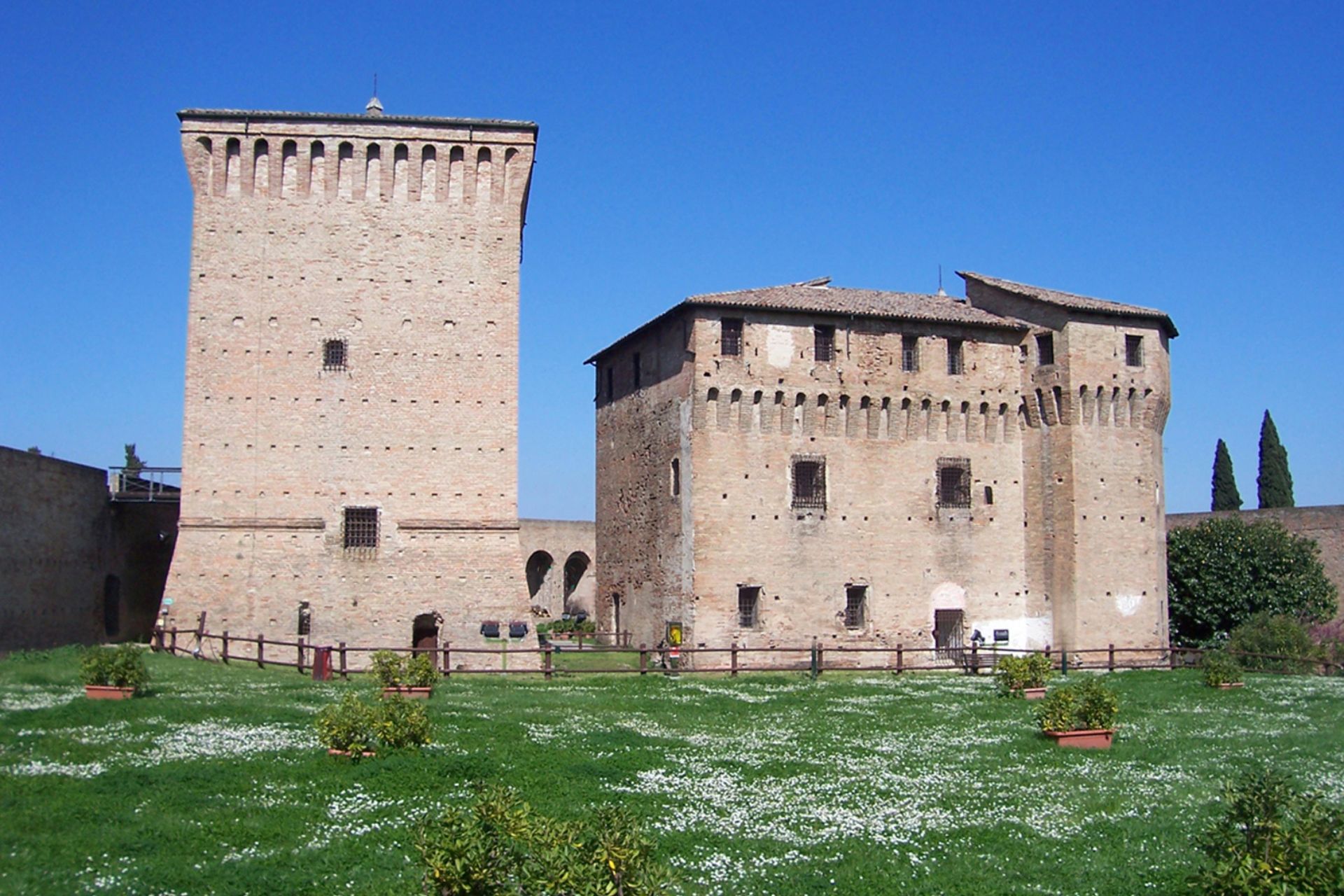
During the reign of the Malatesta, the city flourished once more, as evidenced by the Malatesta Fortress, commissioned by Galeotto, and from the Malatestiana Library, a work by the patron Domenico Malatesta Novello. For a short period, around 1500, under the rule of Cesare Borgia, Cesena it became the “capital” of the Duchy of Romagna, and in the 1502, he arrived in town Leonardo da Vinci, commissioned by Borgia to upgrade the fortifications of the towns in Romagna. Cesena then returned to the rule of the Papal State, which lasted until theUnification of Italy.
In 1775, the man from Cesena Giovan Angelo Braschi He became Pope under the name of Pius VI, and in the 1800, another man from Cesena, Barnaba Chiaramonti, became Pope under the name of Pius VII. During thethe Napoleonic era (1797-1814), Cesena saw the closure of numerous monasteries, convents and churches, and the abolition of theUniversity. In January 1832, the city was sacked and 17 citizens were killed during the The massacres in Cesena and Forlì carried out by the papal troops in the suppression of the Romagnoli movements.
In the period following theUnification of Italy, Cesena it experienced a period of expansion. After the 1861, i liberals They ran the local council until the beginning of the The 20th century. Then, the Republicans They held power until the advent of the fascism and to the Comandini Uprising. During this period, Cesena experienced a history that was both rich and bloody.
During the Resistance, Cesena It made a significant contribution in terms of manpower, and for this reason it was awarded the Silver Medal for Military Valour. In post-war, the city experienced considerable urban development and significant economic growth, becoming an international hub in the sector agri-food, particularly in research and in biotechnology.
In 1992, following the separation of the district of Rimini and the creation of the new province, the province of Forlì changed its name to Forlì-Cesena, whilst maintaining Forlì as its capital. From the 29 January 2024, Cesena has become joint capital in the province of Forlì-Cesena.
Symbols
Coat of arms
The municipality’s coat of arms takes the form of a ‘balzana’ shield, divided horizontally into two parts, one black and the other silver, with a wedge-shaped gold border. The upper part, known as “Capo d’Angiò”, represents a grant by the King of Naples, Robert of Anjou. The shield is said to symbolise the pacification among the factions of the Guelphs and the Ghibellines, whilst the border, taken from the coat of arms of the Malatesta, recalls the period of their lordship about the city in the Four hundred. As an alternative to the civic crown, the shield could be adorned with the noble crown, as the city is included in theOfficial List of the Italian Nobility. The coat of arms was granted by the king Vittorio Emanuele III by Royal Decree of 24 April 1927: ‘Per pale black and silver, with a serrated border of black and gold, bearing the Anjou crest’.
Banner
The municipality’s banner consists of a piece of cloth divided horizontally between the black and the white, with the the town’s coat of arms placed in the centre.
Honours
Cesena is one of the towns to have been awarded the Silver Medal for Military Valour for his role in the war of liberation, in recognition of the sacrifices of its population and its commitment to partisan struggle during the Second World War:
- Silver Medal for Military Valour
‘True to its ancient and glorious patriotic and democratic traditions, the City of Cesena has, ever since the armistice of 8 September 1943, been a centre of resolute resistance against German and Fascist oppression. By courageously supporting and giving voice to the fierce partisan forces – whose organisation began with the establishment of the first volunteer base at Pieve di Rivoschio and in the surrounding hilly area – over fourteen months of gruelling operational commitment, the people of Cesena made a significant contribution to inflicting substantial attrition on enemy forces and damaging their equipment and defences. Cesena area, 8 September 1943 – November 1944’
— 19 September 1974
- City Title
Monuments and places of interest
Religious architecture
Churches
- The Abbey of Santa Maria del Monte
The imposing, thousand-year-old complex stands on the Spaziano Pass, where the Bishop Mauro He used to go there to pray. After his death, a church was built around the year 1000 and a monastery was constructed between 1001 and 1026. Over time, the basilica has been enriched with remarkable works of art, including the collection of ex-votos, the largest in Europe. - Cathedral of St John the Baptist
The city’s cathedral, dedicated to St John the Baptist, is an example of a style Gothic-Romanesque and dates back to the end of the Three hundred. Inside lie the remains of San Mauro and an important painting depicting the saint Battista, recently attributed to the painter Livio Agresti. Furthermore, in the Chapel of Our Lady of the People, you can admire frescoes by Corrado Giaquinto of 1750. - Convent of San Biagio
Founded in 1394, the convent was completed in 1424 and rebuilt in 1486. In 1810, it was dissolved and converted into the site of the shelter for the Daughters of the Poor. Today it is home to the Municipal Art Gallery. - Church and monastery of the Capuchin friars
They stand on a hill near the town and house a painting by the Guercino which represents theThe Ecstasy of St Francis. - Church and monastery of the Observant Friars Minor
Founded on the initiative of Malatesta Novello, the complex was built between 1459 and 1464 to a design by the master Farmstead in the Lugano Valley. The exterior, in the style of neoclassical, features an unfinished façade and a portico with chapels that were once simple arches. - Church of St Augustine
Located in the historic centre, the church originally belonged to the Observant friars and handed over to the monks at the end of the 15th century Augustinians, who undertook a programme of renovation and decoration that was completed in 1520. Its present appearance dates from 1748, designed by Luigi Vanvitelli. - Church of St Christina
Located in Chiaramonti district, the church dates back to the Middle Ages, but has been rebuilt several times, notably in 1470, 1630 and 1740. It was completed in 1825 in accordance with the original design by Giuseppe Valadier. - Church of St Dominic
Built between 1706 and 1772 on the ruins of a 15th-century church, the interior features a central nave with side chapels, which house examples of local painting from the 17th century. - Church of Santa Maria dei Servi
The religious complex was rebuilt in 1240, and in 1367 the Servants of Mary. Between 1756 and 1765, the church took on its present appearance thanks to the design by Pietro Carlo Borboni. - Church of Santa Maria del Suffragio
The church was built between 1685 and 1689 to a design by Pier Mattia Angeloni, and is linked to the confraternity founded in 1633. The façade and the interior were remodelled in Eighteenth century to achieve the current look. - Church of Saints Anne and Joachim
Cemeteries
- Monumental Cemetery
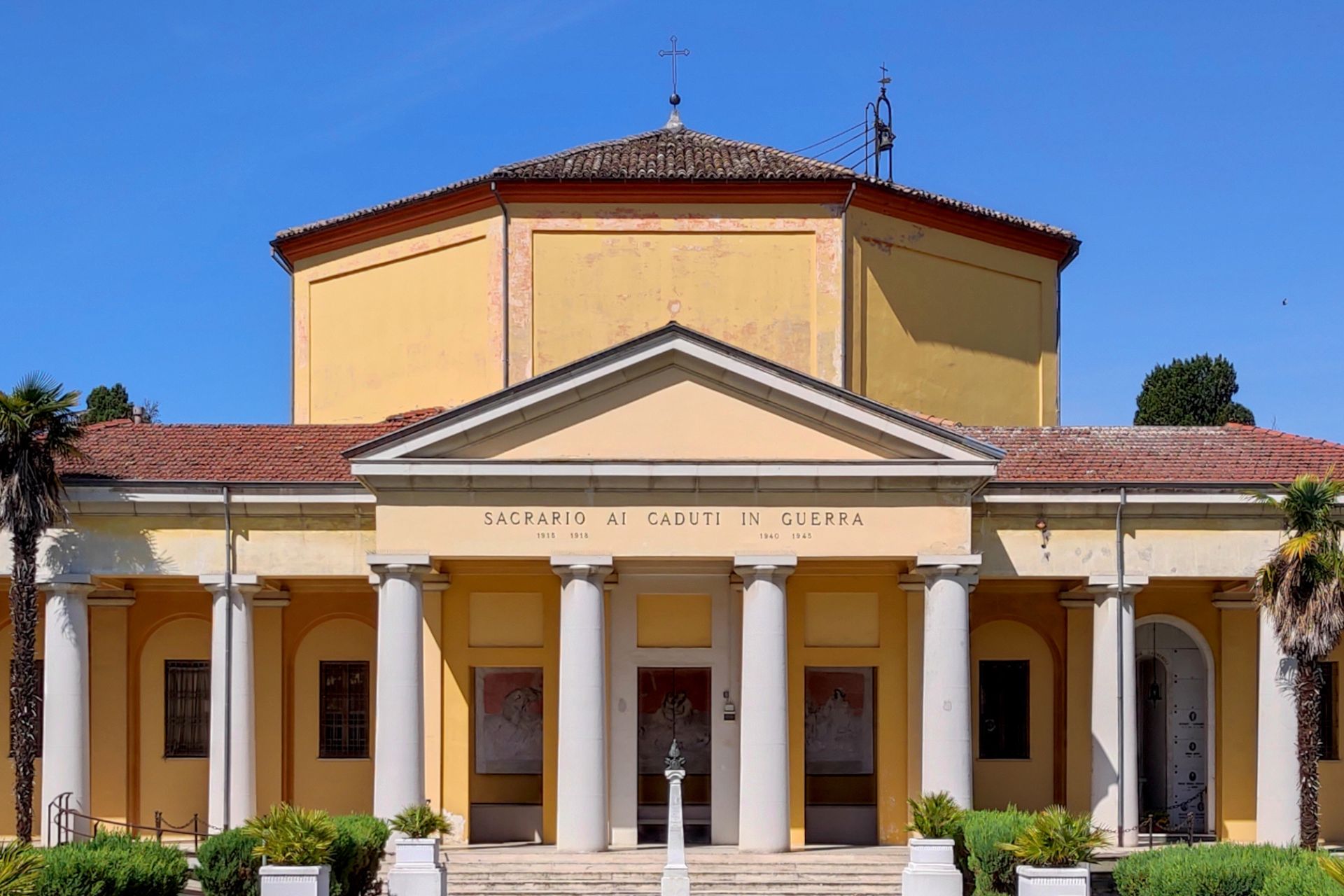
The Monumental Cemetery in Cesena, designed by Barbieri Built in 1809 and inaugurated in 1813, it is an example of Neoclassical architecture. Comprising two sections, one quadrangular and the other octagonal, it features a portico with Doric columns and family chapels. Distinguished citizens of Cesena are laid to rest here, including Renato Serra e Maurizio Bufalini. Inside the crypt there is an ossuary commemorating the victims of the the Second World War.
- New Cemetery
Opened in 2011, it was designed by the architect Paolo Portoghesi. The chapel is circular in shape and built of exposed brick, with a concentric wooden roof. There is also a crematorium and spaces for non-Catholics. - Cesena War Cemetery
This military cemetery is the final resting place for soldiers from the countries of the Commonwealth who died during the the Second World War. It contains around 700 graves of military personnel from United Kingdom, Canada, New Zealand, South Africa e India.
Civil Architecture
Palaces of Cesena
- Albornoz Palace
The Albornoz Palace, also known as Town Hall, is located in Piazza del Popolo and was built at the behest of the cardinal Egidio Albornoz from the mid- Three hundred. The building comprises two existing structures: the Palatium Vetus and the Palatium Novum. Inside, there are frescoes and 18th-century furnishings of considerable value.
- Chiaramonti Palace
This building, situated in Contrada Chiaramonti, was commissioned in the early Eighteenth century from Giovanni Gaetano Carli and refurbished in 1807 during the pontificate of Pius VII. During the the Second World War The building sustained significant damage.
- Palazzo Ghini
Built in 17th century designed by the architect Pier Mattia Angelonithe Palazzo Ghini features sculptures by in its monumental courtyard Francesco Calligari and is an example of Baroque architecture.
- Palazzo del Ridotto
Built in 1401 and expanded in the 1466 and in the 1472, this building houses the Municipal Art Gallery and features a fascinating façade comprising Doric and Ionic orders.
- Romagnoli Palace
A monumental building from the 18th century built by the marquis Michelangelo Romagnoli, which still features painted decorations of Giuseppe Milani.
- Rocchetta di Piazza and the Venetian Loggetta
La Rocchetta di Piazza It is a brick wall over 20 metres high, with the Nuti Tower and the Venetian Loggetta, a walkway reminiscent of a passage mentioned by Dante in theInferno.
Villa Silvia
Purchased by the family Pasolini–Zanelli, the villa has hosted well-known figures such as Carducci e Bonci. The centuries-old park features a 19th-century rose garden.
Historic Theatres
- Alessandro Bonci Municipal Theatre
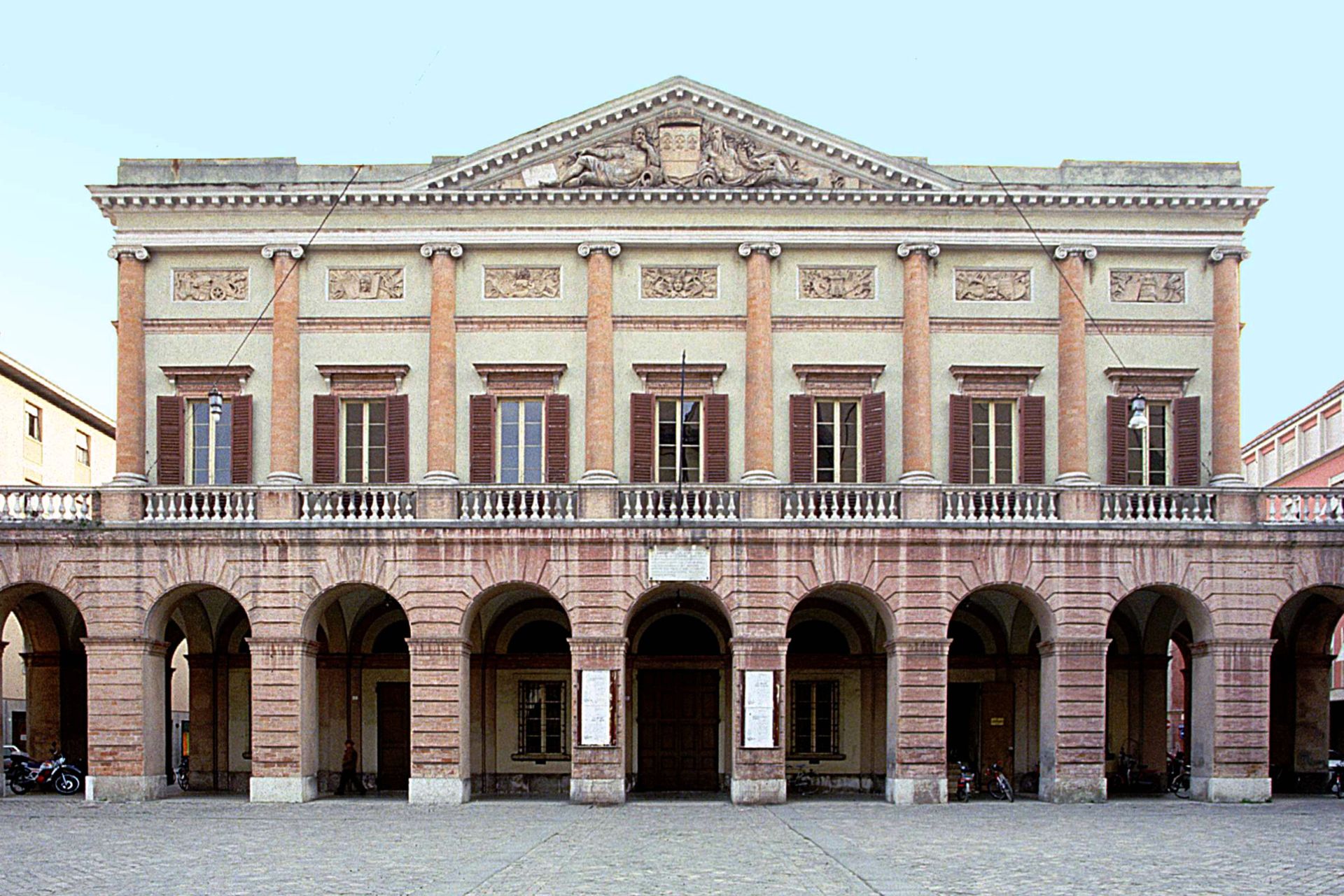
Opened in 1846the Bonci Theatre It is an Italian-style theatre with extraordinary acoustics. Following restoration, it was reopened to the public in 1996.
- Comandini Theatre
Part of Palazzo Guidithe Comandini Theatre It is a centre for cultural production, hosting events organised by the Socìetas Raffaello Sanzio since 1993.
- Giuseppe Verdi Theatre
Originally an open-air arena, the Verdi Theatre It was rebuilt in brick after a fire in 1907 and today it hosts entertainment events such as nightclubs and concerts.
- Valdoca Theatre
Centre for contemporary theatrethe Valdoca Theatre It is the home of the theatre company of the same name.
Bridges
- Ponte Vecchio
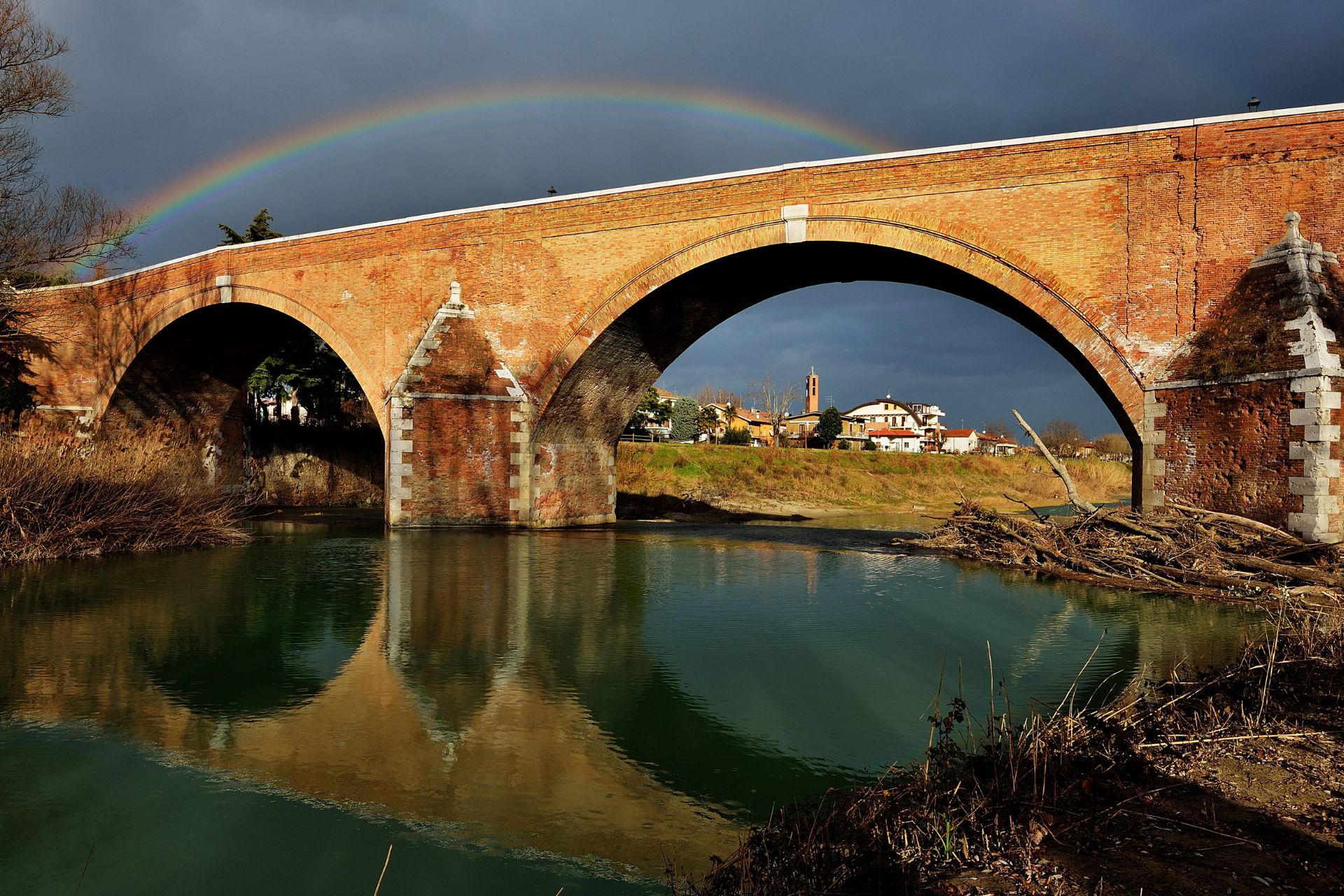
The Ponte Vecchio, or Clemente Bridge, is the oldest bridge in Cesena and spans the the River Savio. Construction began in 1733, commissioned by Pope Clement XII.
- Risorgimento Bridge (Ponte Nuovo)
Built in 1914the Risorgimento Bridge has improved access to the city centre from Forlì.
- United Europe Bridge
As part of the urban regeneration project for the former sugar factory site, the United Europe Bridge It was opened in 2003.
Towers
- Byzantine Tower of Cesena
Military Architecture
- Cavour Barrier
The demolition of the ancient Cervese Gate and the construction of the Cavour Barrier at 1864, based on a design by D. Angeli, represent one of the most significant developments in Cesena following Italian unification, giving the city a more modern and middle-class appearance.
- Malatesta Fortress
La Malatesta Fortress It is one of the most impressive in the Romagna, commissioned by the family Malatesta. It is notable for its ‘courtyard’ and for the two central towers, known as Male and Female.
- Museum of Agricultural History:
Located in the tower Female, features an exhibition dedicated to the agricultural traditions of Romagna.
- Exhibition of Malatesta ceramics
Set up in Male, houses a collection of historic ceramics.
The walls and gates
The construction of the city walls in Cesena dates back to thethe year 1000. The ancient city gates were:
- Ravegnana Gate
- Lions’ Gate
- Sapigna Gate
In 17th century, the number of doors rose to seven:
- Porta Fiume
- Trova Gate
- Porta Cervese
- Porta Romana (then Gate of the Saints)
- Figarola Pass (then Porta Santa Maria)
- La Portaccia
- Porta Montanara
Following the unification of Italy, some gates were demolished and others altered. The moat was filled in to make way for a tunnel. Today, four historic gates still remain:
- Porta Santi
- Porta Fiume
- One of the two Portacce
- Porta Montanara
Squares in Cesena
- Piazza Amendola
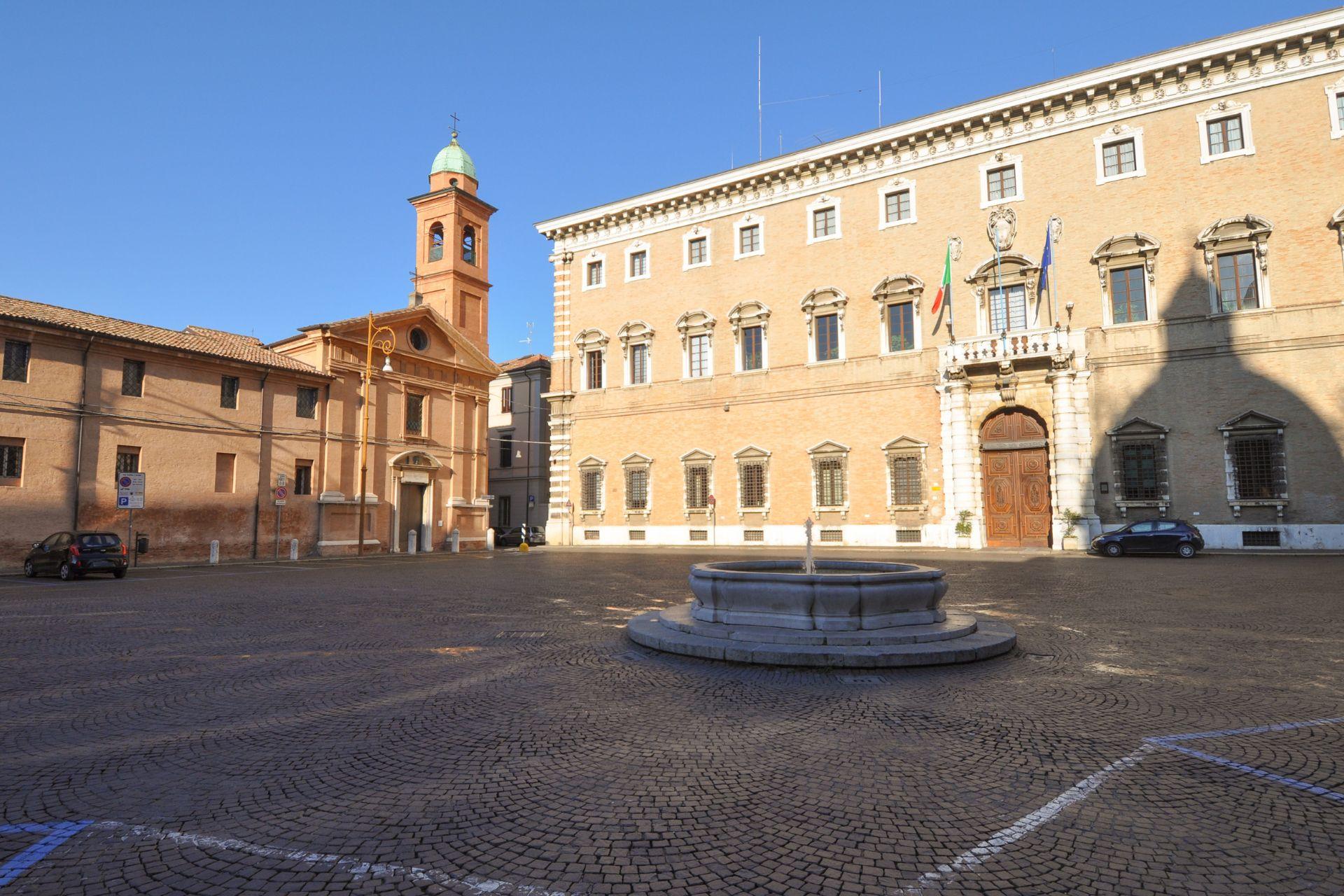
Established in the 1930s, following the demolition of a number of buildings and the covering of the Cesuola stream. In 2008, a regeneration project has replaced the tarmac with stones of various shapes and introduced a fountain which is reminiscent of the nineteenth-century style.
- Mario Guidazzi Square
It is home to the Alessandro Bonci Theatre. The 16 January 1915, Cesare Battisti gave a lecture there, which was strongly opposed by the neutralists. A commemorative plaque On the theatre’s façade, there is a commemorative plaque marking the event.
- Piazza del Popolo
Originally enclosed on all four sides, it lost part of its structure in the 19th century following the demolition of the Chiesanuova district.
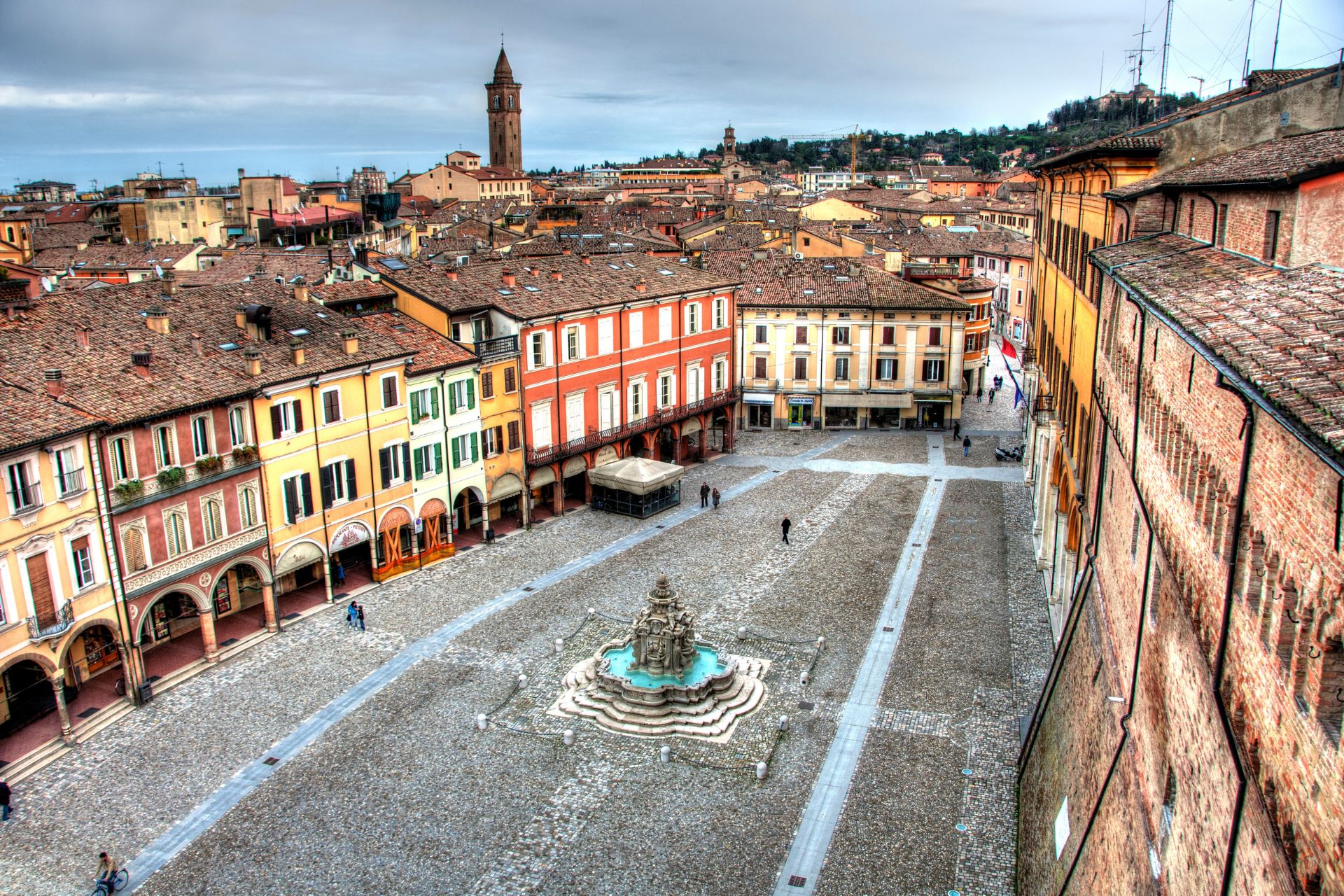
- Formerly known as Lower Square, Piazza Maggiore e Piazza Vittorio Emanuele.
- In the centre stands the historic Masini Fountain.
- The architectural contrast between the Town Hall (or Albornoz Palace) and the Venetian Loggetta, in contrast to the neoclassical and eclectic buildings, defines the square’s aesthetic.
Streets
- Via Emilia
Built between 189 and 187 BC, the Via Emilia was originally a military road designed to facilitate the rapid movement of the Roman army, with a view to countering potential uprisings by the Boii Gauls in the vicinity of Placentia. The road was subsequently extended from Piacenza to Milan. In ancient times, the Via Emilia followed a route that skirted the Garampo hill, whilst the current route – which includes Via Emilia Ponente, Via Carlo Cattaneo, Via Matteotti, Via Zuccherificio, Via Europa, Via Bovio, Via Oberdan, Via Marconi and Via Levante – crosses two modest hills. - Via Chiaramonti
One of the city’s most significant thoroughfares, owing to its artistic and historical value, is known as the ‘Via dei Signori’. It forms part of the E45 European route and intersects the Via Emilia at Via Carbonari, ending at Porta Trova. Along the route are the Church of Santa Cristina, with its dome inspired by the Pantheon, and numerous historic palaces, including Palazzo Chiaramonti, Palazzo Ghini, Palazzo Sirotti-Gaudenzi and Palazzo Guerrini Bratti. - Viale Jacopo Mazzoni
Built after the unification of Italy, this avenue was created by demolishing the Borgo Chiesanuova in 1861, with the aim of creating a wide, tree-lined avenue for those arriving from Forlì. - Via delle Scalette
A picturesque cobbled street with steps leading from the public gardens to the Abbey of Santa Maria del Monte, situated at the top of Spaziano Hill. Every 15 August, on the Feast of the Assumption, the faithful walk along this route to reach the religious site. - Via Zeffirino Re
This historic street links Piazza del Popolo with the Palazzo del Ridotto. Originally part of the Via Emilia, in the Middle Ages the street ran between Piazza Maggiore and the palace, following the route used by fruit sellers, hence its traditional name of ‘Via delle Ortolane’. The junction with Via delle Erbe and Via degli Orefici formed the Trivio di San Paolo, where an oratory of the Camaldolese monks stood until 1801.
Archaeological sites
- Colle Garampo Archaeological Park
In 1993 and 2005, during excavations in the historic centre, important Roman artefacts were unearthed, including a floor mosaic now on display at the Town Hall. Further remains of buildings and roads dating from the Roman and medieval periods were uncovered in 2005. - Roman kilns at Ronta
Discovered in 2005 during the construction of the Emiliano-Romagnolo Canal, these kilns, dating back to the 2nd century BC, are among the best-preserved in Emilia-Romagna. The site, situated in the hamlet of Ronta, comprises three large rectangular kilns, which were used for the production of bricks.
Natural areas
- Savio River Nature Park
Cesena boasts numerous green spaces, including the Savio River Nature Park, which, together with a further 250 green areas, make up a total of over 246 hectares of natural space. The city’s main green spaces include the Serravalle Garden, the Public Gardens, Cesuola Park, Fabio Park, ‘Fornace Marzocchi’ Park, the Hippodrome Urban Park and the Remembrance Park.
Culture
Education
Libraries
- The Malatesta Library and Neighbourhood Libraries
The Malatestiana Library, founded in the mid-15th century, is of great historical value. It is Italy’s first public library and the only perfectly preserved example of a medieval monastic library, both in terms of the building itself and its furnishings and books. Recognised by UNESCO, it has been included in the Memory of the World Register. The modern library, with over 100,000 volumes, comprises the Modern Library section (60,000 volumes) and the Children’s Library, with nearly 24,000 books for young readers. In addition to the Malatestiana, the town has libraries in the districts of Al Mare, Borello, Cervese Nord, Cervese Sud, Cesuola, Dismano, Oltresavio, Rubicone and Valle Savio. - Comandini Library
In 1967, Federico Comandini donated his extensive collection to Cesena City Council, comprising over 70,000 volumes and 3,200 coins, medals and weapons. The collection includes historical documents relating to the family, including those of Ubaldo Comandini, who took part in the Napoleonic Wars, and his descendants, amongst whom was the Member of Parliament Ubaldo Comandini, who played an active role during the unification of Italy. - Other Libraries
There are numerous other libraries in the city, including the Forlì State Archives – Cesena Branch, the Library of the ‘Bruno Maderna’ Conservatoire of Music, and the Library of the Abbey of Santa Maria del Monte.
Schools
Cesena is home to 23 nursery schools, 28 primary schools, 11 lower secondary schools and 10 upper secondary schools, including grammar schools, technical colleges and vocational colleges. The Vincenzo Monti State Grammar School, founded in 1860, is one of the city’s historic schools. The city is also home to the ‘Arcangelo Corelli’ Conservatoire, founded in 1806, which is the second oldest in Italy.
University
From the 16th century until 1800, Cesena was home to the University of Cesena. Since 1989, it has been a branch campus of the University of Bologna. Since 2018, Cesena has also been home to a new university campus.
“Bruno Maderna” Conservatoire of Music
Founded in 1970, it is the only conservatoire in Romagna. It has been an independent institution since 1988; prior to that, it was a branch of the ‘G. B. Martini’ Conservatoire in Bologna. The conservatoire is based in Palazzo Guidi, an 18th-century building.
Museums
- Renato Serra House Museum
Renato Serra’s birthplace has been converted into a museum dedicated to the literary critic. Since 2023, it has been included among the ‘Homes and studios of eminent figures from Emilia-Romagna’. - Ridotto Gallery
Located on the ground floor of the Palazzo del Ridotto, it hosts temporary art exhibitions, including paintings and sculptures. - Cesena Archaeological Museum
Housed in the same building as the Malatestiana Library, the museum holds artefacts from the Cesena area, spanning from prehistory to the Renaissance. It received a special mention from UNESCO in 1972. - Natural History Museum
Housed within the Loggetta Veneziana, the museum offers an overview of the wildlife of the Cesenate area, with specimens from all over the world and educational displays on insects and shells. - Museum of Centuriation
It showcases the Romans’ historic surveying work in the Cesena area, featuring a collection of documents and photographs. The museum also extends outdoors along the local roads. - Diocesan and Cathedral Museum
Housed in the space once occupied by the Chapel of St Tobias, the museum holds works of sacred art and liturgical objects donated by the popes of Cesena. - Museum of Agricultural History
Housed in the Rocca Malatestiana, the museum boasts one of the region’s most extensive collections on the subject of agriculture, thanks to a donation made by the artist Mario Bocchino in 1974. - Cesena Municipal Art Gallery
The collection of paintings, which spans the 15th to the 20th centuries, was first exhibited in 1883 and is now housed in the former monastery of San Biagio. It includes works of great artistic value at both local and national level.