Culinary specialities from Romagna
Sangiovese: A red wine grape variety which is the most important grape grown in the Romagna region.
Piadina: a traditional flatbread made with flour, lard, salt and water, typically filled with various local ingredients such as cheese, cured meats or vegetables.
Pagadebit: A type of white wine made from the Bombino Bianco grape, known for its ability to withstand difficult growing conditions and provide a reliable yield for winegrowers.
Romagna Albana: A white wine made from the Albana grape, one of Italy’s oldest grape varieties and native to Romagna.
Passatelli: a traditional pasta dish made with breadcrumbs, Parmesan, eggs and nutmeg, typically served in a broth.
Piadina Romagnola: Another name for piadina, a popular and traditional street food in Romagna.
Cagnina: A sweet red wine made from Refosco dal Peduncolo Rosso grapes, often served as a dessert wine.
Saba: A syrup made by reducing grape must, used as a sweetener or to garnish various dishes.
Gnocco fritto: a fried bread dough typically served as an accompaniment to cold meats, cheeses or other savoury dishes.
Passito di Romagna: a sweet wine made from dried grapes, resulting in a complex and concentrated flavour profile.
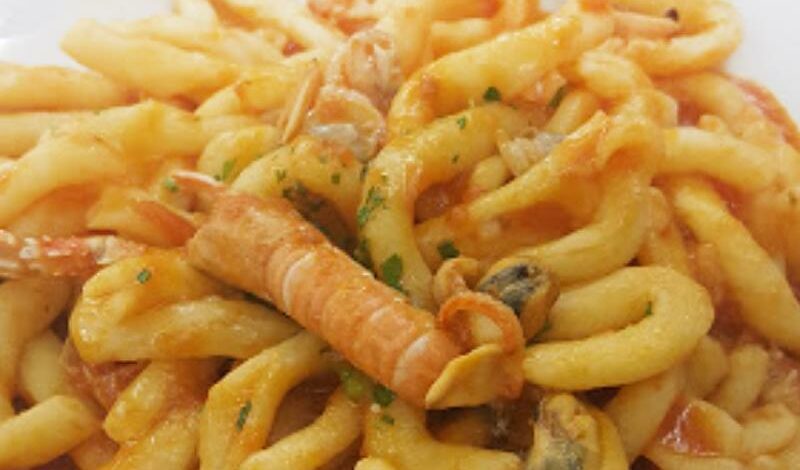
Traditional dishes from Romagna
Typical dishes from the Romagna region are:
Piadina Romagnola: a thin flatbread baked on a terracotta baking tray and filled with ham, cheese, vegetables or Nutella.
Romagna-style cappelletti: fresh pasta stuffed with meat, often served with meat stock.
Lasagne from Romagna: layers of fresh lasagne sheets alternated with meat ragù and béchamel sauce.
Passatelli: a sort of gnocchi made from bread and grated cheese, served in meat stock.
Oven-baked potatoes: potatoes cut into slices and baked in the oven, seasoned with rosemary, garlic and olive oil.
Potato gnocchi: potato gnocchi served with tomato sauce, meat ragù or butter and sage.
Onion soup: a soup made with onions, toasted bread and meat stock.
Piada with squacquerone: a piada filled with squacquerone, a fresh cheese typical of the region.
Porchetta-style rabbit: roast rabbit stuffed with garlic, sage, rosemary and lemon.
Mora Romagnola: a breed of black pig native to Romagna, often served as a roast.
These are just a few examples of typical dishes from Romagna, but there are many more to discover in the region.
Some recipes from Emilia-Romagna
Romagna’s cuisine is characterised by a wide variety of tasty, traditional recipes. Here are some of the typical recipes from Romagna:
Romagna-style piadina: The piadina is the symbol of Romagna cuisine. Made with flour, lard, salt and water, it is cooked on a special griddle called a ‘testo’ and filled with cold cuts, cheeses, herbs or even sweet fillings such as Nutella.
Passatelli in broth: Passatelli are small dumplings made by mixing grated Parmesan, eggs, breadcrumbs, lemon zest and nutmeg. They are cooked in meat broth and served as a first course.
Lasagne from Romagna: Lasagne from Romagna is different from the traditional version. It is made with sheets of egg pasta, meat ragù and béchamel sauce. During baking, it is generously sprinkled with grated Parmesan.
Romagna-style cappelletti: Romagna-style cappelletti are small tortellini stuffed with meat, usually served in capon stock. They are a traditional dish for the Christmas season.
Romagna-style fish soup: This fish soup is made with various types of fresh seafood, such as prawns, squid, mussels and clams. It is enriched with fresh tomatoes, garlic, parsley and white wine.
Romagna-style strozzapreti: Strozzapreti are a type of fresh, handmade pasta shaped like a spiral. They can be served with a meat sauce or seasonal vegetables.
Salama da sugo: This cured meat is a traditional speciality of Ferrara. Salama da sugo is a pork sausage flavoured with spices such as cloves, cinnamon and nutmeg, which is cooked in tomato sauce for several hours.
These are just a few of the many traditional recipes from the Romagna region. Every area of Romagna has its own speciality dishes, but they all share the use of simple, wholesome ingredients. Enjoy your meal!
The typical Mora Romagnola is a breed of cattle native to the Emilia-Romagna region, found mainly in the province of Forlì-Cesena.
The Mora Romagnola
Characteristics of Mora Romagnola beef:
- The meat is a deep red colour.
- It has a tender and juicy texture.
- It is rich in marbling – that is, fat interwoven throughout the meat – which helps to enhance its flavour and tenderness.
- It is very tasty and popular with both chefs and consumers.
Traditions associated with the Mora Romagnola:
- The Mora Romagnola has historically been used as a working animal in agriculture, particularly in the lowland fields, but in recent decades it has become renowned for the production of high-quality meat.
- The culinary tradition of Romagna includes the preparation of traditional dishes made with Mora Romagnola pork, such as ‘Bollito misto alla romagnola’, a dish of boiled meat served with sauces and side dishes.
- The Mora Romagnola is also used in the production of the region’s traditional cured meats, whilst its milk is used, for example, to make ‘Squacquerone di Romagna’, a fresh, creamy cheese with a delicate flavour that is often eaten alongside Mora Romagnola meat.
In short, the Mora Romagnola is a breed of cattle prized for the quality and flavour of its meat. The culinary tradition of the Emilia-Romagna region calls for this meat to be used in the preparation of traditional dishes and in the production of traditional cured meats.
Squacquerone: characteristics and how it is made
Squacquerone is a soft, fresh Italian cheese, typical of the Emilia-Romagna region. Its main characteristics are its creamy texture and delicate flavour.
Fresh whole cow’s milk, rennet and salt are used in the production of Squacquerone. After the milk has been pasteurised, rennet is added to coagulate the proteins, and the curd is then cut into small pieces. The resulting curd is then gently worked to preserve its creaminess, and a small amount of salt is added to flavour the cheese. Finally, the cheese is packaged and wrapped ready for sale.
Squacquerone has a very short maturing period and is eaten fresh or slightly fermented. It is usually spread on bread or piadina and can be used as an ingredient in various dishes from the Emilia-Romagna region, such as piadina romagnola, tortellini or passatello.
Squacquerone is recognised as a PDO (Protected Designation of Origin) product and is available in both industrially produced and artisanal forms. It is mainly produced in the Emilia-Romagna region, particularly in the provinces of Modena, Bologna, Reggio Emilia and Rimini.
The Piadina from Romagna
It is a type of traditional flatbread from the Italian region of Emilia-Romagna. It is a very versatile food that can be filled with various ingredients such as cold meats, cheeses, vegetables, etc. The recipe is relatively simple and requires only a few basic ingredients.
Here is a classic recipe for piadina romagnola:
Ingredients:
500 grams of white flour
3 tablespoons of extra virgin olive oil
10 grams of salt
10 grams of baking powder
about 200 ml of water
Preparation:
In a large bowl, mix together the flour, baking powder and salt.
Add the extra virgin olive oil and start working it into the flour with your hands.
Gradually add the water whilst kneading until the dough has a springy, smooth texture. Add more or less water depending on the consistency of the dough.
Knead the dough for about 10 minutes until it becomes soft and elastic. Cover with a tea towel and leave to rest for at least 30 minutes.
Divide the dough into balls the size of a golf ball and roll them out into thin circles, about 20 cm in diameter.
Heat a non-stick frying pan over a medium-high heat and cook each piadina for about 2–3 minutes on each side, until it turns golden brown and bubbles appear.
Fill the piadina as you like with cold meats, cheese, vegetables or other ingredients. Fold it in half and serve it warm.
Characteristics of the Piadina Romagnola:
It is a flatbread, similar to a tortilla or a chapati, so it does not have a crust like traditional bread.
It has a slightly neutral flavour and is very versatile, making it ideal for a variety of fillings.
It is made with flour, oil, water, yeast and salt – simple, readily available ingredients.
It is cooked in a frying pan or on a hot griddle, without using the oven.
Its texture is soft, but it can be slightly crunchy and pliable.
It is often served as street food or as a main course in place of bread at a meal.
Lard: characteristics and production
The characteristics of lard can vary depending on the animals’ diet and the preparation techniques used. Generally speaking, it is a solid substance with a creamy texture and a white colour. It has an intense, savoury flavour, thanks to the presence of mineral salts and saturated fatty acids.
The production of lard involves several stages. First, the best and fattest cuts of the pig are selected. The fat is then cut into smaller pieces and cooked slowly over a low heat to melt the fat and separate it from the lean meat. Next, the melted fat is filtered to remove any impurities, such as small particles of meat or residue. Finally, it is poured into containers, left to cool and set.
Lard is mainly used in cooking to add flavour and richness to dishes, particularly those of Italian origin. It is often used to make rolled lard or pancetta, which is used to flavour and enhance various types of meat, such as roasts or braised dishes. Furthermore, lard is used in the production of cured meats, such as prosciutto, which is often wrapped in a layer of lard that helps to impart flavour and tenderness to the final product.