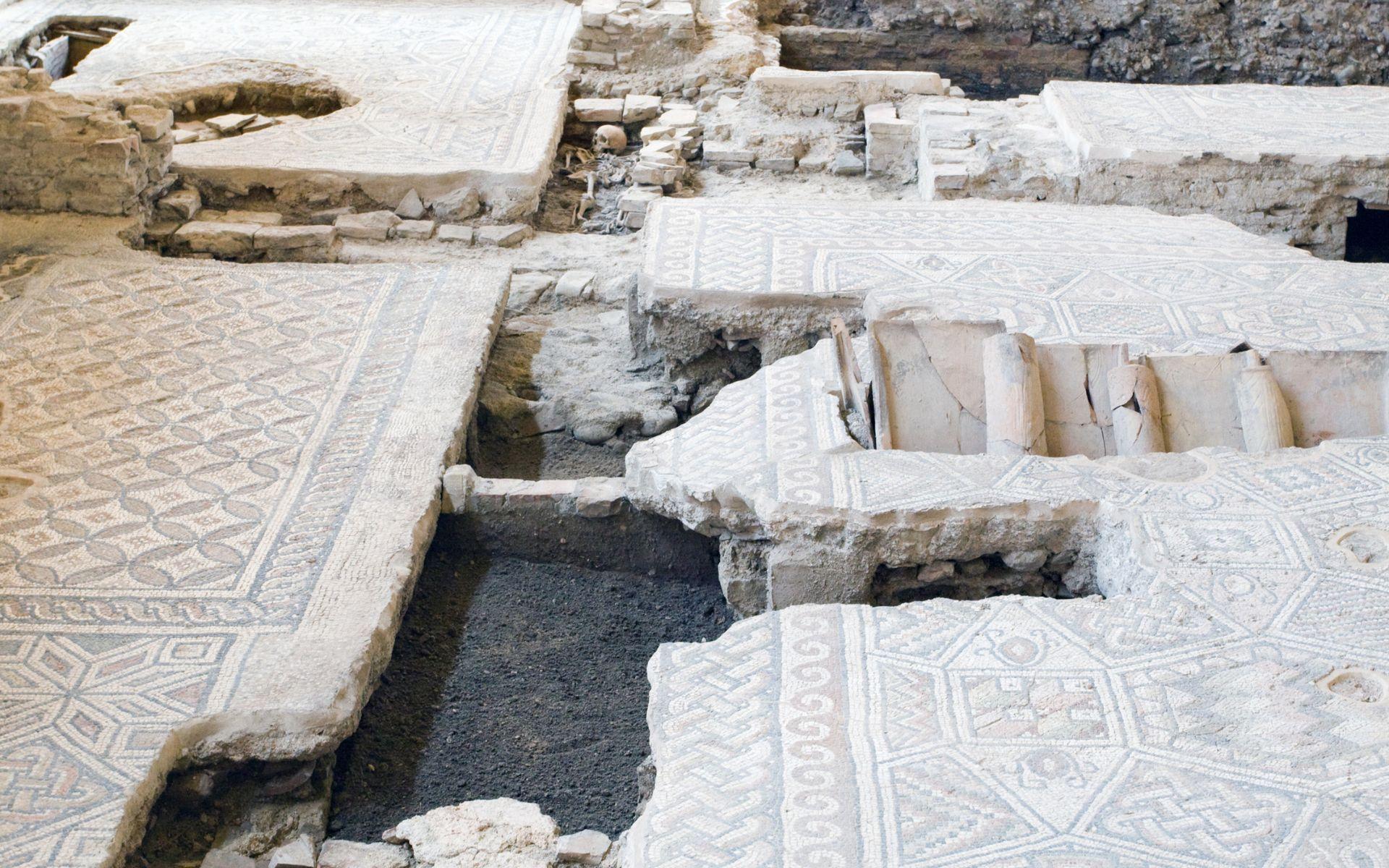
If you’re wondering What is the most famous street in Rimini?, for those who love history and culture, the answer can only be Corso d’Augusto. Situated in the heart of the historic centre, this street is much more than just a road: it is a a symbol of Roman Rimini, dating from the Middle Ages and the Renaissance. A veritable open-air museum, where every step tells a chapter of the city’s millennia-old history.
Via d’Augusto: a street that came into being with Rome itself
The name is no coincidence. Corso d’Augusto is named after Octavian Augustus, the first Roman emperor, and coincides with the main decumanus of the ancient colony of Ariminum, founded in 268 BC.
It was under Augustus that the city enjoyed one of its most prosperous periods, becoming a strategic crossroads between the Via Flaminia, the Via Emilia and the Via Popilia.
The route of Corso d’Augusto is has remained essentially the same from Roman times to the present day, and links two of the main symbols of ancient Rimini:
-
The Arch of Augustus (27 BC), the oldest surviving Roman arch, which marked the monumental entrance to the city;
-
The Tiberius Bridge (14–21 AD), built during the reigns of the emperors Augustus and Tiberius, is still passable today and is regarded as a masterpiece of Roman engineering.
A stroll through different eras
Stretching for around 800 metres, Corso d’Augusto runs through the historic centre of Rimini, linking together monuments, squares and views that tell the story of over two thousand years of history.
Here’s what you can discover as you stroll along the Corso:
-
Tre Martiri Square, an ancient Roman square and now the commercial heart and symbol of the Resistance. According to tradition, it was here that Julius Caesar uttered the famous “Alea iacta est” after crossing the Rubicon.
-
Piazza Cavour, steeped in medieval and Renaissance charm, home to the Palazzo dell’Arengothe Galli Theatre recently restored, the Pine cone fountain and the Old Fish Market.
-
The Malatesta Temple, not far away, is one of the most important monuments of the Italian Renaissance, designed by Leon Battista Alberti for Sigismondo Pandolfo Malatesta.
Today: a mix of shopping, culture and atmosphere
Today Corso d’Augusto is an elegant and lively pedestrian street, perfect for those who want to combine culture and pleasure. Along the way, you’ll find clothing shops, independent bookshops, art galleries, historic bars, literary cafés and artisan workshops.
It’s the ideal place for anyone who loves slow shopping, in a setting steeped in history and architectural beauty.
The street is also popular with the people of Rimini themselves, who meet here for an aperitif, a concert, an exhibition or simply to stroll past the shop windows and soak up the history of their city.
Cultural events and initiatives
Throughout the year, Corso d’Augusto and its squares become the venue for numerous cultural events:
-
Festival of the Ancient World, featuring talks, guided tours and performances relating to Roman Rimini;
-
Museum Night e the “Mare di Libri” evenings, the children’s literature festival;
-
Craft markets, historical re-enactments, open-air photography exhibitions and jazz concerts on summer evenings;
-
Christmas lights and winter markets, which transform the town centre into a charming village full of atmosphere.
Corso d’Augusto for all seasons
One of the most fascinating features of the Corso d’Augusto is that it is not linked to the beach season.
Whilst the seafront empties during the winter months, the historic centre — and this street in particular — remains lively all year round: Students, families, cultural tourists, art lovers and local residents visit it every day.
Conclusion: a route that tells the story of Rimini
So, What is the most famous street in Rimini? For those who love history, art and culture?
The answer is clear: Corso d’Augusto.
A route that brings together the legacy of the Roman Empire, the elegance of the Renaissance and the contemporary vibrancy of a city that looks to the future without forgetting its past.
Whether you’re coming to Rimini for the seaside or for Fellini’s films, You mustn’t miss a stroll along Corso d’Augusto. You need only look up to find yourself in the vibrant heart of an eternal city.