La Via Emilia (in Latin Via Aemilia) is one of the main thoroughfares of ancient Rome and still represents the the backbone of Emilia-Romagna. It was done built in 187 BC by the consul Marcus Aemilius Lepidus with the aim of collto link Ariminum (Rimini) with Placentia (Piacenza) along a straight route through the Po Valley.
This road was not merely a piece of military infrastructure: over time, it became a a genuine path of economic, urban and cultural development, which was destined to have a profound impact on the history of the region. Even today, its route largely coincides with State Road 9 – the Via Emilia, one of the main thoroughfares in northern Italy.
The origins of the Via Emilia

During the Republican period, the Romans called Cisalpine Gaul, northern Italy, a territory that included the fertile Po Valley, the largest agricultural area on the peninsula. The conquest of this region represented an enormous economic and demographic advantage for Rome.
Towards the end of the 3rd century BC, following a series of military campaigns, Rome succeeded in subjugating the Gallic peoples of the plain. To consolidate its control over the territory and facilitate the movement of the legions northwards, the following were constructed: new consular roads.
La First there was the Via Flaminia, completed in 220 BC, which linked Rome to Rimini. However, the expansion into the Po Valley came to an abrupt halt during the Second Punic War, when the Carthaginian army led by Hannibal invaded Italy (218–203 BC). During that period, many Gallic tribes rebelled, hoping to regain their independence.
It was not until 189 BC, with the conquest of Bononia (Bologna), Rome re-established full control of the area. It was then that the Senate decided to build a a new strategic transport route: the Via Emilia, completed two years later, in 187 BC
The road also served a military purpose: by providing a swift link between Rimini and Piacenza – a Roman colony situated in an area that was still unstable – it enabled the army to intervene promptly in the event of further uprisings by the Gallic peoples.
The route of the Roman road
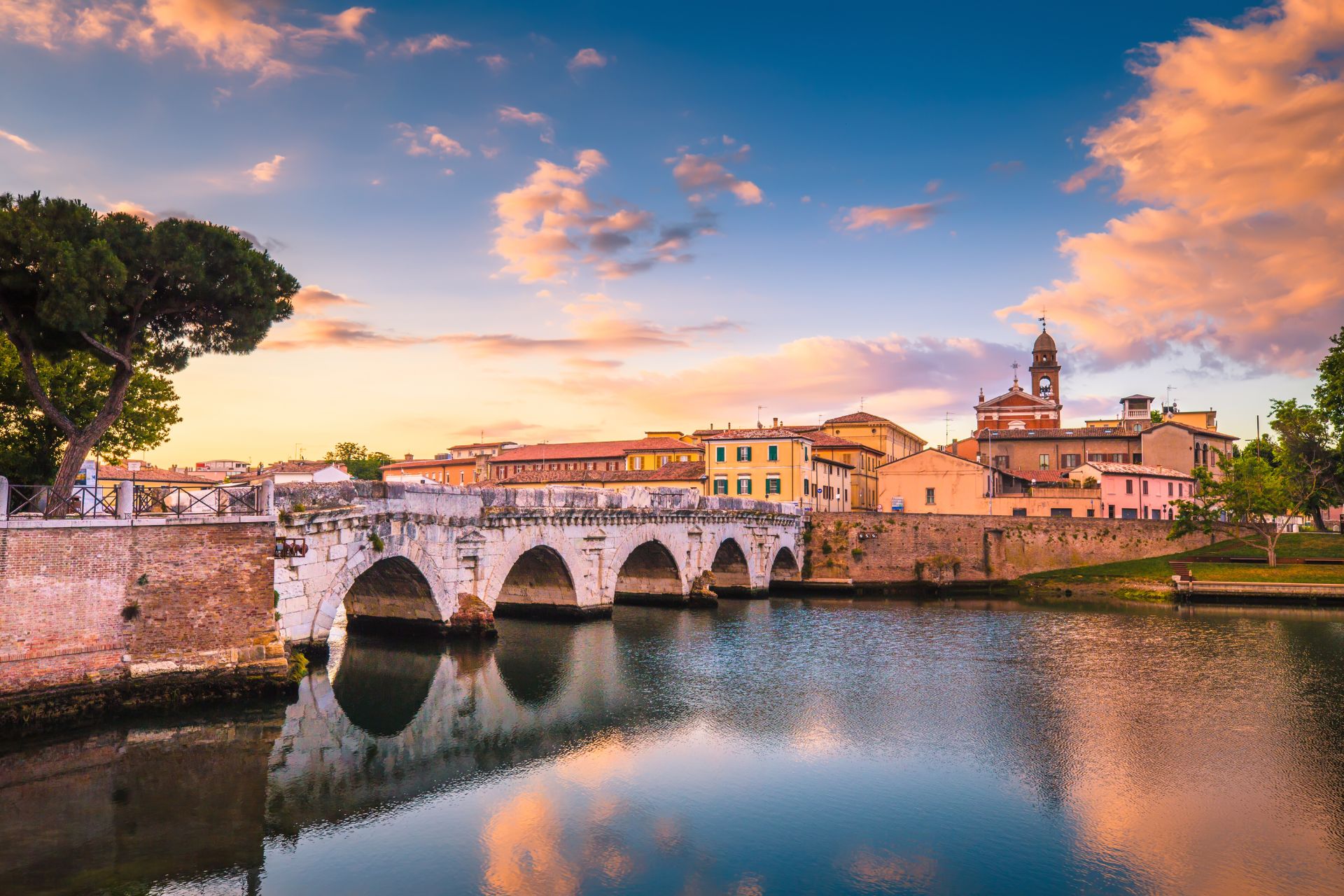
The Via Emilia It began in Rimini, where it joined the Via Flaminia coming from Rome. Here was crossing the River Marecchia thanks to the monumental Tiberius Bridge, one of the city’s landmarks.
Heading towards north-west, The road passed through numerous towns which are now major cities in Emilia-Romagna. These include:
- Santarcangelo di Romagna (Acervolanum)
- Savignano sul Rubicone (Sabinianum)
- Cesena (Caesena)
- Forlimpopoli (Forum Popilii)
- Forlì (Forum Livii)
- Faenza (Faventia)
- Imola (Forum Cornelii)
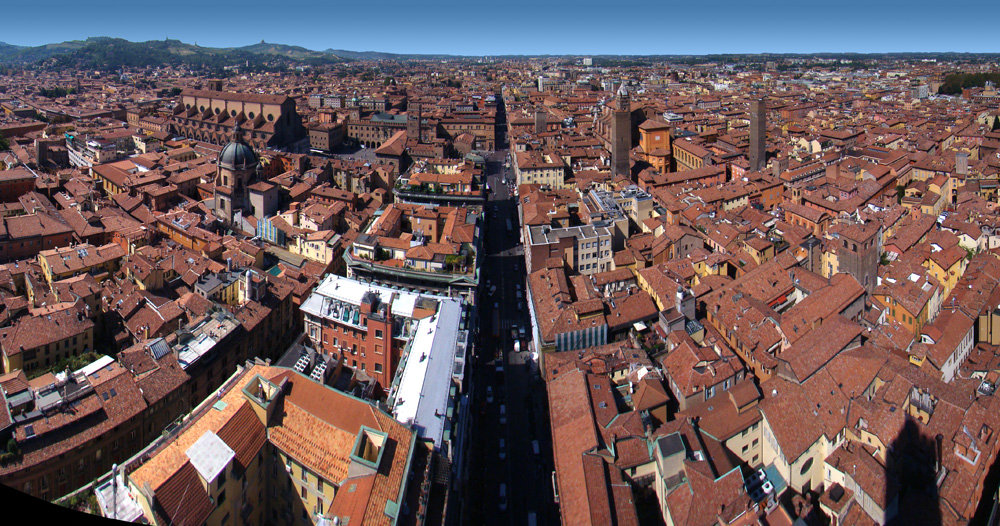
- Bologna (Bononia)
- Modena (Mutina)
- Reggio Emilia (Regium Lepidi)
- Parma
- Fidenza (Fidentia)
- Fiorenzuola d’Arda (Florence)
- Piacenza (Placentia)
A Piacenza the Via Emilia it linked up with the Via Postumia, which linked the ports of Genoa and Aquileia, one of the main Roman ports on the northern Adriatic.
Traces of the Via Emilia today
Although more than two thousand years have passed, various remains of the ancient Roman road can still be seen along its route.
A Rimini, the starting point of the route is marked by the Tiberius Bridge, begun under Emperor Augustus and completed by his successor Tiberius in the 1st century AD.
A Bologna was found in the bed of the the River Reno: a Roman milestone which commemorates the restoration of the road commissioned by Augustus in 2 BC.
Further sections of the ancient paving have come to light during archaeological excavations in Reggio Emilia and Faenza and at the Roman site of Claterna, near Bologna.
Other notable infrastructure features along the Via Emilia include:
- the Roman bridge over the Rubicon at Savignano sul Rubicone
- Theodoric’s Bridge in Parma
- the Roman bridge at Fidenza
These structures bear witness to the Romans’ advanced engineering and the central role played by this road in the ancient road network.
A legacy that continues to this day
The construction of the Via Emilia encouraged the Romanisation of the Po Valley and transformed this region into one of the the Empire’s most productive regions. Thanks to the fertility of the land and the existence of an efficient road network, the area quickly became one of the most populous and prosperous in Italy.
The importance of the road remained evident in the centuries that followed. A great deal of modern infrastructure were built almost parallel to its route, including:
- the Milan–Bologna railway line
- the Bologna–Ancona railway line
- the Autostrada del Sole (A1)
- the Adriatic Motorway (A14)
Even today, the SS9 Via Emilia runs through the entire region, linking towns, villages and industrial districts that form one of the economic heartlands of Italy.
The fortified towns along the Via Emilia
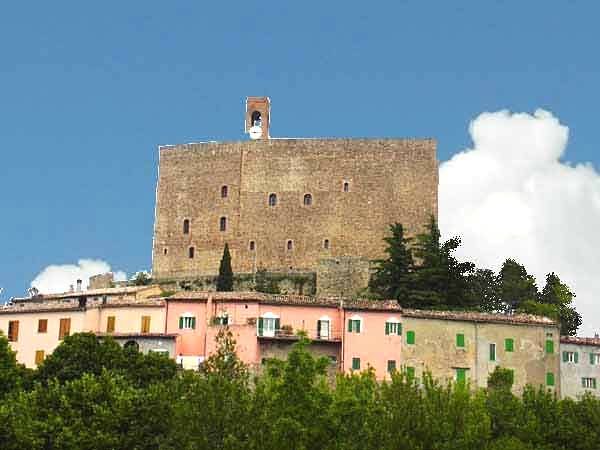
Travelling along the Via Emilia between Rimini and Bologna, you will come across numerous historic town centres that still have their city walls medieval buildings, monumental gates and fortified castles.
Between the 13th and 16th centuries, the powerful families who ruled these territories strengthened the town defences to protect the towns along this important trade route.
Even today towns such as Cesena, Forlì, Faenza, Imola, Castel San Pietro Terme and Bologna show tracks of this defensive system, which reshaped the urban landscape of the villages and created a genuine historical route along the Via Emilia.
Travelling along the Via Emilia today means journeying through over two thousand years of history, taking in Roman archaeological sites, medieval towns and the landscapes of the Po Valley. It is a road that is not merely a link between towns, but a common thread that tells the story of the identity and culture of Emilia-Romagna.