Gea della Garisenda and Villa Amalia: the story of an operetta diva in the heart of the Valmarecchia
Set amongst the hills of Villa Verucchio, where the Rimini plain gradually gives way to the green landscape of the Valmarecchia, stands a residence with a surprising history. It is Villa Amalia, a historic residence surrounded by a vast agricultural estate, also known as Villa Garisenda due to its connection with one of Romagna’s most famous artists of the early 20th century: Alessandrina Drudi, who went down in history under the stage name of Gea della Garisenda.
Her life reads like the plot of a novel. Born into a family of modest means, she managed to study singing thanks to the support of her community; she made her opera debut at a very young age and went on to become one of the most admired leading ladies of Italian operetta. She rubbed shoulders with poets, musicians and intellectuals, won over audiences with her talent and caused a scandal by singing whilst draped in the Italian tricolour. After her years on the stage, she chose Villa Amalia as her retirement home, transforming the estate into a hub for art, music, high society and country life.
Telling the story of Gea della Garisenda therefore means rediscovering not only a great performer, but also an elegant and cosmopolitan Romagna, capable of engaging with Italian theatres and cultural circles without losing touch with its roots.
Villa Amalia, a historic residence where countryside meets legend
Villa Amalia is situated on Via Molino Bianco, within the municipal boundaries of Verucchio. The General Catalogue of Cultural Heritage lists it as a private villa of architectural interest, together with the nearby church that forms part of the complex. The property, nestled in the countryside of Villa Verucchio, still bears witness today to the tradition of the great stately estates that developed between the 18th and 19th centuries around manor houses, farm buildings and private places of worship.
The origins of the name ‘Amalia’ are shrouded in a tale that blends local history with romantic notions. According to a tradition recounted in various local accounts, in 1819 the estate is said to have been donated by Caroline Amalia of Brunswick, the estranged wife of the future King George IV of England, to Bartolomeo Pergami, the Italian who had entered his service during his stay in Europe and had become one of his most trusted companions. Pergami is said to have named the property ‘Amalia’ in honour of the princess’s middle name.
The relationship between Carolina and Pergami was at the centre of one of the most sensational scandals in Europe at the time. The princess, effectively separated from her husband, travelled extensively throughout Italy accompanied by her entourage, whilst in London accusations and rumours about the nature of their relationship were rife. The affair even reached the House of Lords during the famous trial brought against Carolina in 1820.
The specific link between the two and the Verucchio estate is largely part of local oral tradition and should therefore be treated with a degree of caution. It remains, however, one of the stories that have helped to make Villa Amalia a place with a particularly fascinating identity, suspended between historical records, local memory and romantic legend.
Alessandrina Drudi: from the province of Romagna to the great theatres
The villa’s second lease of life began in the 20th century, when the estate became part of Alessandrina Drudi’s personal history. The future Gea della Garisenda was born in Cotignola, in the province of Ravenna, on 24 September 1878. Her father ran a small hotel, but the financial circumstances of their large family left little room for ambition. Alessandrina was therefore entrusted to the nuns at the Collegio Don Morelli in Lugo, where she received her education and very soon showed a particular aptitude for singing and acting.
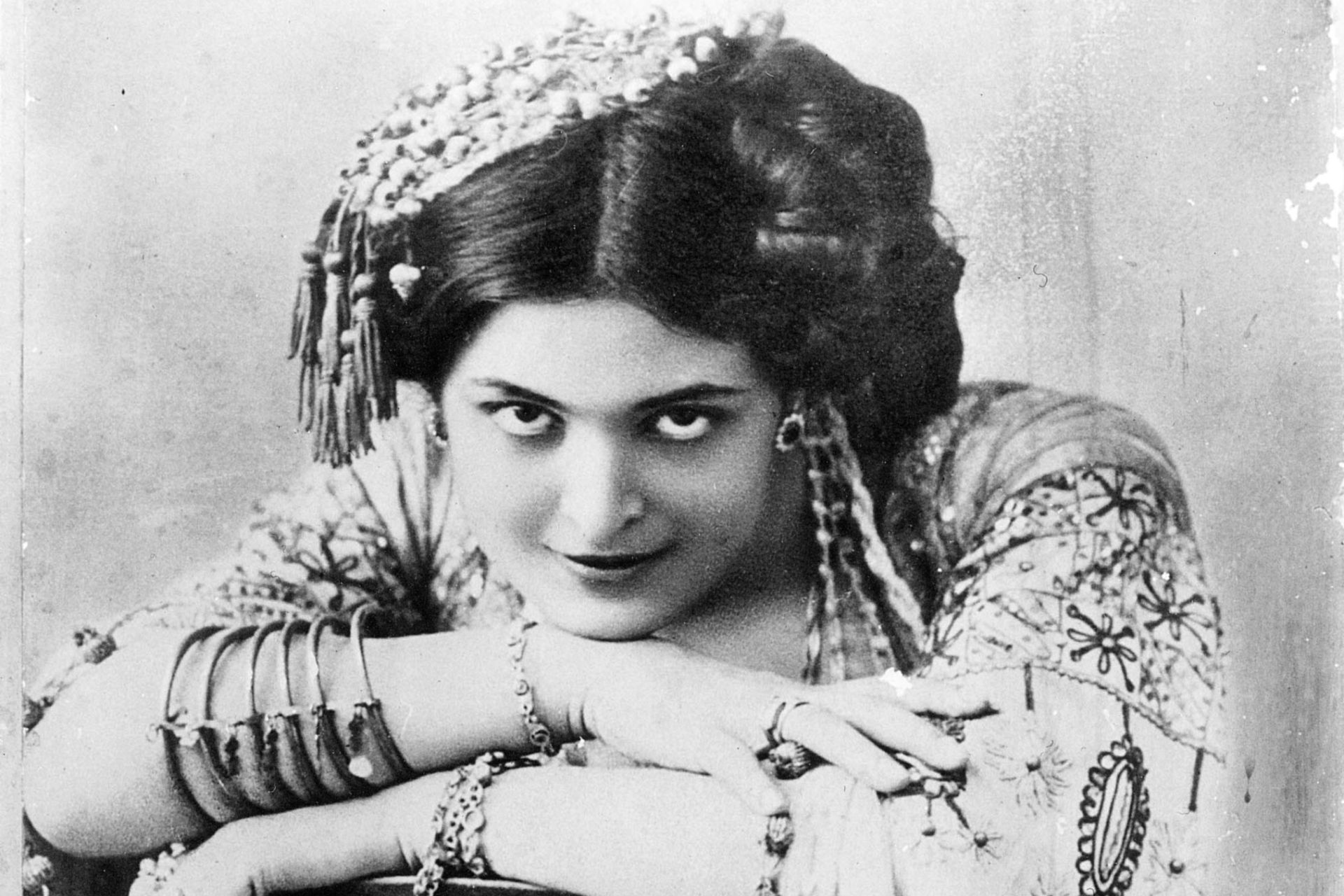
His talent did not go unnoticed. Thanks to a public fundraising campaign organised in Cotignola, he was able to attend the Liceo Musicale in Bologna, now the ‘Giovan Battista Martini’ Conservatoire. After three years of training, he graduated in 1899 with a diploma in singing and recitation, turning a childhood passion into a full-fledged profession.
The organised support that enabled her to study is a particularly significant aspect of her life story: even before she became a star, Alessandrina was a young artist backed by her home town, which recognised her talent and decided to invest in her future. Her story therefore also illustrates the deep connection between individual talent and the community, in a provincial part of Romagna that was nonetheless capable of recognising and nurturing an extraordinary talent.
The premiere took place on 2 September 1899 at the Teatro Rossini in Lugo, where she played Mimi in the Bohème by Giacomo Puccini. It marked the beginning of a career destined to take her far from the Romagna countryside and bring her into contact with the vibrant world of early 20th-century Italian entertainment. Following her early experiences in opera, in 1907 she chose to devote herself primarily to operetta, a genre much loved by audiences at the time for its combination of singing, acting, dancing, comedy and elegant settings.
Why was she called Gea della Garisenda?
It was on stage that Alessandrina Drudi took the name that was to make her famous: Gea della Garisenda. La tradition attributes the decision to Gabriele D’Annunzio, that he would have liked to come up with a melodious name for her, instantly recognisable and closely associated with the cultural imagery of Emilia-Romagna.
‘Gea’ evoked the earth and feminine strength, whilst ‘Garisenda’ referred to the famous medieval tower in Bologna.
Her name helped shape the artist’s public image. Gea was not merely a singer with a brilliant voice, but a true showwoman, capable of commanding the stage through her performance, her elegance and a physical presence considered extraordinarily captivating by her contemporaries.
At a time when photographs of actresses and singers were beginning to appear in magazines and on picture postcards, her face became part of that emerging celebrity culture which foreshadowed many aspects of the modern entertainment industry. The artist captivated her audience not only with her voice, but also through her image, her poise, her stage costumes and a personality capable of turning every appearance into an event.
In 1908, she enjoyed a major success at the Teatro Costanzi in Rome, playing the lead role in The Mascot by Edmond Audran. This was followed by numerous productions and tours, including such popular titles as The Musketeers at the Convent, The Geisha, The Blue Moon e The Merry Widow. In 1912, she also founded her own theatre company, thereby establishing a professional independence that was by no means a given for a woman of that era.
The Queen of Operetta and her illustrious admirers
In the early decades of the 20th century, operetta played a central role in Italian cultural life. It was a popular yet refined form of entertainment, capable of attracting both middle-class audiences and spectators seeking light-hearted amusement. Gea della Garisenda perfectly captured its spirit: she possessed musical training, acting skills, a sense of humour and a keen awareness of her own image.
Historical accounts and biographies mention numerous intellectuals and artists who admired her, including Giosuè Carducci, Giovanni Pascoli, Salvatore Di Giacomo, Trilussa, Olindo Guerrini and Ruggero Leoncavallo. The latter is said to have tried to persuade her to return to opera on a permanent basis, recognising in her voice a potential that went beyond light theatre.
The presence of such prominent figures associated with Gea helps us to understand just how well-known she was within the cultural scene of the time. She was not merely a local celebrity confined to Romagna, but an artist who was part of the national theatre circuit, capable of arousing interest even in literary circles.
Her success stemmed from a combination of talent and personality. On stage, she came across as modern, self-assured and free-spirited – qualities that captivated the public but could also provoke scandalised reactions in more conservative sections of society. Gea skilfully navigated this tension, turning her independence and charisma into key elements of her public persona.
“Tripoli, beautiful land of love”: the performance that caused a scandal
The most famous moment of her career took place on 8 September 1911 at the Teatro Balbo in Turin. On that occasion, Gea played “In Tripoli”, a song written by Giovanni Corvetto and set to music by Colombino Arona, which went on to become famous for the opening line of the chorus, Tripoli, a beautiful land of love. The song was released a few weeks before the start of the Italo-Turkish War and formed part of the propaganda campaign in support of Italian colonial expansion in Libya.
According to the account handed down by the chronicles, Gea appeared on stage wrapped only in a large Italian flag. In an era characterised by very strict moral codes, that choice caused a huge stir. The gesture combined patriotism, sensuality and promotional flair, making the performance impossible to ignore. The song achieved extraordinary popularity and the singer’s name remained inextricably linked to its chorus.
Today, that episode must also be understood in the light of its historical context. In Tripoli It was, in fact, a means of building support for a colonial war that led to violence, occupation and far-reaching consequences for the Libyan people.
The performance remains key to understanding how Gea’s fame was built, but recounting it also means examining how theatre, music and the image of celebrities could be used to support the political aspirations of early 20th-century Italy. It is, therefore, an episode that brings together the history of the performing arts, social customs, propaganda and the development of mass culture.
The meeting with Teresio Borsalino
He played a decisive role in Gea’s life Teresio Borsalino, a member of the family that owned the famous hat factory in Alessandria and a senator of the Kingdom. The two met during their years in the theatre and began a long and complex relationship, hampered by their respective family circumstances and frowned upon by some in the Borsalino circle.
Gea had married Pier Giovanni Dragoni of Bagnacavallo in 1902, with whom she had a daughter, but the marriage ended in separation. It was not until many years later, after she had been widowed, that she was able to marry Teresio. The wedding took place on 3 September 1933 and marked the culmination of a relationship that had already spanned much of their adult lives.
By 1922, Gea had essentially retired from the limelight, choosing a more private life. In 1925, the couple made their home at Villa Amalia, although the available accounts do not entirely agree on who formally purchased the estate: some name Alessandra Drudi directly, whilst others attribute the purchase to Teresio Borsalino. The date and the subsequent move to the property in Verucchio, however, are consistently mentioned across the sources.
Villa Amalia thus became not merely a residence, but the place where the singer could embark on a new chapter in her life, far removed from touring and the hustle and bustle of the theatre, whilst still maintaining her connection with music, culture and the artistic world.
Villa Amalia becomes a hub for art and culture
With Gea della Garisenda, Villa Amalia probably experienced the most glorious period in its history. The singer brought to the Verucchio countryside the elegance, social connections and habits she had cultivated during her years spent in the theatres. The villa became a venue for gatherings, receptions and conversations, frequented by figures from the artistic and cultural worlds.
It was not merely a country residence. Villa Amalia represented the meeting point between two worlds: on the one hand, rural Romagna, with its vineyards, farming activities and the life of the estate; on the other, the cosmopolitan world of entertainment, music, fashion and industry. Gea continued to nurture her love of singing even after her retirement, taking an interest in musicians and the musical events organised on the estate.
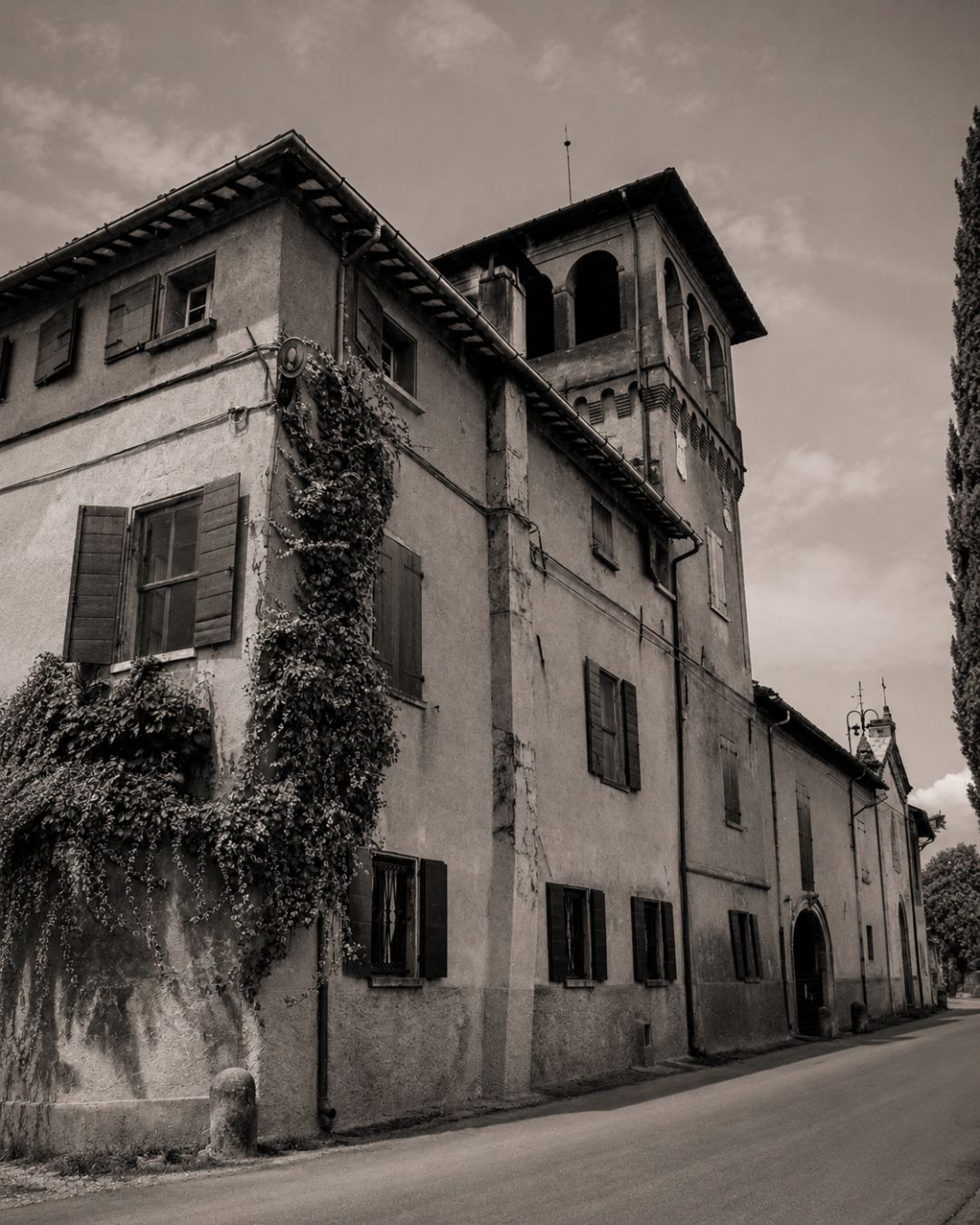
Further evidence of the artistic character of the residence is its connection with Marcello Dudovich, one of the leading Italian illustrators and poster artists of the twentieth century. He is credited with the decorations in one of the estate’s rooms, featuring scenes inspired by country life. The sketches and frescoes were subsequently studied and showcased as part of initiatives dedicated to Gea.
The account recounted in the local testimony on which this article is based also paints a more everyday picture of the singer. In the 1950s, Gea is said to have organised parties for the estate’s workers, entrusting the musical accompaniment to the Rimini band. Now an elderly woman, she would listen attentively to the operatic repertoire and chat with the young musicians, recognising in them a potential new generation of performers.
It is a personal recollection, one that cannot easily be verified through documentary sources, but it adds a human touch to the diva’s image. Behind the public persona, we see a woman who remained deeply connected to music and attentive to the people who lived and worked around her.
From the villa to the wine estate
The story of Villa Amalia did not end with the singer’s death. The estate retained its agricultural character and became an integral part of the Valmarecchia wine-producing region. Even today, the Tenuta Amalia winery evokes, through its name and its story, the lives of Princess Carolina, Pergami and Gea della Garisenda.
The Villa Verucchio area offers favourable conditions for vine cultivation: the hills are close to the sea, but are also influenced by the daily temperature variations and the characteristics of the inland area. The Sangiovese, the grape variety that symbolises Romagna, finds one of its regional expressions here, alongside other varieties used to reflect the local landscape and agricultural tradition.
The transformation of the estate into a winery represents a significant continuity. Villa Amalia has not merely remained a repository of memories, but has maintained a living connection with the local area. Its aristocratic and artistic history is thus intertwined with work in the fields, wine culture and the gradual development of tourism in the Valmarecchia.
Wine thus becomes part of a broader narrative, in which the landscape, agriculture, heritage and hospitality all help to keep the estate’s identity and its connection with local history alive.
Following the death of Teresio Borsalino in 1939, Gea continued to live on the estate. The days of the grand stages were now a distant memory, but the singer retained the charm and gravitas associated with her career. Villa Amalia became the place where she spent the final years of her life, surrounded by the countryside and memories of an irreplaceable era in Italian show business.
Alessandrina Drudi died in Villa Verucchio on 7 October 1961, a few days after turning eighty-three. His life story links several places in Romagna: Cotignola, where he was born; Lugo, where he studied and made his debut; Bologna, where he completed his musical training; Rimini e Riccione, which he frequented during his secondary school years; and finally Villa Verucchio, which he chose as his permanent home.
It is precisely this widespread connection that makes Gea a particularly fascinating figure for anyone wishing to rediscover the region’s cultural history. Her life story paints a picture of a Romagna capable of nurturing talent, supporting the ambitions of a young woman and welcoming, across its countryside and villages, figures who had achieved international success.
What to see around Villa Amalia
The story of Gea della Garisenda could serve as a starting point for exploring Verucchio and the Valmarecchia. Villa Amalia is a private property and access to the grounds must be arranged directly with the organisations operating on the estate; it should therefore not be regarded as a monument that can normally be visited without a booking.
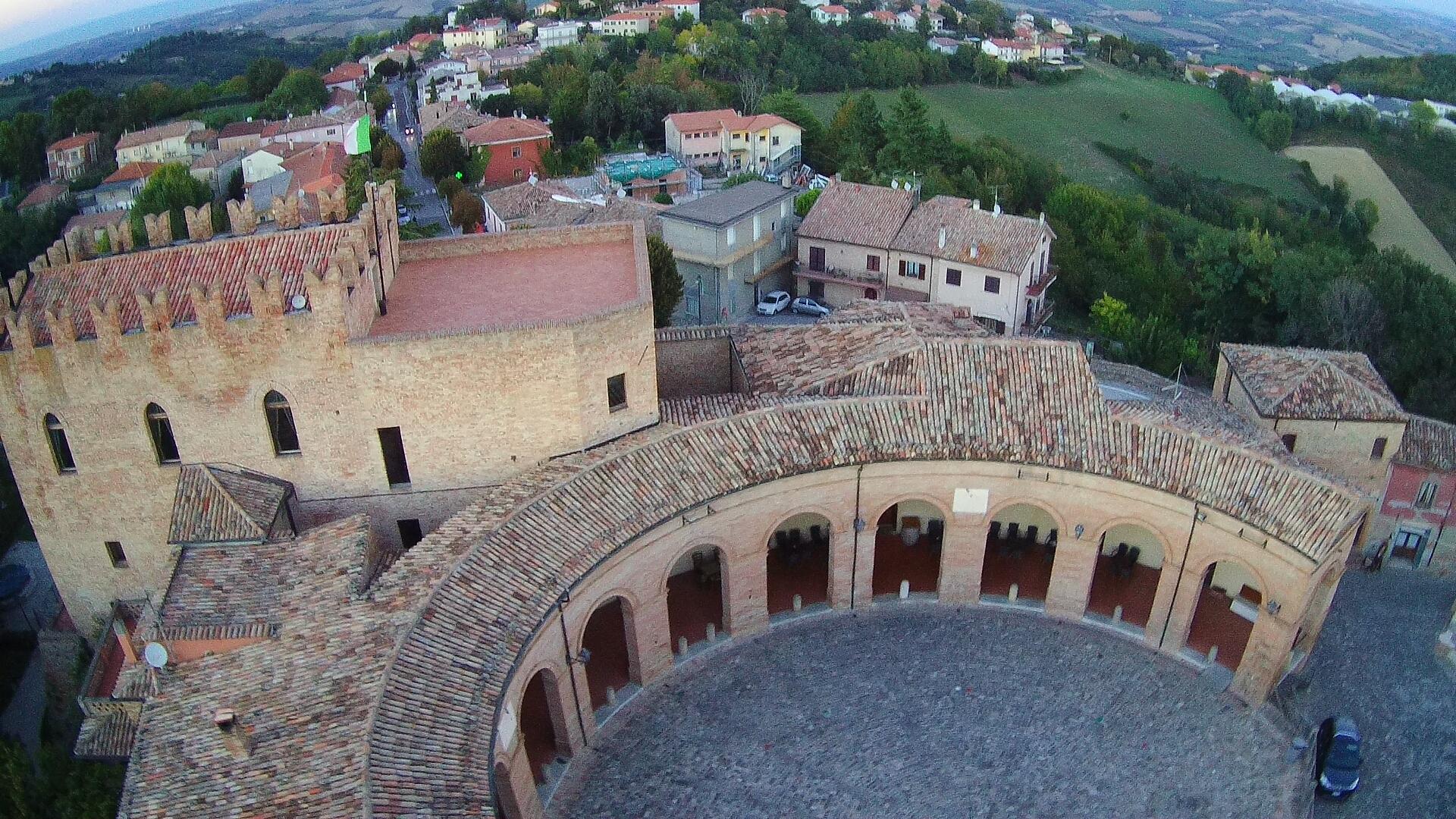
A short distance away lies the village of Verucchio, dominated by the Malatesta Fortress, one of the most picturesque fortified towns in the valley. The historic centre features narrow streets, panoramic terraces and artefacts linked to the Malatesta family, whilst the Civic Archaeological Museum displays finds from the Villanovan necropolises that have made Verucchio one of the most important archaeological sites in Romagna.
In Villa Verucchio, the Franciscan complex of Santa Croce is also well worth a visit; it is best known for its monumental cypress, traditionally associated with St Francis. From here, you can continue on to San Leo, Torriana, Montebello and the other villages of the Valmarecchia, creating an itinerary that combines castles, art, nature and local specialities.
Those who enjoy food and wine tourism can also combine their visit with a tasting of local wines, whilst lovers of scenery and photography will find numerous vantage points along the valley’s roads, offering views of the hills and the Rimini plain.
Villa Amalia is not just a historic residence, and Gea della Garisenda is not just the singer of Tripoli, a beautiful land of love. Together, they tell a much broader story, one of artistic emancipation, fame, scandal, romantic relationships and a return to one’s roots.
The young Alessandrina Drudi, who was helped by the people of her village to study music, became one of the best-known performers of her time. After performing in theatres across Italy and establishing a persona that captivated both the public and intellectuals, she chose the tranquillity of the Valmarecchia. Here, he transformed a country villa into a place of culture and conviviality, leaving a mark that is still recognisable in the estate’s identity.
To discover this story is to look Villa Verucchio through different eyes. Behind the vineyards, country lanes and the hills leading up to the Apennines lies the memory of a diva who captivated the audiences of the Belle Époque and who, at the end of her career, found in Romagna the very place in which to preserve the music, her loved ones and the memories of an extraordinary life.