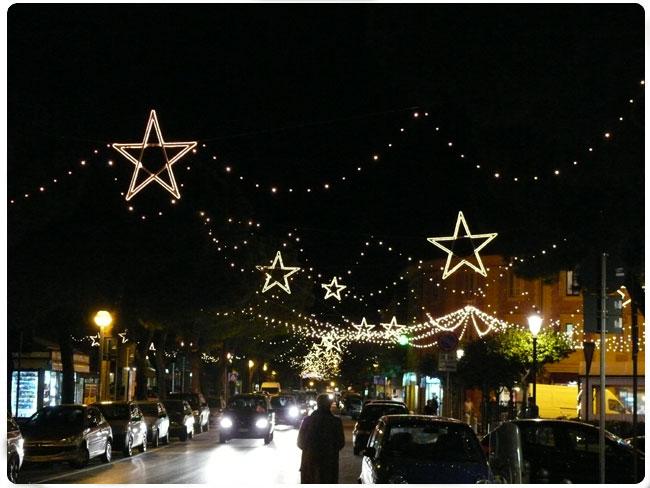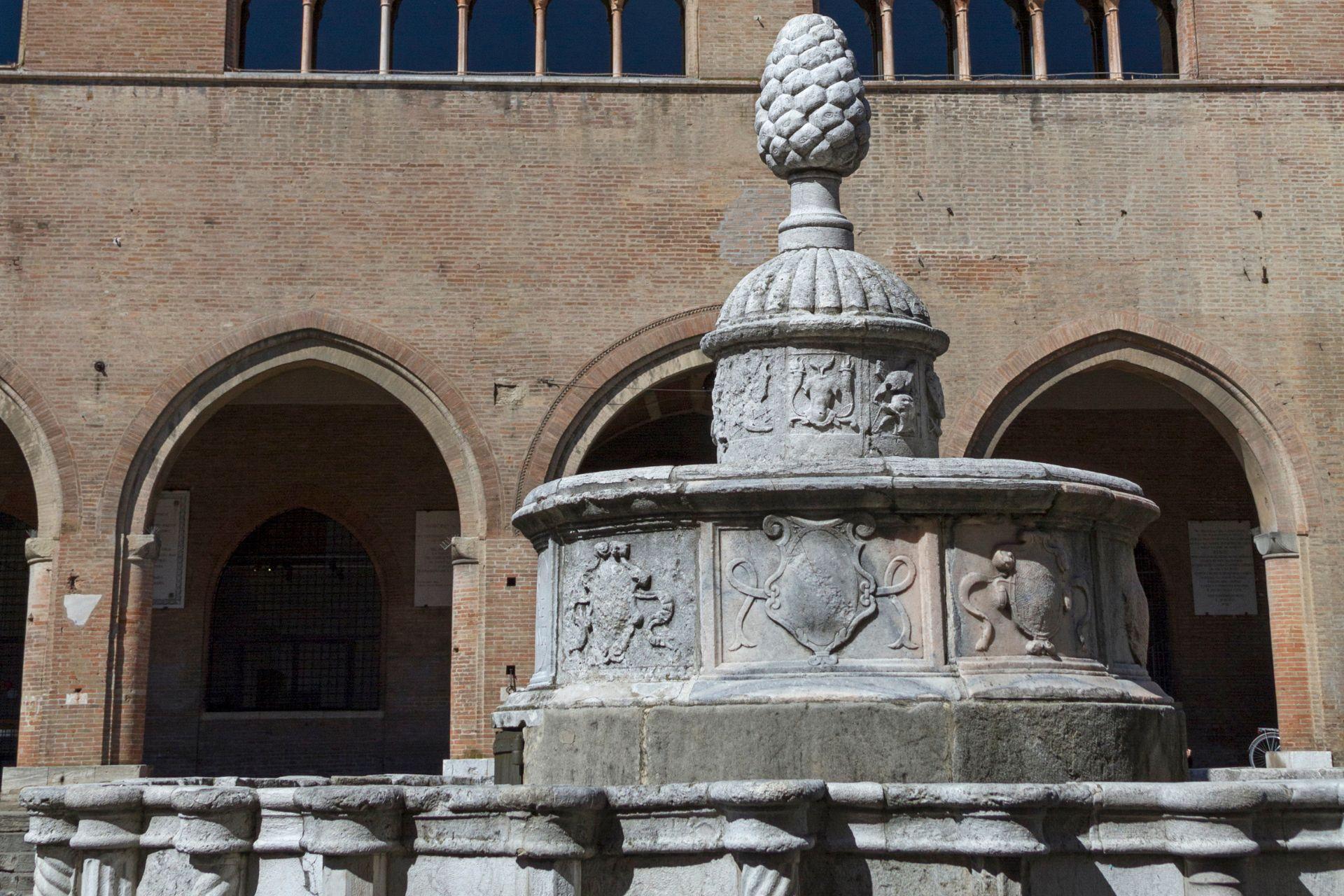
In the heart of Lower Romagna, halfway between Ravenna and Bologna, lies Lugo, a town steeped in charm and tradition. With a population of over 32,000, it covers an area of 117 km² and is now a vital hub for the economic, cultural and social life of eastern Romagna. Its strategic location and extraordinary historical heritage make it an ideal destination for those seeking a leisurely and evocative holiday experience.
The region and the climate
Lugo is situated between the Santerno and Senio rivers, in an area that was once marshy but which, thanks to centuries of land reclamation, has become a shining example of harmony between humankind and nature. The landscape is now dominated by cultivated fields, orderly canals and straight roads, a legacy of the Roman centuriation system. The climate is temperate subcontinental: cold, damp winters; hot, muggy summers; and frequent autumn mists that envelop the area in a unique atmosphere.
Ancient origins and the name
The name ‘Lugo’ comes from Latin lucus, meaning ‘sacred grove’. The area has been inhabited since prehistoric times, first by Neolithic and Celtic peoples, and later by the Romans. The Romans allocated these lands to veterans and organised them according to the typical centuriation grid. Lugo, however, did not originate as a town in Roman times, but only took on an urban form in the Middle Ages.
The Middle Ages and the Age of the Este family
In the Middle Ages, Lugo developed around a castrum (fortification) first mentioned in 1037. After centuries of conflict between the Empire, the Papacy and local lords, in 1437 it came definitively under the rule of the Este family of Ferrara. From that moment on, it became an important administrative centre of the Este-ruled Romagna. The Este family left a lasting mark: they built the ‘via nova’, promoted trade and protected the large Jewish community, which contributed significantly to the town’s cultural life.
An exceptional architectural heritage
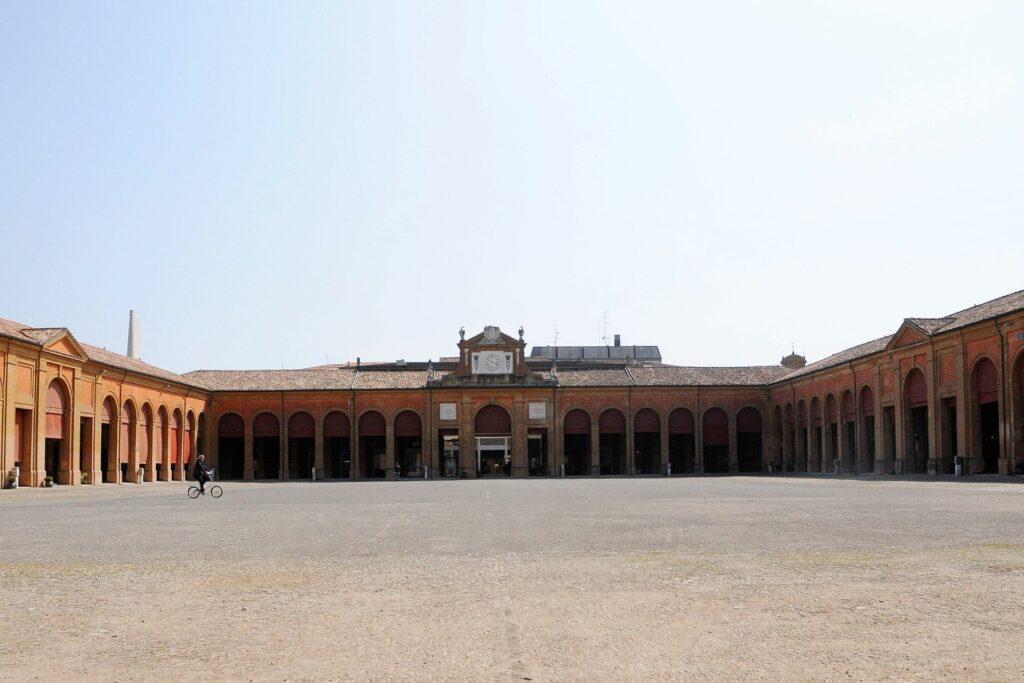
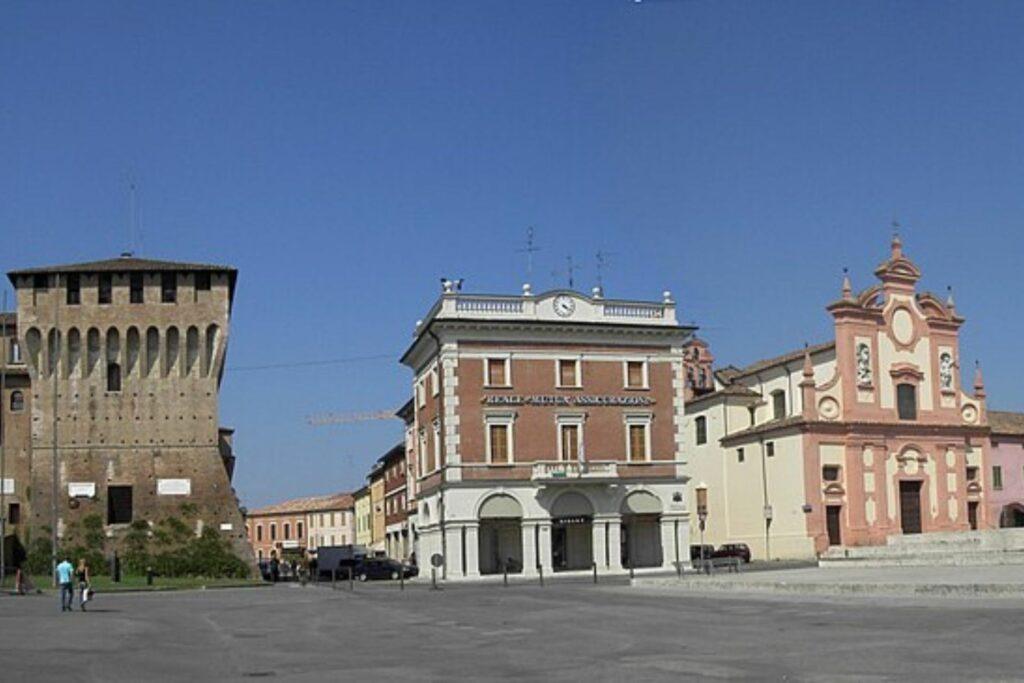
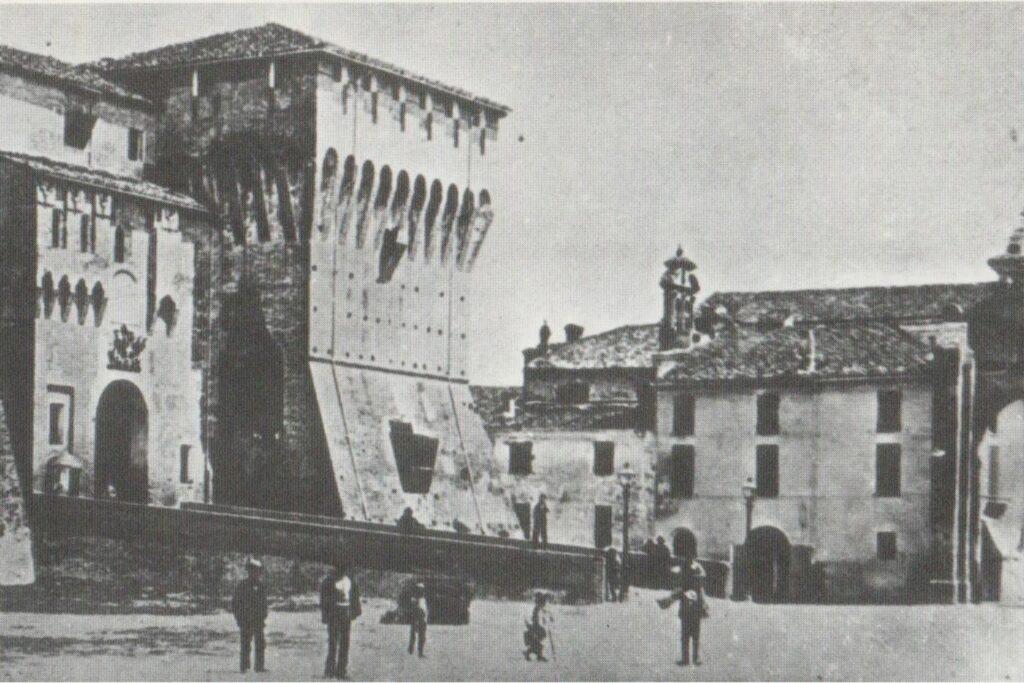
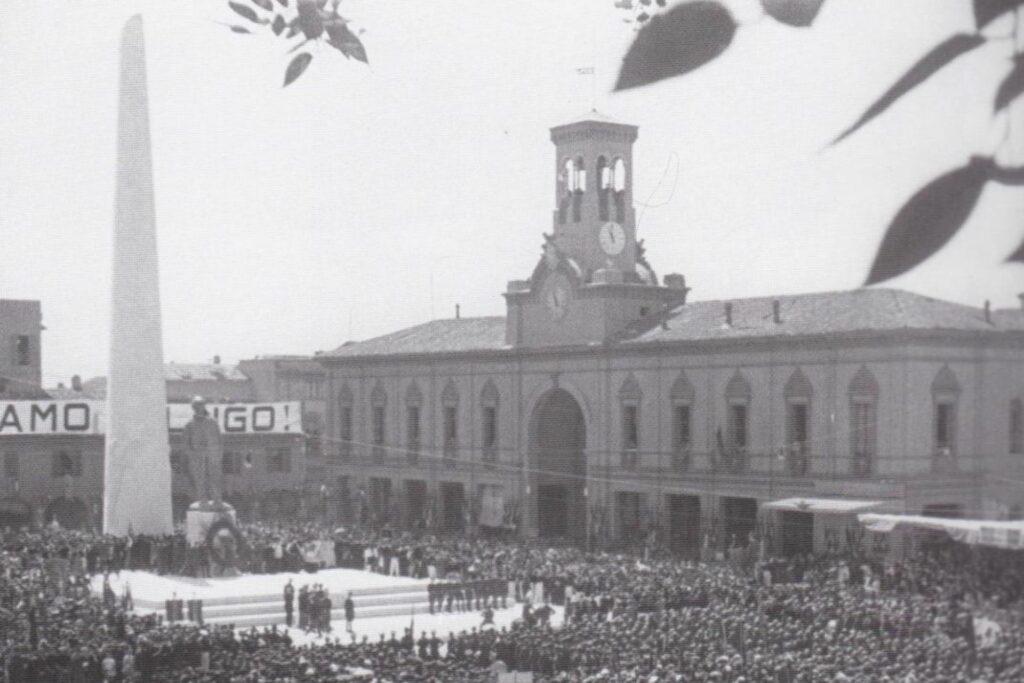
Among the city’s most iconic buildings is the majestic Rocca Estense, the town hall, and the Pavaglione, an elegant 18th-century four-sided portico originally used for the silk cocoon trade, now a venue for events, markets and gatherings. The Rossini Theatre, built in the 18th century, is one of the oldest theatres in Romagna and still hosts a rich cultural programme today.
Francesco Baracca: the hero of the skies
Lugo is also the birthplace of Francesco Baracca, an ace of the Italian Air Force during the First World War. A museum is dedicated to him, housing his aeroplane, uniforms, photographs and the famous ‘prancing horse’ that inspired Enzo Ferrari to create the symbol for his racing team.
The Jewish ghetto and the historic community
As early as the 13th century, Lugo was home to a thriving Jewish community. With the establishment of the ghetto in the 17th century, the Jews were confined to what is now Corso Matteotti. The synagogue, which is no longer in use, can still be seen today and stands as one of the most significant reminders of this important chapter in the town’s history. Lugo was one of three centres in the former Duchy of Ferrara where Jews were able to continue living even under the control of the Papal States.
The city through the centuries: from uprisings to wars and renaissances
Over the centuries, Lugo experienced episodes of rebellion, such as the resistance against Napoleon’s troops in 1796, for which it paid a heavy price in the form of looting. In the 19th century, it became a hub for Risorgimento and socialist ideas: cooperatives, social housing and the wealthiest Mutual Aid Society in Romagna were established there.
During the Second World War, Lugo was the scene of fierce fighting along the Senio River front. It was liberated in April 1945, thanks in part to the contribution of Indian troops serving in the British Army. For its role in the Resistance, the town was awarded the Bronze Medal for Military Valour.
A vibrant city, with its markets and traditions
The Wednesday market It is one of the oldest and busiest in Emilia-Romagna, the beating heart of city life. As well as being a centre for agricultural trade, Lugo is also home to theTondo Racecourse, which opened in 1869 and is still in operation today.
Among the culinary specialities on offer, you can enjoy traditional Romagna dishes such as cappelletti, piadina, local cold cuts and local wines such as Sangiovese and Albana.
Events and culture
Lugo hosts numerous cultural events and historical re-enactments: concerts, theatre festivals, craft markets and sporting events bring the town to life throughout the year. Among the best known is the Biennial Fair, which has its roots in the 18th century, and the Lugo Vintage Festival, aimed at lovers of fashion and vintage items.
For visitors
- Museums and monuments: Baracca Museum, Rocca Estense, Rossini Theatre, Jewish Ghetto.
- Nature trails: cycle tourism through the hamlets and along the canals of the area.
- Gastronomy: traditional trattorias, farmers’ markets and tastings.
- Hospitality: hotels in the historic centre, farm stays nestled in the countryside, cosy B&Bs.
How to get there
Lugo is easily accessible by car via the SS16 Adriatica or the A14 motorway (Imola or Faenza exit). The town is also served by a railway station on the Bologna–Ravenna line, with frequent regional trains. The cycle paths make it easy to explore the area by bike too.
Recognition and identity
In 1817, Pope Pius VII conferred upon Lugo the title of city. In 1996 and 2012, the Council of Europe awarded it the Flag and the Plaque of Honour for its contribution to European identity. The coat of arms and banner have recently been updated to reflect the prestige and history of the community of Lugo.
Conclusion
Lugo is a town to be experienced at a leisurely pace and with a sense of curiosity, where every street tells a story, every building preserves a fragment of the past, and every tradition is brought to life in the present. It is the perfect place for those seeking an authentic Romagna, rich in memories, culture and beauty.