 Situated in the Marano river valley, Coriano appears to be a town ‘nestled’ against the hillside; the landscape offers views of olive groves, vineyards and wheat fields. Olive oil and Sangiovese are the main agricultural products of the municipality of Coriano, and these are showcased at two national trade fairs.
Coriano, which was half-destroyed during the Second World War, was rebuilt by the very citizens who remained there. Archaeological finds in the area have shown that people lived there in prehistoric times, but it was the Romans who established Coriano as a colony, which later became a village in the Middle Ages.
In 1356, Villa Corliani (as the village was then known) came under the rule of the Malatesta family, a situation that has continued to the present day, and it is now the second-largest town in the entire province of Rimini.
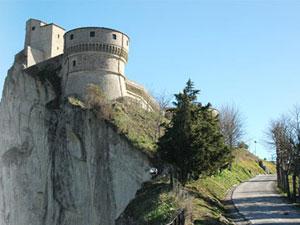
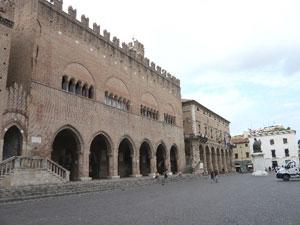
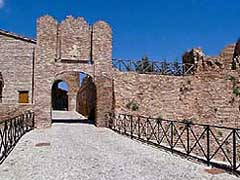
Places worth visiting include the Municipal Theatre (originally built as an administrative headquarters), the Battarra Municipal Library, the Church of Santa Maria Assunta (restored after the Second World War, featuring a 47-metre-high tower), the Elisabettiano Museum (which displays embroidery, lace and trimmings made by the schoolgirls who lived in the old boarding house adjacent to the museum), and the Malatesta Castle (or what remains of it, as the passage of time and wars have largely destroyed it).