There are recipes that are born out of necessity and, over time, become true symbols of a region’s identity: Sabadone, the traditional dessert from Romagna that tells the story of the region
The Sabadone It falls into this very category. Less well-known than piadina, cappelletti or the Romagna ciambella, it is one of the oldest and most authentic desserts of the Romagna peasant tradition.
Made with simple, wholesome ingredients, it captures the flavour of the saba, the cooked grape must that for centuries served as a precious natural sweetener in the Romagna countryside, when sugar was still a luxury reserved for the few. Today, Sabadone continues to take centre stage at village festivals, food fairs and artisan bakeries, offering visitors the chance to savour a recipe that tells the story of the history, culture and culinary traditions of the most authentic Romagna.
If you’re planning a holiday in Rimini, Ravenna, Cesena, Faenza Or, in the Romagna hinterland, spending a few hours discovering the local flavours means getting to know the area from a completely different perspective.
What is Sabadone?
The Sabadone It is a traditional dessert from the Romagna region, consisting of a thin sheet of pastry enclosing a soft, fragrant filling made with simple ingredients, the most notable of which is the saba, the cooked grape must that gives it its characteristic amber colour and a sweet flavour with subtle caramel notes.
Its shape is reminiscent of a large ravioli or a sweet tortello. After being carefully sealed along the edges, it is traditionally baked in the oven or on a griddle, although some families still make the fried version. The filling varies slightly from region to region and from family to family, but generally includes:
- boiled chestnuts or chestnut flour;
- quince or plum jam;
- saba;
- breadcrumbs;
- lemon zest;
- walnuts;
- almonds;
- sometimes cocoa, coffee, honey or liqueur.
This variety means that every Sabadone is different, transforming a traditional recipe into a heritage passed down from generation to generation.
The peasant origins of Sabadone
To truly understand this dessert, you need to imagine rural Romagna as it was over two centuries ago. Farming families lived in tune with the rhythm of the seasons and learnt not to waste anything. Every available ingredient became precious and was transformed with creativity.
La saba, made by slowly boiling freshly pressed grape must until it had reduced by more than two-thirds, was one of the few natural sweeteners available. It was used to make desserts, preserves, biscuits and even as an accompaniment to cheese.
Sabadone originated precisely in this context: a rich yet inexpensive dessert, designed to make the most of what the countryside had to offer in autumn. Chestnuts, walnuts, quinces and grape must were all readily available in the Romagna countryside and, when combined, created a nourishing dish, perfect for getting through the winter. For many years, Sabadone was mainly prepared during the grape harvest, at the time when saba was being produced, or to mark the most important festivals.
The star ingredient: saba
If there is one thing that makes this dessert unique, it is undoubtedly the saba. It is made from freshly pressed grape must, which is simmered slowly for many hours until it becomes a thick, glossy and wonderfully fragrant syrup.
The long cooking process naturally concentrates the sugars in the grapes without adding any other ingredients. The result is a product with an intense flavour, with notes reminiscent of:
- honey;
- caramel;
- dried figs;
- raisins;
- cooked fruit.
Even today, many farms in Romagna continue to produce saba using traditional methods, keeping alive an ancient craft that represents one of the region’s most precious culinary heritages. It is no coincidence that this ingredient is also used to accompany mature cheeses, artisan ice cream, yoghurt, tarts and biscuits.
A recipe that varies from country to country
One of the most fascinating aspects of Sabadone is that there is no single recipe. Every family has its own version, passed down orally from grandmothers and great-grandmothers. It is precisely this variety that reflects the richness of Romagna’s cuisine, where each region has developed slightly different interpretations of the same dishes.
In the Ravenna area, for example, it is common to find a richer filling made with chestnuts and saba, whilst in other areas homemade quinces or plum jams are more commonly used. Some add unsweetened cocoa, others a dash of coffee, whilst others add orange zest, mulled wine or a dash of liqueur. There are even versions containing dried figs, raisins and pine nuts.
The baking method also varies: whilst the oven remains the most common choice today, in the past many families used to bake Sabadoni on a stone or a baking slab, resulting in a different texture and a subtle smoky flavour. These subtle differences make every bite a unique experience, one that tells the story of the family who makes it.
Where to try Sabadone in Romagna
Although it is not a dessert available all year round in patisseries, Sabadone is still readily available at events dedicated to traditional cuisine. One of the most iconic places is Massa Lombarda, in the province of Ravenna, where the historic event takes place every autumn Sabadone Festival, an event that attracts thousands of visitors.
During the festival, visitors can sample various versions of the recipe, prepared by local associations and families in the area in accordance with time-honoured traditions. Farm stays, historic bakeries and farms in Romagna also offer Sabadone from time to time, particularly during the autumn months and at events dedicated to local specialities.
Those who enjoy food and wine tourism can include it in an itinerary that includes:
- wineries in Romagna;
- oil mills;
- farmers’ markets;
- farms;
- historic villages;
- festivals celebrating the grape harvest.
The Sabadone Festival in Massa Lombarda: a celebration of flavour and tradition
If there is one place where the Sabadone continues to be celebrated as a true symbol of Romagna’s identity, it is undoubtedly Massa Lombarda, in the heart of the province of Ravenna. This is where the traditional Sabadone Festival, an event that attracts residents, visitors and food lovers keen to rediscover one of the most characteristic desserts of the local cuisine.
The event helps to preserve and promote a recipe deeply rooted in the rural culture of Romagna. Thanks to the efforts of local associations, volunteers and those who still preserve these ancient family recipes, the Sabadone continues to be made using traditional methods, with variations in the filling, the pastry and the cooking method that make each version slightly different from the others.
During the event, Massa Lombarda comes alive with food stalls, markets, shows and activities celebrating the local culture. The real star of the show is, of course, the Sabadone, served in its traditional forms and often accompanied by other typical products from the Romagna region, local wines, artisan preserves and specialities prepared by local producers.
Taking part in the Sagra del Sabadone means enjoying an experience that goes beyond simply tasting the food. It is an opportunity to discover a lesser-known side of Romagna, made up of local communities, recipes handed down through the generations and small villages that retain a strong connection to their identity. For those staying on the Riviera, a visit can also be a pleasant excursion into the Ravenna hinterland, combining visits to local wineries, farms and villages in the area.
Before organising your visit, it is always advisable to check the dates and the latest programme for the event, as these may change from year to year.
Sabadone and the culture of Romagna
In Romagna, food is much more than just a social occasion. Every recipe tells a piece of history, speaking of work in the fields, grape harvests, chestnut gathering, and families gathered round the kitchen table. The Sabadone perfectly embodies this spirit.
Making them takes time, patience and teamwork. In the past, it was common for the whole family to get involved: one person would roll out the pastry, another would prepare the filling, whilst the children helped to seal the edges of the pastries. These traditions, repeated over generations, have transformed a simple recipe into a true part of our cultural heritage.
Tasting a Sabadone today is like taking a journey down memory lane to the most authentic Romagna, far removed from the hectic pace of mass tourism and rooted in the values of hospitality, simplicity and conviviality.
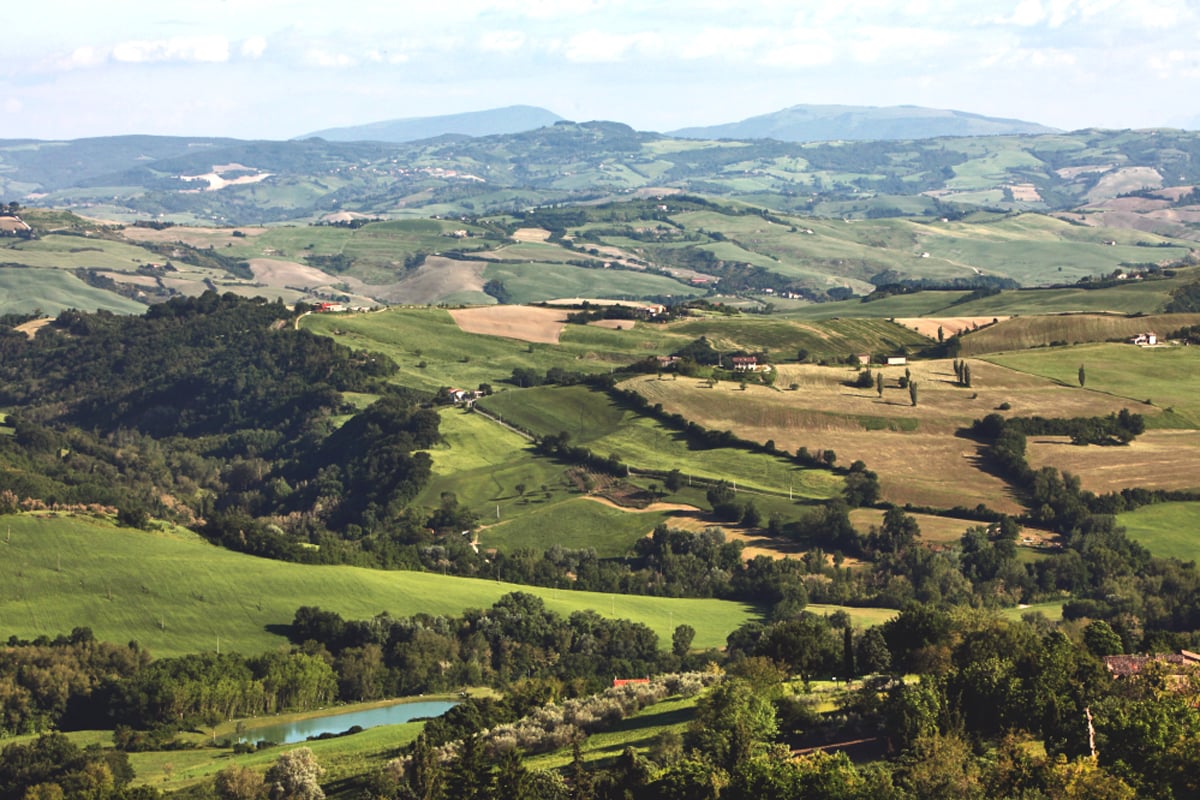
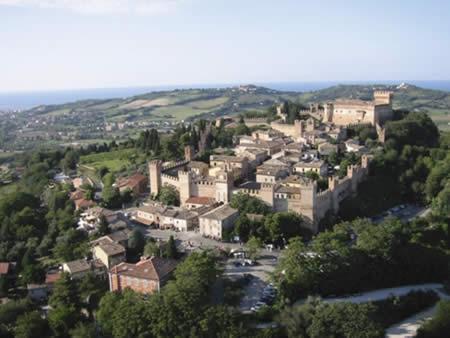
Those who choose Romagna for their holidays often think straight away of the beaches, the sea and the Riviera. In reality, spending a day exploring the hinterland offers a completely different experience. Amidst medieval villages, vineyards, farms and small artisan bakeries, it is still possible to meet producers who preserve recipes handed down through the generations.
Visiting a local festival, popping into a craft workshop or taking part in a tasting session is an authentic way to experience the culture of Romagna. The Sabadone thus becomes not just a dessert to savour, but also a symbol of an authentic Romagna that continues to celebrate its culinary heritage.
The traditional recipe for Sabadone from Romagna
As is the case with many traditional country dishes, there is no single recipe for Sabadone. Every family in Romagna has its own version, passed down from generation to generation, with slight variations in the dough, the filling or the cooking method.
Some people prefer to bake it in the oven, others to cook it on a griddle, whilst others, following the oldest tradition, prepare it strictly by frying. The following is one of the most popular traditional recipes, perfect for anyone who wants to bring the authentic flavour of Romagna to their table.
Ingredients (serves about 6):
For the pasta
- 500 g of flour
- 100 g of sugar
- 4 eggs
- a few spoonfuls of oil
- ½ sachet of baking powder
- grated zest of 1 untreated lemon
For the filling
- boiled dried chestnuts
- Romagna-style mustard or Savor
- grated zest of 1 untreated lemon
- grated zest of 1 untreated orange
For cooking and finishing
- frying oil
- 1 glass of saba
- chestnut cooking liquid
Preparing the filling
Preparation begins the day before. The dried chestnuts must be left to soak overnight, then drained, stripped of any remaining skins and boiled until soft. Once cooked, mash them with a potato masher and transfer them to a bowl. Add the Mostarda Romagnola (or ‘savor’), the grated lemon zest and the grated orange zest. Mix thoroughly until the mixture is smooth, soft but firm, and slightly thicker than jam.
Preparing the pasta
Pour the flour onto a work surface and add the sugar, eggs, a little oil, the baking powder and the grated lemon zest. Knead until you have a smooth, elastic dough, then roll it out with a rolling pin until it is fairly thin. Cut the pastry into rectangles measuring approximately 10–15 centimetres per side. Place a teaspoon of filling in the centre of each rectangle, fold the pastry over itself and seal the edges carefully with your fingers or the prongs of a fork, just as you would with a large ravioli.
Cooking
Fry the Sabadoni in plenty of hot oil until they are evenly golden brown. Drain them on kitchen paper and leave them to rest. According to Romagna tradition, they taste even better the following day, which is why it is advisable to leave them to rest overnight. The next day, mix the saba with some of the stock used to cook the chestnuts, to create a fragrant, slightly runny syrup.
Lightly brush or gently drizzle the Sabadoni with this mixture before serving. It is the saba itself that gives them their characteristic amber colour, glossy surface and that intense flavour which makes this traditional Romagna dessert so special.
Why it’s worth trying at least once
In a culinary landscape dominated by increasingly standardised products, Sabadone retains a rare charm. Every dish is unique, because behind every recipe lie skilled hands, family memories and traditions handed down through the generations.
Tasting it means supporting local producers, promoting small artisan bakeries and helping to preserve a gastronomic heritage that represents one of the most authentic expressions of Romagna’s culture. For visitors to Romagna, it is an experience that brings the region to life through authentic flavours, simple ingredients and a history stretching back centuries.
Romagna is a region that surprises visitors not only with its coastline and villages, but also with a culinary tradition rich in traditional recipes. Sabadone is one of the iconic desserts of this rural culture: born of the ingenuity of rural families, it is still prepared today according to customs handed down from generation to generation.
During your stay, do take the time to explore the countryside, attend a local festival or pop into an artisan bakery. Discovering Sabadone means experiencing the authentic Romagna – a region characterised by hospitality, traditions and flavours that tell the story of the area far better than any tourist guide ever could.