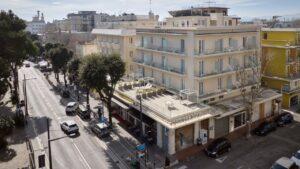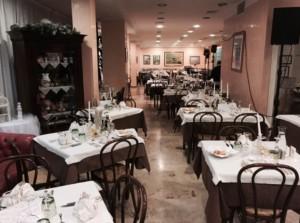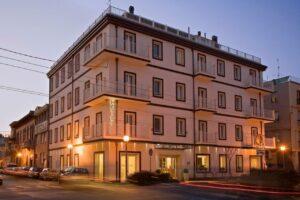
 Rimini and its hotels are committed to meeting all hospitality needs and, for this reason – and thanks in part to their adherence to relevant national legislation, the aim is to create a welcoming environment for tourists differently abled by reducing architectural barriers.
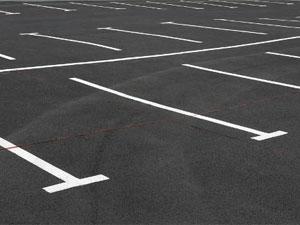
The 70% from the hotels on the Romagna Riviera It has overcome barriers by offering services tailored to the circumstances. Hotels that are free of architectural barriers have car parks adjacent to the entrance; these car parks are never situated on gravel or grass, to facilitate the movement of guests with disabilities.
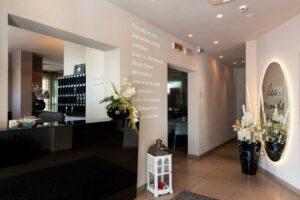
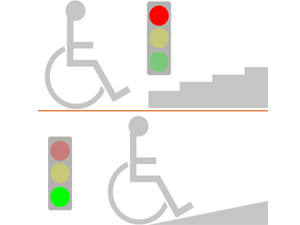
From the car park along the paths without obstacles Upon reaching the entrance, hotels with staircases leading to the lobby are fitted with ramps, at least 90 cm wide, with gentle gradients to ensure easy access. There are no steps in the lobby; the doors are all wide and easy to open, and the reception desks are at a lower height in so as to foster good relations between staff and guests in wheelchairs, you won’t find any carpet, let alone rugs, as these could cause problems for those who have difficulty walking or are unable to walk.
Wide corridors to make it easier to manoeuvre both wheelchairs and pushchairs. The stairs are spacious and wide enough to allow people to pass each other comfortably whether going up or down; the balustrades with handrails are all one metre high (as required by law) and the steps are no more than 17 cm high.
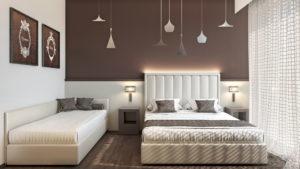
Hotel lifts, with stops at every floor situated on spacious landings to facilitate entry and exit, have cabins at least 140×110 deep and wide, with a door 80 wide (as required by law). Finally, the rooms, generally situated on the ground floor or in any case close to the lift, are large and spacious, with sufficient space around the bed and unobstructed access to the balconies, free of internal steps, with light switches positioned at a height of no more than one metre, and without rugs or carpets.
The bathrooms have The doors open outwards; the bathrooms are spacious and fitted with grab rails in the shower and grab bars next to the toilet and washbasins, as well as emergency call buttons both in the shower and near the sanitary fixtures. Book hotels in Rimini, Riccione, Cattolica, Igea Marina, Bellaria, Cesenatico, Milano Marittima and along the Adriatic Coast of Romagna via the Speciale Hotel portal.
LThe facilities and features of hotels for people with disabilities include:
Accessibility: Hotels catering for people with disabilities are equipped with accessible facilities to ensure that guests with disabilities can move around the premises without difficulty. This includes wheelchair ramps, accessible lifts, accessible bathrooms and accessible communal areas.
Accessible rooms: Hotel rooms for guests with disabilities are specially designed to ensure the comfort and safety of guests with disabilities. These rooms may feature wider doorways, accessible bathrooms with grab rails, wheelchair-accessible showers and other design features that make the stay easier for guests with disabilities.
Tactile and visual signage: Hotels designed for people with disabilities may feature tactile and visual signage to guide guests with visual or hearing impairments. This signage can be used to indicate exits, room numbers, lift buttons and other points of reference within the hotel.
Support services: Hotels catering for people with disabilities can offer a range of support services to ensure the wellbeing of guests with disabilities. These may include mobility assistance, the hire of medical or assistive equipment, such as wheelchairs or walking frames, and the coordination of accessible transport services.
Staff training: Staff at hotels catering for people with disabilities should be properly trained to serve guests with disabilities. This includes being familiar with safety regulations and accessibility standards, being sensitive to the needs of people with different types of disabilities, and having appropriate communication skills.
Menus and catering services tailored to dietary requirements: Hotels catering for people with disabilities can offer a wide range of food and drink options for guests with disabilities who have specific dietary requirements. This may include vegetarian, gluten-free and lactose-free options, or other specific dietary requirements.
Accessible information: Hotels catering for people with disabilities should provide accessible information on the additional services they offer, such as leisure facilities, accessible public transport in the vicinity and accessible tourist attractions. This information can be provided in various formats, such as large print, Braille or accessible digital formats.
These are just some of the most common features found in hotels catering for people with disabilities. It is important to note that the needs of guests with disabilities can vary, and that every hotel should strive to ensure a comfortable and accessible experience for all its guests.