Faenza (AFI: /faˈɛnʦa/, Fẽ́za in the local dialect Romagnolo) is a Italian municipality located in the Province of Ravenna, in Emilia-Romagna, with a population of 58,764 inhabitants. The city is internationally renowned for its production of artistic ceramics, so much so that the term “faience” stems precisely from the renown of its majolica workshops.
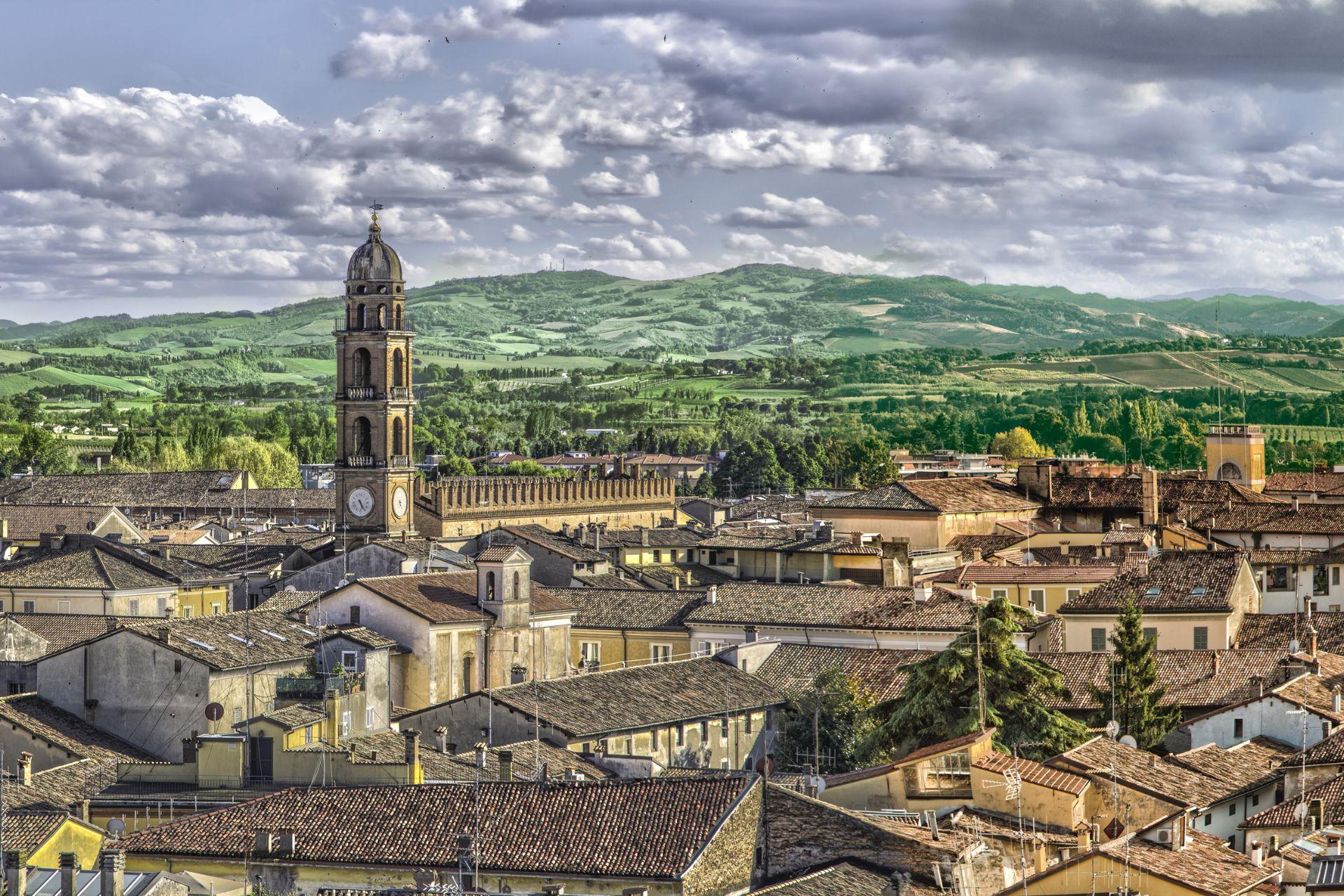
Founded in Roman era, Faenza it enjoyed a period of great splendour architectural e artistic under the rule of the Manfredi, from Renaissance at Baroque. Between the XVIII and the 19th century, thanks to the lively activity cultural e artistic, it established itself as one of the main centres of the Neoclassicism at Italy and in Europe.
Situated to the west of the heart of the Romagna, along the Via Emilia between Imola e Forlì and at the foot of the first hills of theFaenza Apennines, Faenza is the capital of theUnion of Romagna Faentina and is home to the bishop’s seat of the Diocese of Faenza-Modigliana.
The History of Faenza
La History of Faenza has roots dating back to the era Roman, although its exact origins are not entirely clear. One of the initial theories relates to the mythology, but the information becomes more reliable following the Roman conquest of the 2nd century BC. Roman rule came to an end in 774, when the territory came under the control of Charlemagne, who sold it to the Church.
During the Middle Ages, Faenza adopted the model municipal, typical of the Northern Italy. At this stage, the family Manfredi It consolidated its power, emerging as one of the city’s most influential dynasties. Faenza was involved in frequent clashes with theEmpire, in particular with Frederick II of Swabia, because of his membership of the Lombard League, and was besieged on numerous occasions.
In 16th century, Faenza came under the rule of papal and subsequently became an important centre of the Italian Neoclassicism. Between the end of 19th century and the start of the 20th century, the city underwent a period of significant development. However, during the World War II, Faenza was heavily bombed before being liberated by the Allies.
Symbols of Faenza
Coat of arms
The official emblem of the municipality of Faenza is the rampant lion, as depicted in the coat of arms described in the decree of recognition dated 5 July 1928, signed by the then head of government Benito Mussolini. The official description reads:
‘Argent, a lion gules, armed, langued and crowned or, holding in its right forepaw a sword in the natural, with a gold hilt, placed cross-barred. The chief is azure, charged with five gold lilies arranged in a band, between a red mantling with six pendants. External ornaments as prescribed by the municipality.”
The coat of arms is first recorded on a 14th-century seal, with the caption “Seal of the Community and People of the City of Favencia”. The Capo d’Angiò, symbol of the faction Guelph, is characterised by five golden lilies, instead of the usual three, and six pendants on the flap, rather than four. The shield is surmounted by the City Crown.
Banner
The municipality’s banner consists of a divided field of white and of blue.
Honours
Faenza has been honoured with prestigious awards for its role in War of Liberation during the World War II. The city has been awarded the War Cross for Military Valour, for the sacrifices made by its people and their contribution to partisan struggle. He is also a member of theNational Institute of the Nastro Azzurro, which brings together those who have been awarded military honours.
Main awards:
- War Cross for Military Valour
Ribbon for the standard uniform - City Title
Ribbon for the standard uniform
Monuments and places of interest
The urban development history of Faenza, like that of many towns in Emilia-Romagna, is characterised by an ongoing process of regeneration of its Roman building original. Despite the damage it has suffered over the course of history, the city’s geometric layout remains visible. The urban fabric, deeply scarred by the destruction of war, retains significant traces of Renaissance architecture e Baroque, particularly in the historic centre. However, the city has a predominantly 18th- and 19th-century Neoclassical, the result of the major architectural transformations that took place between the 18th and 19th centuries. Leading architects such as Giuseppe Pistocchi, Giovanni Antonio Antolini e Pietro Tomba, making Faenza a point of reference for the European Neoclassicism.
Religious architecture
Bell Tower of Santa Maria Vecchia
The oldest building in Faenza that has survived almost intact is the bell tower of Santa Maria Vecchia, built between IX and the 10th century. The original church, dating from 6th century, it was subsequently rebuilt.
Crypt of the Church of St Hippolytus
Another important medieval monument is the crypt of the Church of San Ippolito, which dates back to the early centuries after the year 1000.
Church of the Commenda
La Church of the Commenda, built around the 1100, is the oldest church in the city to have survived virtually intact.
The Duomo (Cathedral of St Peter the Apostle)
The main Catholic place of worship in Faenza is the Cathedral of St Peter the Apostle, also known as Cathedral. Designed by the architect Giuliano of Maiano, its construction began in 1474 and were to continue until 1515, whilst leaving the façade unfinished.
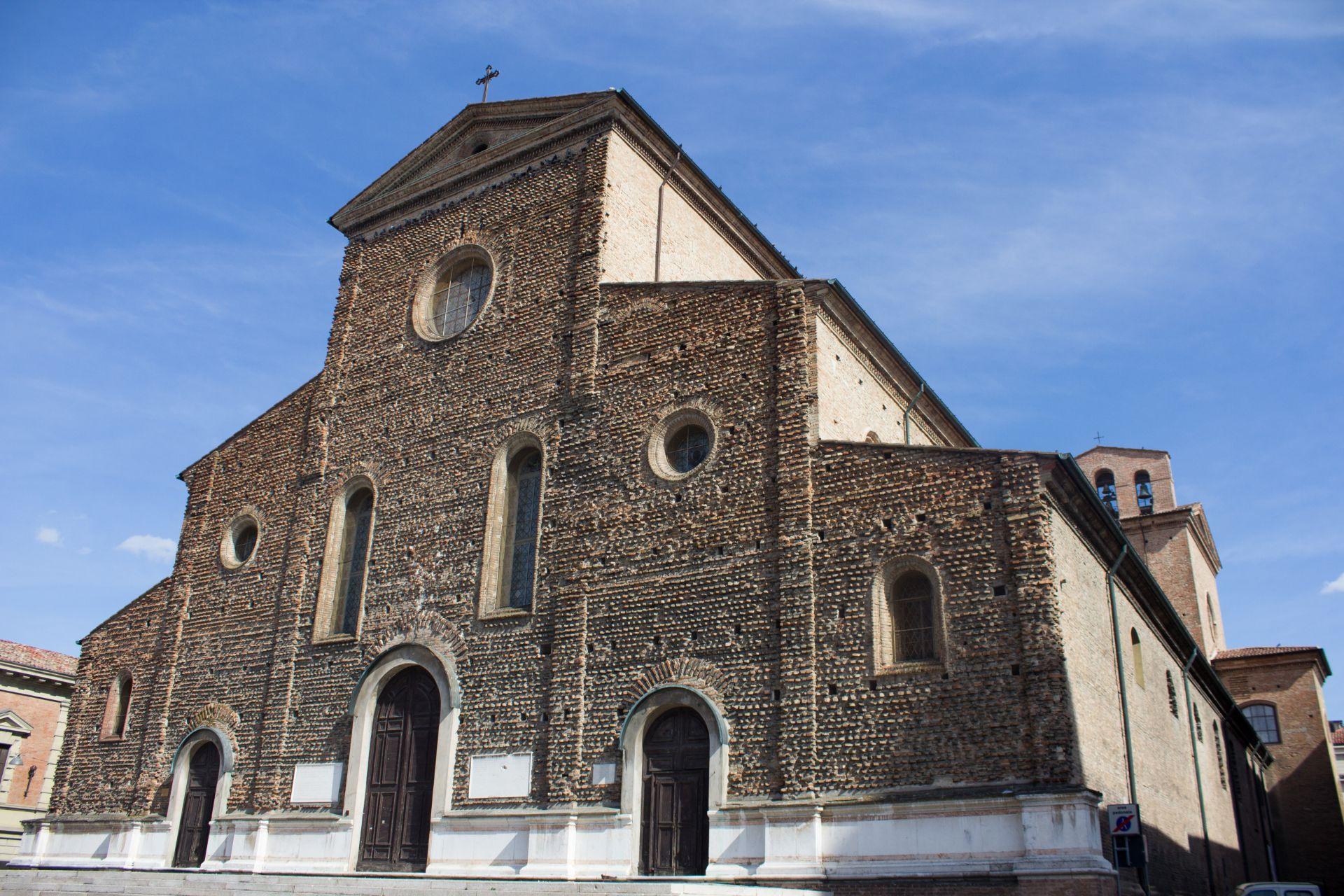
The consecration of St Peter’s Basilica took place in 1581. The interior of the cathedral is a fine example of Renaissance architecture.
Other notable religious buildings
Listed below are some of the main religious buildings within the municipal area:
- Church of St Francis
- Church of St Anthony
- Church of the Santissima Annunziata
- Shrine of the Blessed Virgin of Graces
- Church of the Servants of Mary
Borgo Durbecco
Borgo Durbecco is the historical expansion of the town of Faenza, situated to the east of the city walls, beyond the the River Lamone. The earliest settlements in this area date back to the11th century, making the village a place of significant historical and cultural interest.
Among the most significant monuments in Borgo Durbecco, the following stand out:
- Church of the Santissima Annunziata
- Church of Sant’Antonino
- Church of the Commenda
- Key Holder: built in 16th century, is the only one remaining of the ancient city gates. The gate takes its name from the symbolic presentation of the keys to the city to Papa Pius IX at 1857.
The Borgo Durbecco is an important part of Faenza’s history and identity, with its monuments bearing witness to the town’s religious and urban vitality over the centuries.
Archaeological sites
Roman Faenza
Traces of the ancient Roman Faenza They are not directly visible due to the buildings that have completely overlaid them in the centuries since. However, the artefacts unearthed during the archaeological excavations have been recovered, catalogued and preserved. The visitor route taking in the sites and artefacts is organised by the Museums Department of the Union of Romagna Faentina.
Archaeological exhibition at Palazzo Mazzolani
In the courtyard of Mazzolani Palace On display is a selection of mosaic flooring among the most important discovered during the excavations of Roman Faenza[28][29]. These mosaics, of extraordinary refinement, date from a period ranging from I at 6th century AD and bear witness to the existence of large domus decorated with elaborate artistic motifs. The collection of artefacts preserved at Palazzo Mazzolani ranges from prehistory up to and including late antiquity, providing a comprehensive overview of the history of the area.
Natural areas
Parks and gardens in Faenza
Faenza is a town characterised by numerous parks e public gardens, many of which are situated right in the historic centre. Among these, the Bucci Park, a green space covering more than 8 hectares, with its many footpaths, small hills, ponds and streams. The park is home to a wide variety of plant and animal species, which roam freely throughout the area, making it a natural oasis for local residents and visitors alike.
Traditions and folklore
Palio del Niballo
On the fourth Sunday in June, we celebrate the Palio del Niballo, a highly prestigious historical re-enactment for Faenza, which began in 1959 and inspired by Medieval fairground rides from Faenza[41]. The competition involves the city’s five districts in a contest that blends tradition and spectacle. The event is preceded by a series of events such as the Golden Bigorda and the competitions in flags e musicians, making June the “Palio Month”. The Palio del Niballo is part of the FIGS (Italian Federation of Historical Games) and has produced numerous champions, both amongst the flag-wavers that amongst the knights, which are also recognised at national level.
Events related to the Palio
- The Bigorda d’Oro Tournament
Known as the “Youth Palio”, takes place on the Saturday before the second Sunday in June. It is similar in nature to the main Palio, but features younger riders. - Flag-Bearers’ Tournament
On the evening of the third Saturday in June, in Piazza del Popolo, the competitions take place flag-wavers of the five districts, which showcase their skill and spectacular displays. - Nott de bisò
Celebrated on 5 January, is one of the most evocative events associated with the Palio. At 7.00 pm, a large puppet is set up in the centre of the square, the Niballo, depicting the Carthaginian commander Hannibal, defeated by Rome in the Second Punic War. Dressed in the colours of the district that won the previous Palio, the Niballo is set alight at midnight. The spot where its head falls indicates the favourite district for this year’s Palio. During the evening, the districts offer visitors the “Bisò”, a local version of the mulled wine, alongside traditional dishes such as polenta. The first edition took place in 31 December 1964, whilst from the 1969 takes place on 5 January.
March
Between the last weekend in February and the first weekend in March, Faenza celebrates the tradition of the “March fires”, a custom typical of Romagna’s folklore. During this festival, dry branches and pruning waste are burnt to ensure a bountiful harvest for the fields and crops. This ritual harks back to ancient agricultural traditions and keeps the town’s community spirit alive.