Anyone who thinks they know Ravenna You’ll be pleasantly surprised by its extraordinary mosaics alone. The city boasts a history stretching back over two thousand years, featuring emperors, Ostrogothic kings, Byzantine exarchs, saints, poets and artists who have left behind a cultural heritage that is hard to find anywhere else.
As you stroll through the streets of the historic centre, you’ll discover a city that brings to life profoundly different eras. Roman Ravenna, Byzantine Ravenna, the Middle Ages and the nineteenth century still coexist today within just a few square kilometres. Every monument conceals a curious detail, every square harbours a legend, and every mosaic tells a story that goes far beyond its extraordinary artistic value.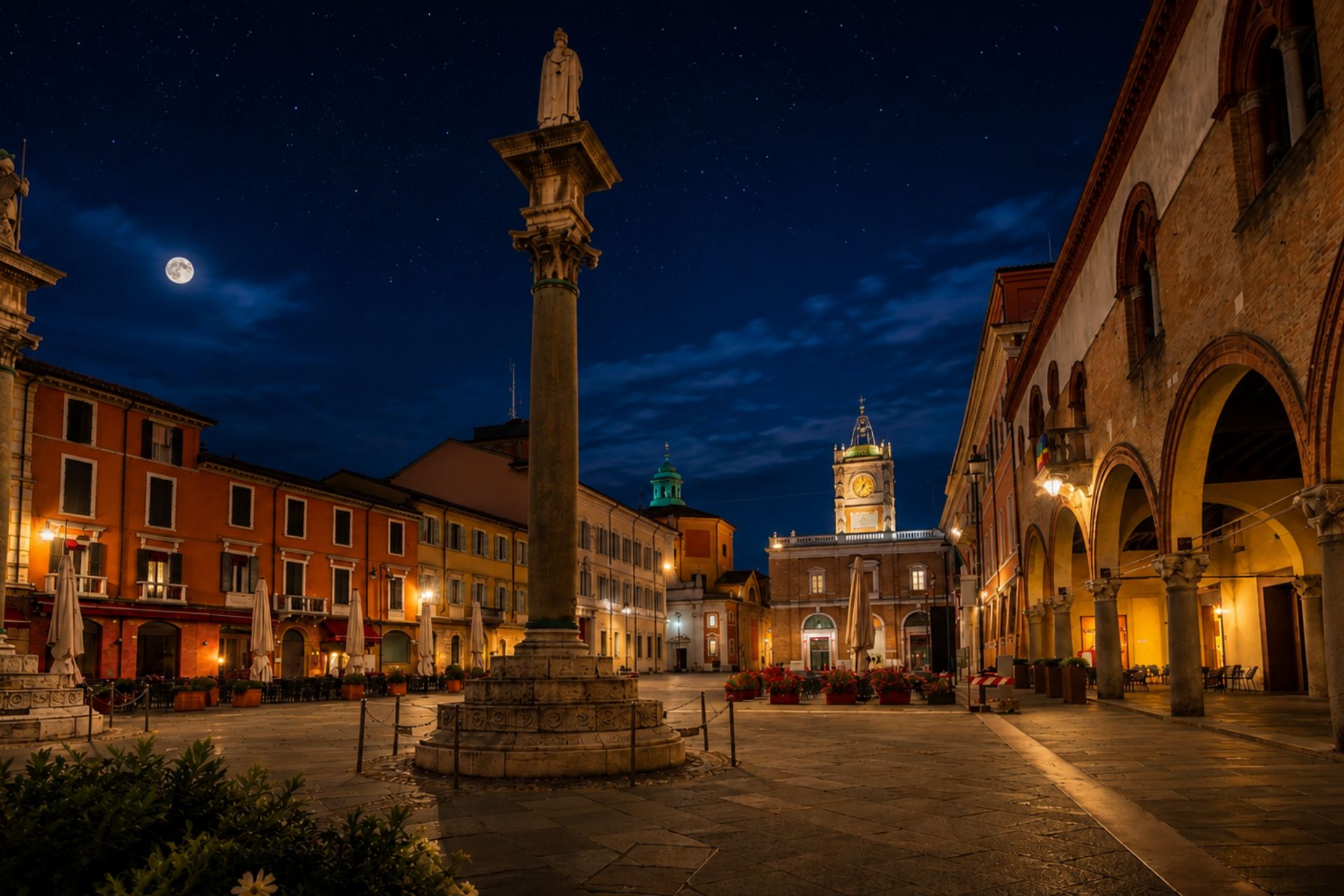
Many visitors focus on the most famous sights without realising that Ravenna harbours unsolved mysteries, popular sayings, literary tales and architectural details that can make a visit all the more fascinating.
Here are fifteen interesting facts about Ravenna that will allow you to see the city of mosaics in a completely new light.
1. Ravenna has been the capital on no fewer than three occasions
Being the capital of a state is in itself a rare privilege. Ravenna can boast an even more remarkable distinction: throughout its history, it has served as a capital on no fewer than three occasions, becoming one of Europe’s most important political centres between the 5th and 8th centuries.
The first turning point came in 402 AD, when the emperor Honorius He decided to move the capital of the Western Roman Empire from Milan to Ravenna. The choice was no accident. The city was surrounded by vast marshy areas, which made it naturally defensible against attack, and it could rely on the nearby port of Classe to maintain swift connections with the rest of the Mediterranean and with Constantinople.
After the fall of the Western Roman Empire, Ravenna did not lose its central role. In the 493 AD the king Theodoric the Great He chose it as the capital of the Ostrogothic Kingdom, ushering in a period of great artistic and architectural development. Monuments such as the Mausoleum of Theodoric and the Basilica of Sant’Apollinare Nuovo still stand today as important reminders of this period.
In 540 AD, finally, Ravenna came under the influence of the Eastern Roman Empire and became the main political centre of Byzantine Italy. It subsequently served as the capital of the Exarchate, playing a key role in relations between East and West for over two centuries.
Walking through the historic centre today, one can see traces of these different eras, which coexist within the same urban fabric and make Ravenna a city that is virtually unique in Europe.
2. Ravenna is home to eight UNESCO World Heritage Sites
Many visitors associate the UNESCO designation primarily with the Basilica of San Vitale. In fact, Ravenna boasts as many as eight monuments designated as World Heritage Sites, all dating from the 5th to the 6th century.
This is a remarkable number, especially given that most of these masterpieces are situated in a relatively compact area and can be reached on foot whilst exploring the historic centre.
- Basilica of San Vitale;
- Mausoleum of Galla Placidia;
- Basilica of Sant’Apollinare Nuovo;
- Neonian Baptistery;
- Arian Baptistery;
- The Archbishop’s Chapel or the Chapel of St Andrew;
- Mausoleum of Theodoric;
- Basilica of Sant’Apollinare in Classe.
One of the most striking aspects is the contrast between the exterior and interior of certain buildings. The brick façades may appear simple and austere, but once you step inside, the space is transformed into a world of light, colour and golden tiles.
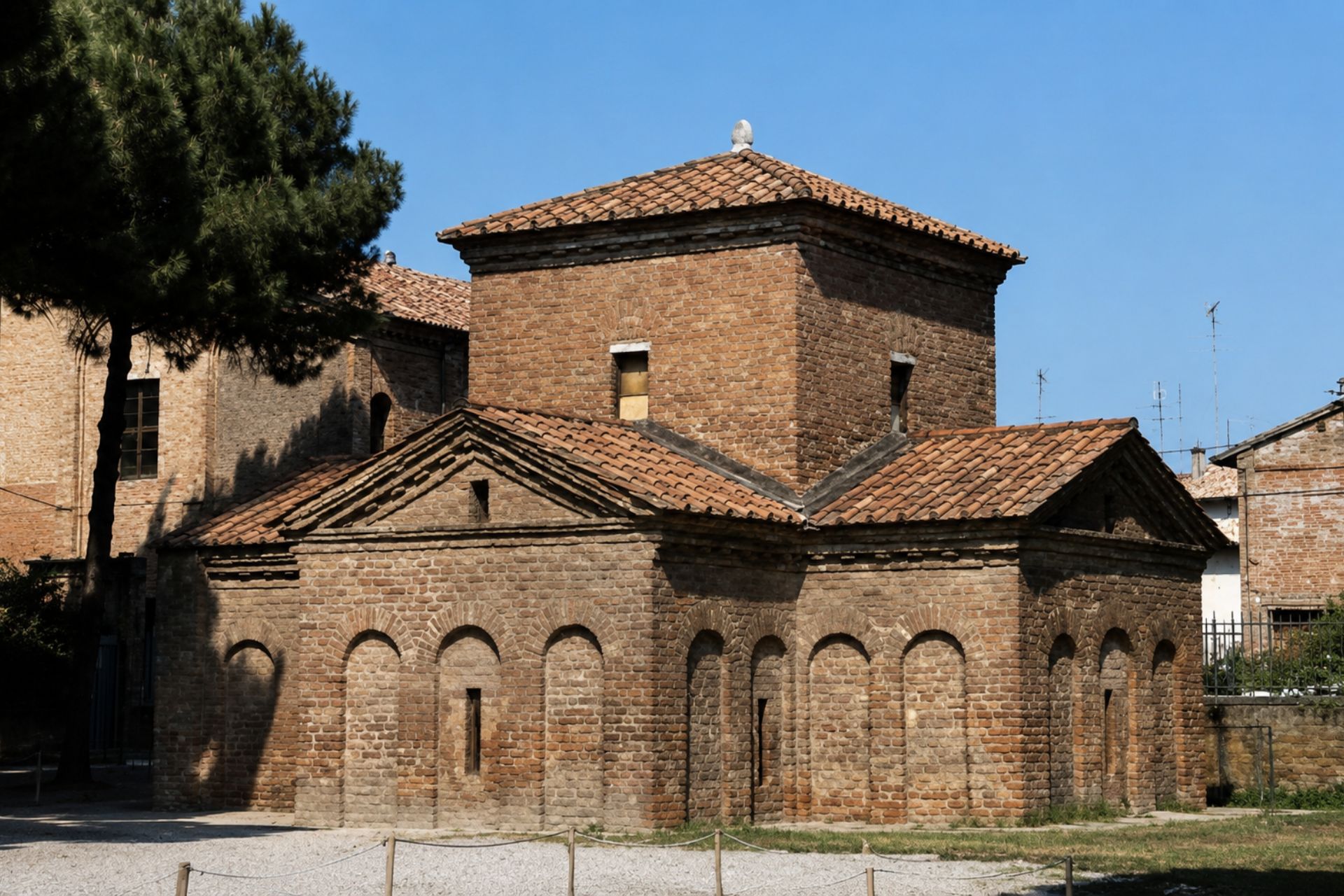
Each monument tells the story of a different phase in the city’s religious and political history. Visiting them together takes you on a journey through imperial, Ostrogothic and Byzantine Ravenna, helping you to understand why the city is considered one of the world’s mosaic capitals.
3. The starry sky of the Mausoleum of Galla Placidia
Enter the Mausoleum of Galla Placidia It is one of the most moving experiences one can have in Ravenna. From the outside, the building appears almost austere, built of simple bricks, but as soon as you step through the door, you find yourself immersed in one of the most evocative settings of early Christian art.
The central vault is adorned with a deep blue sky, against which hundreds of golden stars twinkle. A large, luminous cross appears at the centre, whilst symbolic figures, apostles, animals and plant motifs cover the interior surfaces.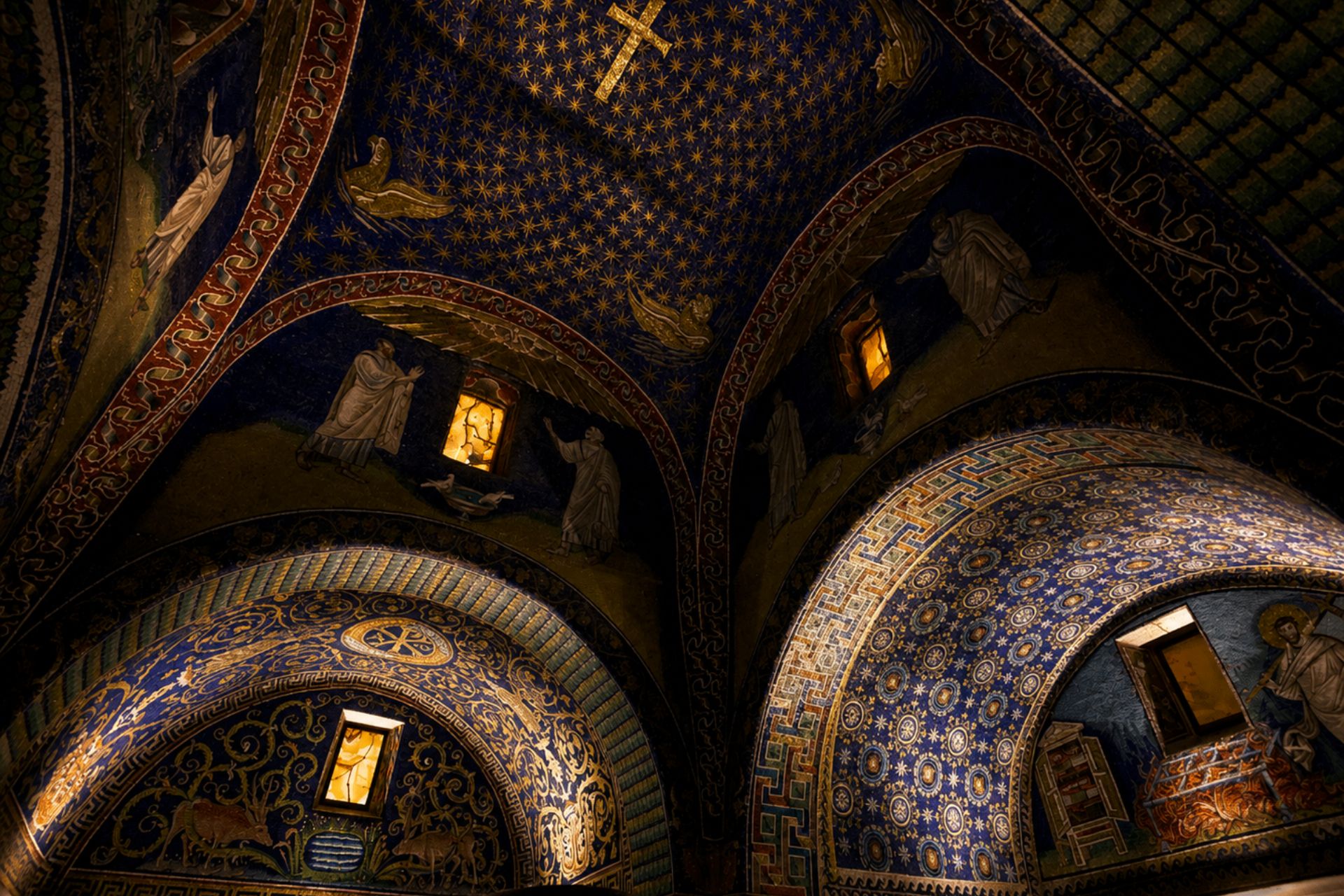
The tiles were not laid in a perfectly uniform pattern. The craftsmen positioned them at slightly different angles, so as to capture the light and reflect it in ever-changing ways. This is why the starry sky seems to come alive and changes its appearance depending on where you are standing.
According to a widely held belief, the American composer Cole Porter, having visited the mausoleum whilst on holiday in Italy, is said to have found the inspiration for his famous song right here Night and Day. The connection has not been definitively documented, but it continues to add to the charm of a place which, even without legends, leaves one speechless.
4. The monolith at Theodoric’s Mausoleum weighs hundreds of tonnes
Of all the buildings in Ravenna, the The Mausoleum of Theodoric It is probably the one that continues to raise the most questions amongst scholars. Built in the 6th century to house the remains of the Ostrogothic king, it stands out from the city’s other monuments due to its use of Istrian stone instead of traditional bricks.
Its most striking feature is at the top: the roof consists of a single enormous block of stone, with a diameter of around eleven metres and an estimated weight of over two hundred tonnes.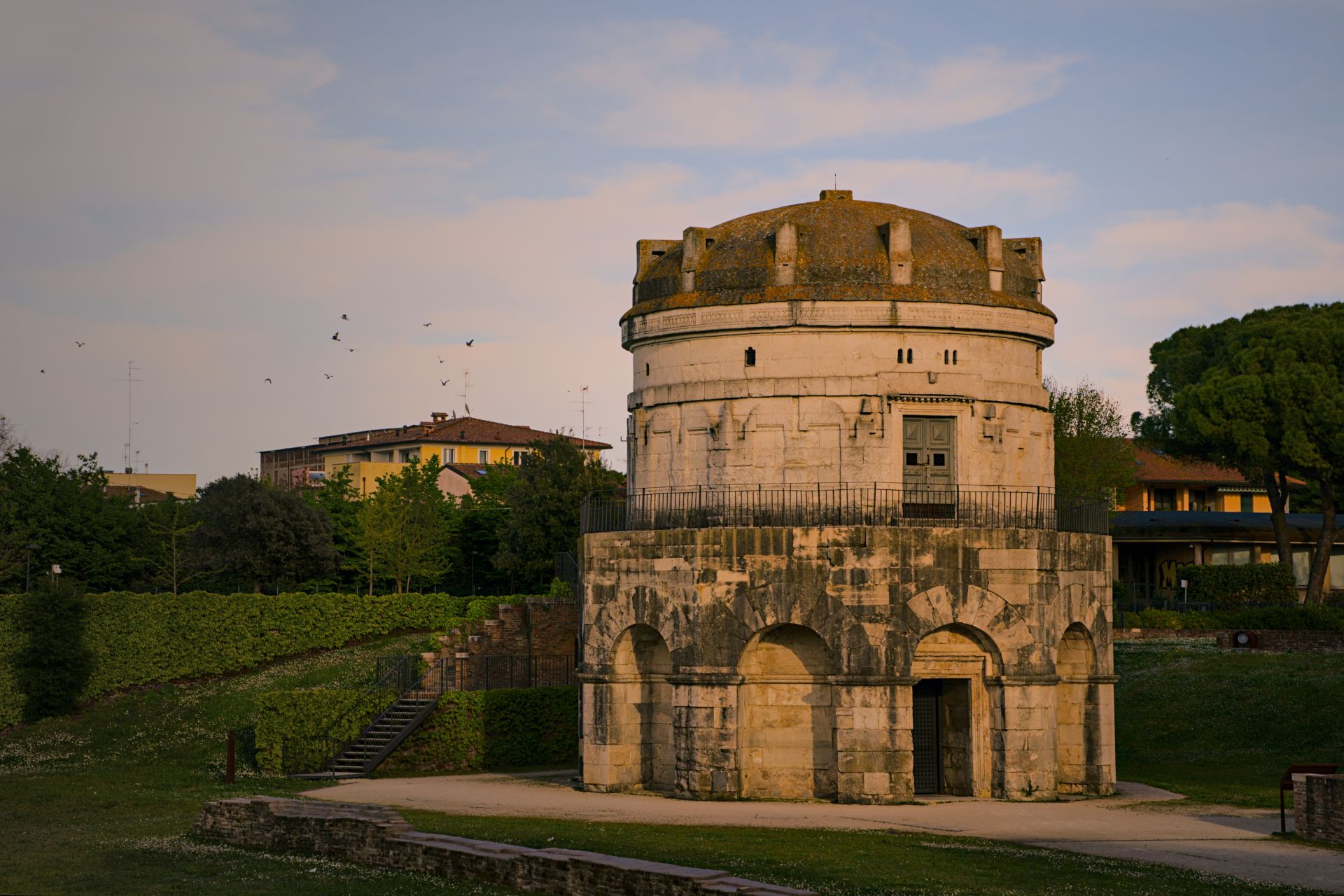
Even today, there is no definitive explanation as to how the engineers of the time managed to transport the monolith all the way to Ravenna and, above all, to hoist it to the top of the building. Among the most common theories are the use of large ramps made of compacted earth, winches, ropes and complex pulley systems.
The roof also features a number of stone projections, often interpreted as handles used during transport, although their function has not been definitively established. This mystery helps to make Theodoric’s Mausoleum a particularly fascinating destination for those who love architecture and the great works of antiquity.
5. There is a hidden city beneath Ravenna
Walking through the historic centre, it is hard to imagine that, just a few metres below street level, a completely different Ravenna lies hidden. The most famous discovery took place in 1993, during some building work near the church of Sant’Eufemia.
The excavations brought to light a large late antique and Byzantine residence, comprising numerous rooms decorated with splendid floor mosaics. The complex can now be visited under the name of Domus of the Stone Carpets.
Descending below the level of the modern city, one finds oneself standing on floors dating back some 1,500 years. The decorations include geometric patterns, plant motifs, symbolic figures and allegorical scenes, all executed with extraordinary precision.
Among his best-known works is the so-called Dance of the Spirits of the Four Seasons, a refined depiction in which human figures appear to move to the rhythm of a dance. A visit here provides an insight into how the wealthiest families of Byzantine Ravenna lived and offers an unusual perspective on the city’s social hierarchy.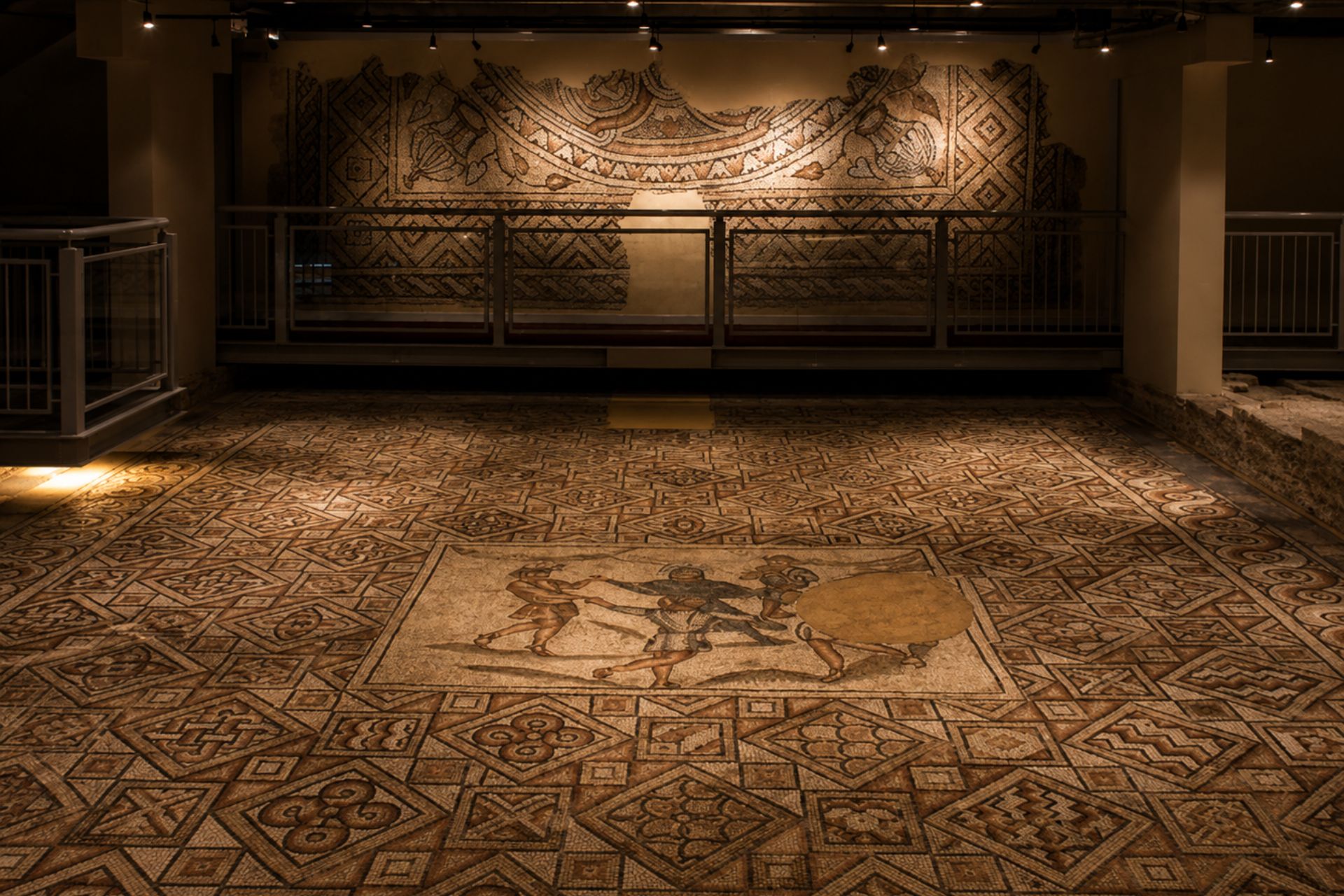
It is not just a matter of viewing archaeological finds: you literally step into a buried Ravenna, which has remained hidden for centuries beneath modern buildings.
6. Dante Alighieri is buried in Ravenna, not in Florence
Dante Alighieri is inevitably associated with Florence, the city where he was born in 1265. The father of the Italian language, however, died and was buried in Ravenna, where he spent the final years of his life following his long exile from his hometown.
Welcomed by Guido Novello da Polenta, Dante found a culturally vibrant environment and a degree of tranquillity in Ravenna. According to tradition, it was here that he completed the Paradise, the final canto of the Divine Comedy.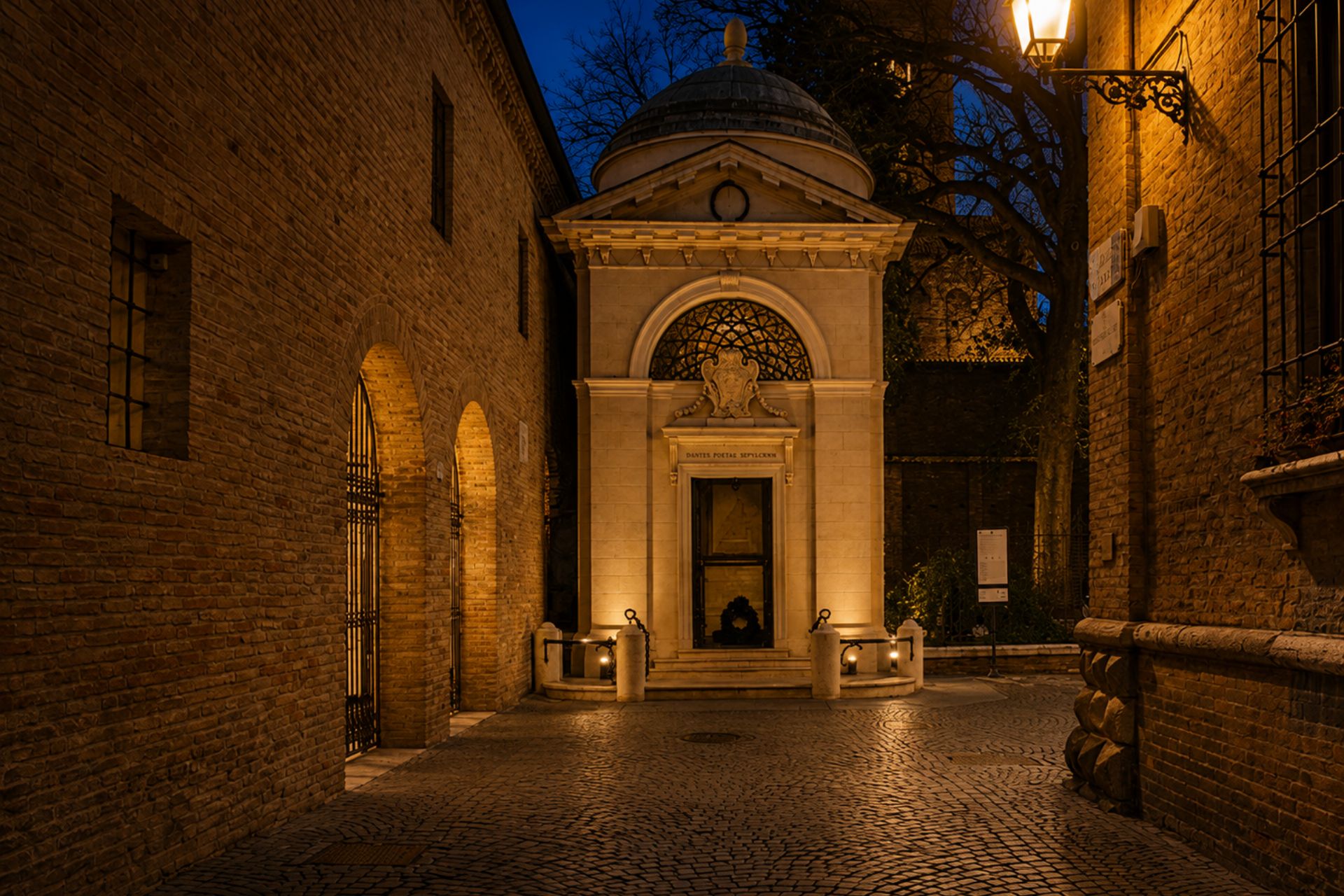
The poet died during the night of 13–14 September 1321, probably after contracting an illness whilst returning from a diplomatic mission to Venice. His tomb is situated next to the Basilica of St Francis, inside the so-called Zone of Silence.
The story of his remains is almost like something out of a novel. Over the centuries, Florence made several attempts to secure the return of the poet’s bones. In the sixteenth century, to prevent them from being moved, the Franciscan friars secretly hid them. The remains lay far from the official tomb for centuries and were discovered by chance in 1865, whilst some building work was being carried out.
To this day, Ravenna proudly honours the poet, recalling how it was here that Dante found the peace that Florence had denied him during his lifetime.
7. St John’s sandal: between devotion and legend
Ravenna is not just about emperors, mosaics and grand monuments. Its history is also steeped in religious traditions and folk tales, some of which have become part of the city’s identity.
One of the most unusual facts concerns the so-called St John’s Sandal, a relic to which miraculous powers were attributed over the centuries. According to tradition, many worshippers would come to venerate it to ask for protection, healing or comfort in times of difficulty.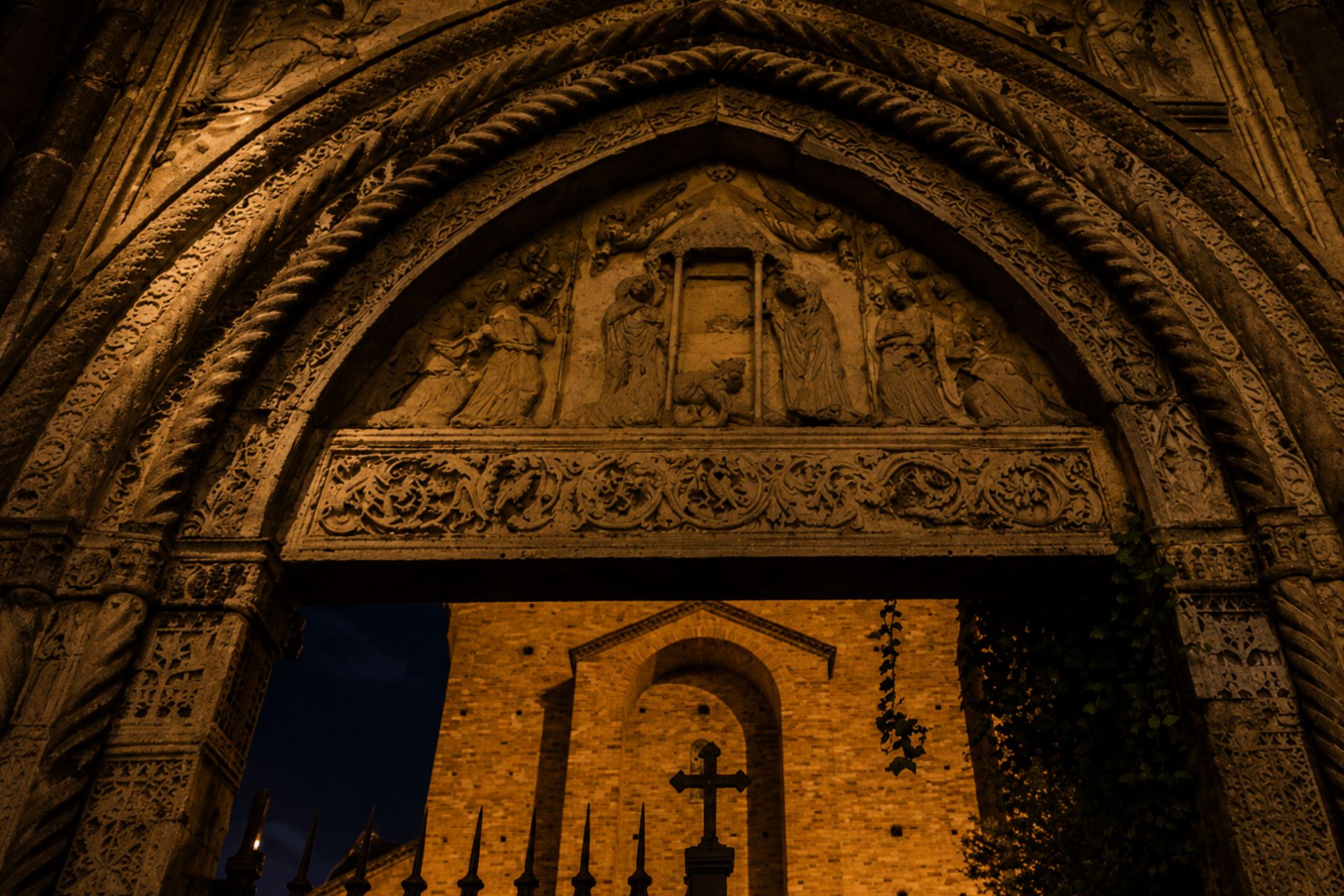 As is the case with many ancient relics, it is not easy to distinguish between elements that are historically documented and those that have been shaped by popular devotion. The value of the story, however, lies precisely in the way it has been passed down, bearing witness to the deep bond between Ravenna and Christianity.
Alongside the great mosaic cycles and monumental basilicas, these traditions reveal a more intimate side to the city: that of ordinary people, pilgrimages, prayers and beliefs which have been part of everyday life for centuries.
8. ‘Looking for Mariola in Ravenna’: the mystery behind an idiom
Among the most curious expressions linked to Ravenna’s traditions is the saying “Search for Mariola in Ravenna”. It is used to describe a search that is difficult, confusing or unlikely to yield any results.
But who was Mariola really? One interpretation links the saying to a sculpted figure that used to stand on the Civic Tower. The small statue would have been difficult to spot for anyone who did not know its exact location, giving rise to the idea of an almost impossible quest.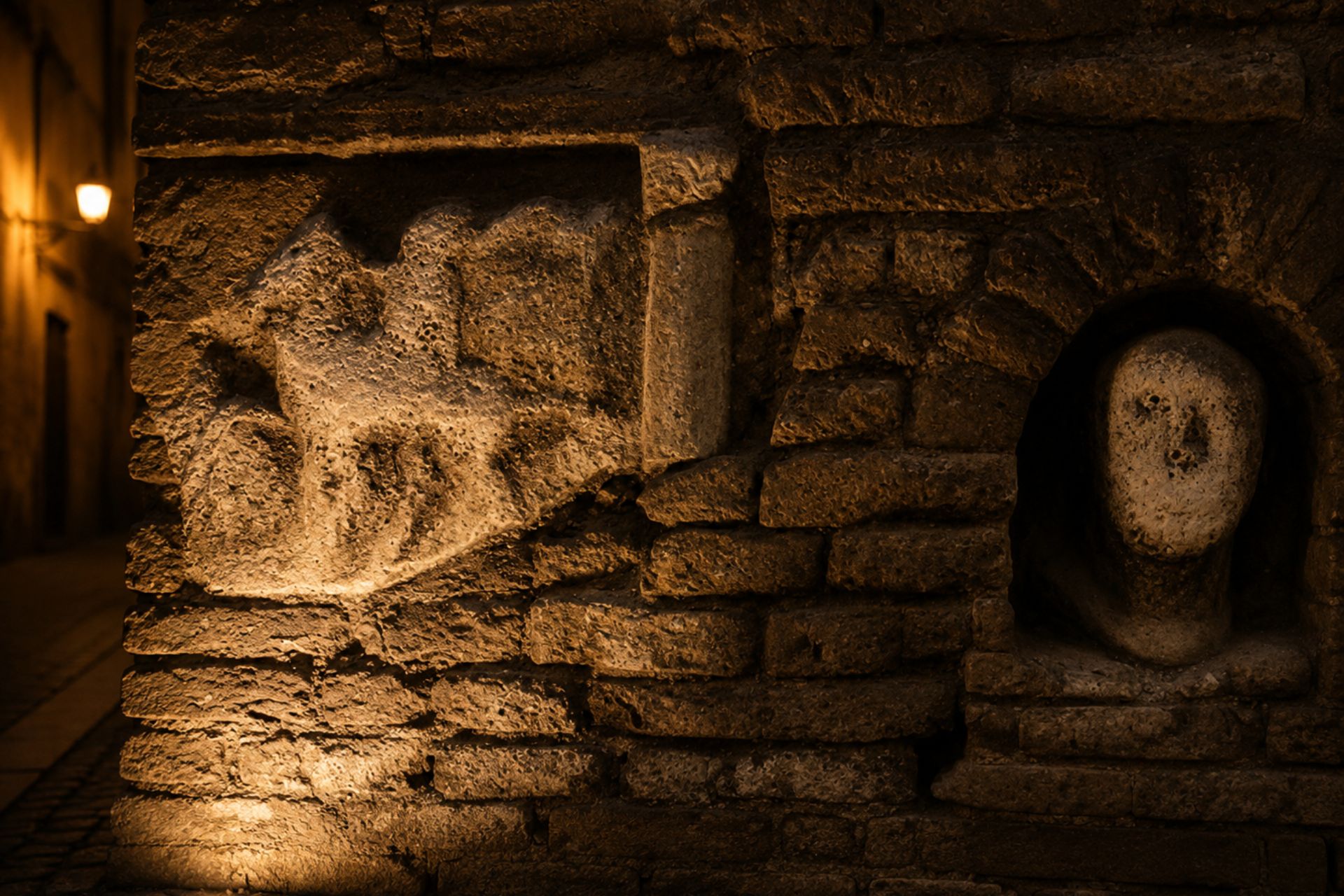
Over time, numerous variations of the legend have emerged. According to some, Mariola was a real woman; according to others, the name refers to a symbolic figure or a now-forgotten architectural detail.
There is no universally accepted explanation, but it is precisely this uncertainty that makes the story all the more interesting. The proverb illustrates how a city’s memory is preserved not only in documents and monuments, but also in words, idioms and stories passed down orally.
9. The mosaics change colour throughout the day
Ravenna’s mosaics are famous throughout the world for their splendour, but few people realise that their appearance changes constantly depending on the light. This is not a random effect, but the result of an extremely sophisticated technique.
The artists arranged the tiles made of glass paste, marble and gilded materials at slightly different angles. In this way, the surfaces did not reflect light uniformly, but created shimmering effects, glints and colour variations.
The golden tiles were often made by sandwiching a very thin sheet of gold between two layers of glass. When struck by natural light or the flickering glow of lamps, they seemed to light up and move across the wall.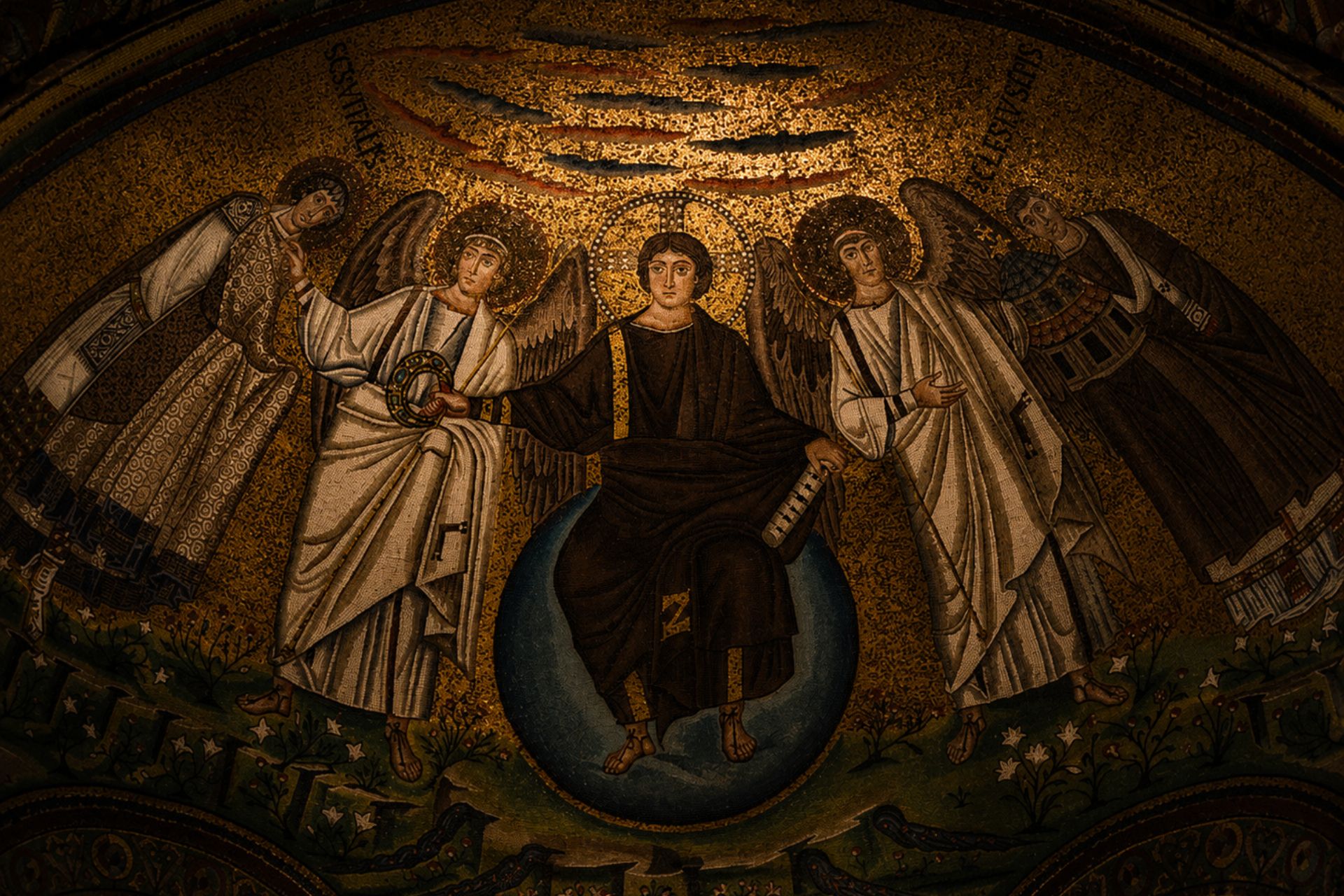
Visiting the Basilica of San Vitale in the morning or in the afternoon can therefore evoke different sensations. The reflections, depths and shades perceived by the eye change. This is also why no photograph can fully capture the experience of being there in person.
To truly appreciate the mosaics, it is best to view them at your leisure, moving around the space and allowing the light to gradually reveal their details.
10. Ravenna was once almost a city on the water
Today, Ravenna lies in the Romagna plain, several kilometres from the coast. In Roman and late antique times, however, the landscape was very different. The city was surrounded by lagoons, marshes, canals and wetlands that linked it directly to the sea.
This natural topography made it particularly difficult to lay siege to. It was one of the reasons that led Emperor Honorius to move the court of the Western Roman Empire here: the marshy areas provided a natural defensive barrier, whilst the harbour ensured maritime links with the East.
Ancient Ravenna must therefore have appeared as a city suspended between land and water, criss-crossed by canals and accessible via routes that changed with the level of the lagoons. The gradual silting up of the coastal areas and land reclamation works slowly altered the landscape, moving the city centre further away from the sea.
An understanding of this particular geography provides a better insight into the city’s history, the role of the port of Classe, and the reason why Ravenna managed to maintain such a prominent political and military position for so long.
11. Lord Byron lived in Ravenna and became involved with the Carbonari
Between 1819 and 1821, Ravenna was home to one of Europe’s most famous Romantic poets: George Gordon Byron. His stay was linked to his relationship with Teresa Gamba Guiccioli, a young noblewoman from Ravenna who was married to Count Alessandro Guiccioli.
Byron lived for a time at Palazzo Guiccioli and immersed himself fully in city life, frequenting its salons, theatres and political circles. Ravenna was not merely the setting for a romantic affair for him: the poet also came into contact with the Carbonari movements, which opposed papal control and advocated a political transformation of Italy.
During his stay in Ravenna, he worked on various pieces and was captivated by the pine forests, Dante’s tomb and the city’s ethereal atmosphere. Byron’s presence placed Ravenna within the wider context of nineteenth-century European Romantic culture.
Its history also offers an insight into a lesser-known side of the city, far removed from the Byzantine era but equally rich in cultural vibrancy, private passions and political tensions.
12. The Basilica of San Vitale has an octagonal floor plan
The Basilica of San Vitale is not only remarkable for its mosaics. Its architectural structure is also very different from that of traditional Christian basilicas with a longitudinal layout.
The building actually features a octagonal central plan, organised around a large interior space covered by a dome. Visitors are not guided along a straight aisle, but invited to move around the centre, discovering ever-changing perspectives.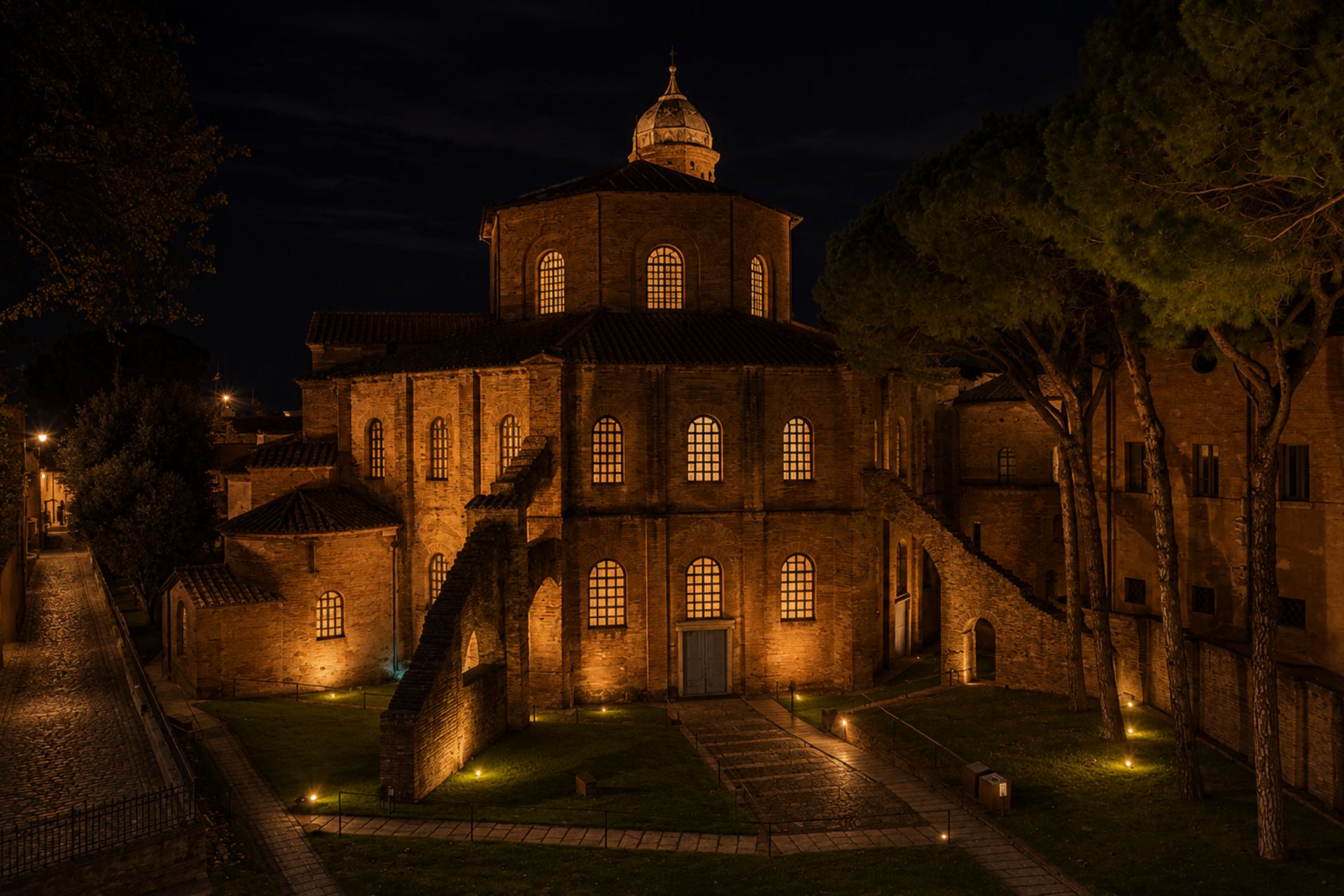
Columns, arches, women’s galleries and curved surfaces create a complex yet harmonious setting. Light streams in from various directions, highlighting the architectural forms and drawing the eye towards the chancel, where the famous mosaics of Emperor Justinian and Empress Theodora are situated.
The octagonal shape also has symbolic significance. In the Christian tradition, the number eight evokes resurrection, renewal and the beginning of a new life. The basilica is therefore a work in which architecture, theology and mosaic decoration engage in a continuous dialogue.
13. Ravenna remains a leading centre for contemporary mosaics
The art of mosaic-making in Ravenna is not confined to the past. Even today, the city is home to schools, workshops, studios and artists who keep this technique alive, reinterpreting it through contemporary forms of expression.
Alongside replicas and restorations of ancient mosaics, the workshop produces abstract works, installations, furnishings, jewellery and architectural decorations. The artisans use traditional materials, such as enamels and marble, but also experiment with metals, ceramics, glass and recycled materials.
Visiting a mosaic workshop gives you an insight into just how much work goes into each piece: from choosing the colours to cutting the tesserae, and from preparing the backing to laying the individual pieces.
The city also hosts exhibitions and events dedicated to contemporary mosaics, fostering an ongoing dialogue between Byzantine masterpieces and contemporary artistic expression. For visitors, stepping into a workshop means discovering a creative and vibrant Ravenna, one that does not merely preserve its heritage but continues to renew it.
14. The port of Classe was one of the most important in the Roman world
A few kilometres from the centre of Ravenna stood Class, a major military and commercial port on the Adriatic. The name itself derives from the Latin classis, a term used to refer to the fleet.
The port was developed during the Augustan period and became one of the Roman Empire’s main naval bases. From here, ships controlled the Adriatic and the eastern routes of the Mediterranean, whilst goods and people reached Ravenna via a dense network of canals.
A proper town sprang up around the port facilities, populated by sailors, craftsmen, traders and officials. Warehouses, administrative buildings, homes and places of worship bore witness to the international character of the Ravenna area.
Today, you can learn more about the history of Classe by visiting the archaeological park, the museum dedicated to the town and the nearby Basilica of Sant’Apollinare in Classe. It is a particularly informative excursion for understanding why Ravenna became the capital and to what extent its connection with the sea has shaped its development.
15. The pine forests of Ravenna inspired Dante and Boccaccio
The pine forests around Ravenna are not merely an important natural environment. Over the centuries, they have also become part of the history of Italian literature.
Dante Alighieri, who had the opportunity to visit them during the years he spent in Ravenna, refers to the Classe pine forest in the Purgatory, using it as a point of comparison to describe the forest of the Garden of Eden.
Also Giovanni Boccaccio He chose the pine forest near Ravenna as the setting for Nastagio degli Onesti’s novella, which appears in the The Decameron. The story recounts a disturbing vision set amongst the trees, which was later depicted by Sandro Botticelli in a famous series of paintings.
Today, the pine forests retain a special atmosphere, especially during the quietest hours of the day. Strolling or cycling amongst the pines allows you to combine nature and literature, imagining the very same landscapes that inspired some of Italy’s most important authors.
Ravenna is a city to be savoured at a leisurely pace
These interesting facts represent just a fraction of the stories Ravenna has to offer. Every monument, every mosaic and every alleyway in the historic centre holds details that are well worth taking the time to discover.
Ravenna is not a destination to be visited in a hurry. It is a city that invites you to slow down, to look up at a decorated vault, to step inside a seemingly simple basilica and to observe the way the light transforms the mosaic tiles.
For a first visit, it is advisable to spend at least two days in the city. This will allow you to alternate between visiting UNESCO World Heritage sites and strolling through the historic centre, visit the Zona del Silenzio and Dante’s tomb, pop into a mosaic workshop and visit the Basilica of Sant’Apollinare in Classe.
It’s also well worth taking a break at the Mercato Coperto or at one of the piadina shops in the city centre, to round off your cultural experience with the flavours of Romagna’s culinary traditions.
Discover Ravenna on a guided tour
To look beyond the surface and understand the symbols hidden in the mosaics, the city’s transformations and the stories linked to its monuments, it may be worth taking a guided tour of Ravenna.
An expert guide enables you to connect places which, when viewed individually, might seem far apart. The Mausoleum of Galla Placidia, the Basilica of San Vitale, Sant’Apollinare Nuovo, Dante’s tomb and the Domus dei Tappeti di Pietra thus become the stages of a single narrative, unfolding across more than fifteen centuries of history.
Before setting off, it is advisable to check the opening times, any booking requirements and the combined tickets available for the main attractions.
Discover Ravenna during your holiday in Romagna
If you’re staying on the Romagna Riviera, Ravenna is one of the most interesting day trips you can take. Art, history, UNESCO World Heritage sites, mosaics that are unique in the world and a culinary tradition rich in authentic flavours make it an ideal destination for families, couples and culture lovers.
After visiting its masterpieces, do take the time to explore the surrounding area as well: the Classe Pine Forest, the beaches of Ravenna, the Po Delta Park and the small towns of the hinterland all contribute to a surprisingly varied landscape.
Up SpecialHotel You’ll find guides, itineraries and tips on Ravenna and the other wonders of Romagna, along with the most suitable accommodation options for planning your next stay.