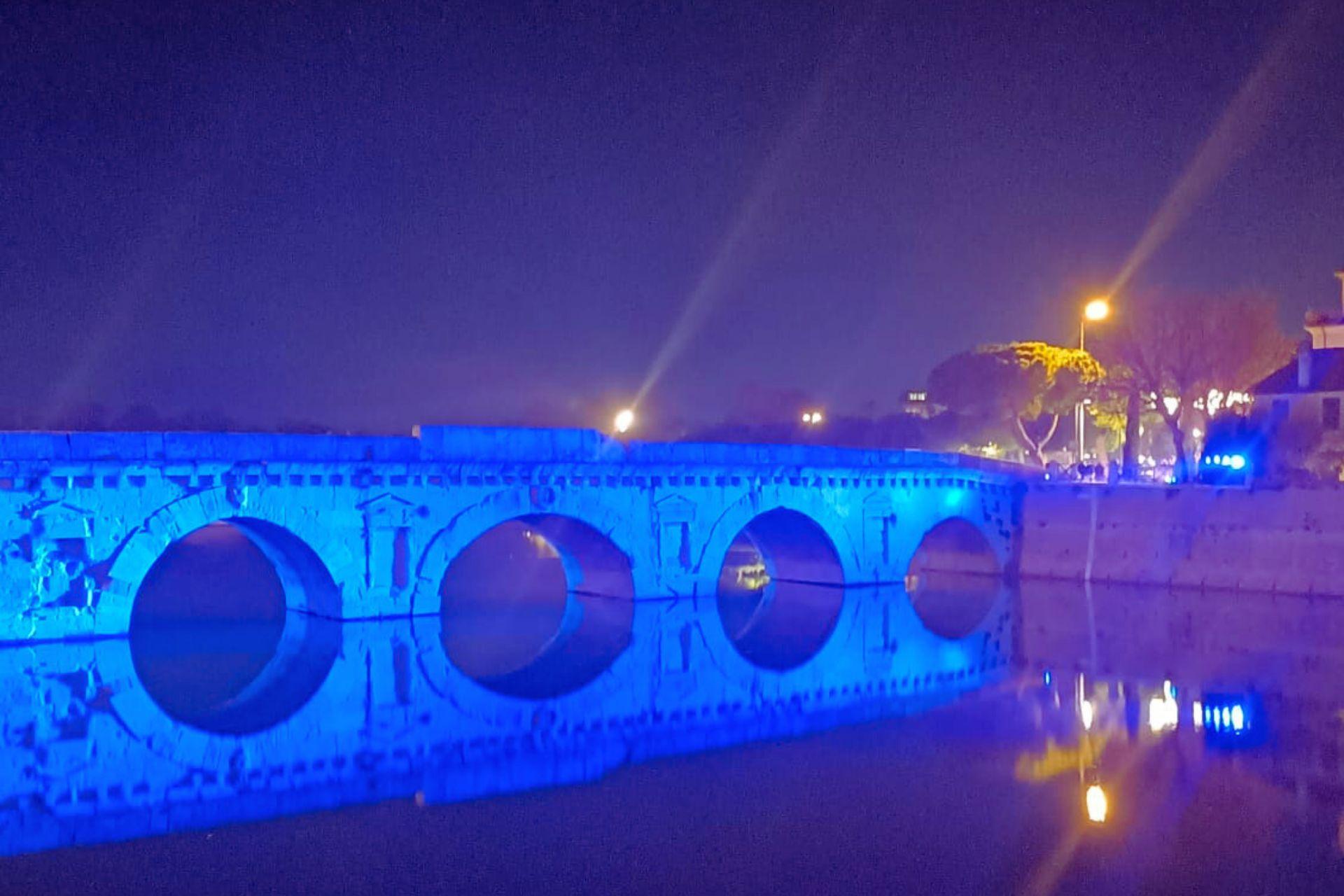
Verucchio (Vrócc in Romagnolo) is a picturesque municipality of 10,072 inhabitants located in the province of Rimini, in the heart of Emilia-Romagna. It is located about 18 km south-west of the capital, in a strategic position between the Adriatic Sea and the hills of the Romagna hinterland, in an area rich in history, culture and natural beauty.
Physical geography
The village lies in the Marecchia valley, perched on a hill about 300 metres above sea levelfrom which it dominates the valley below. This position gives it a spectacular panorama, with views stretching from the coast to the Apennines.
Verucchio borders to the north with Santarcangelo di Romagna, east with Rimini, to the south with Sassofeltrio and the State of San Marinosouth-west with Saint Leo and to the west with Poggio Torriana.
The municipality consists of two main cores: the historic hilltop villagewhere the ancient Malatesta walls and fortresses are located, and Villa Verucchiolocated in the valley, the centre of economic-industrial activity in the area. A geographical peculiarity of Verucchio is the presence of an exclave: the hamlet of Pieve Corenaseparated from the rest of the municipality by the State of San Marino and about 12 km away.
Origins of the name
The name Verucchio derives from the Latin verruculus, male of verruculawhich means 'small wart', in the figurative sense of relief or hill, indicating the hill on which the village stands.
History
Verucchio boasts ancient origins dating back to the Iron Age. Numerous excavation campaigns conducted since 1893 have brought to light over 600 burialsdated between 10th and 7th centuries BC.belonging to the Villanovan civilisation, considered the oldest phase of Etruscan civilisation. The rich grave goods - including jewellery, weapons, pottery and horse harnesses - testify to Verucchio's importance as a cultural and commercial centre of the time.
Many of these exhibits are displayed in the Archaeological Museumone of the most important in the region, which offers a fascinating insight into the life and traditions of the area's ancient inhabitants.20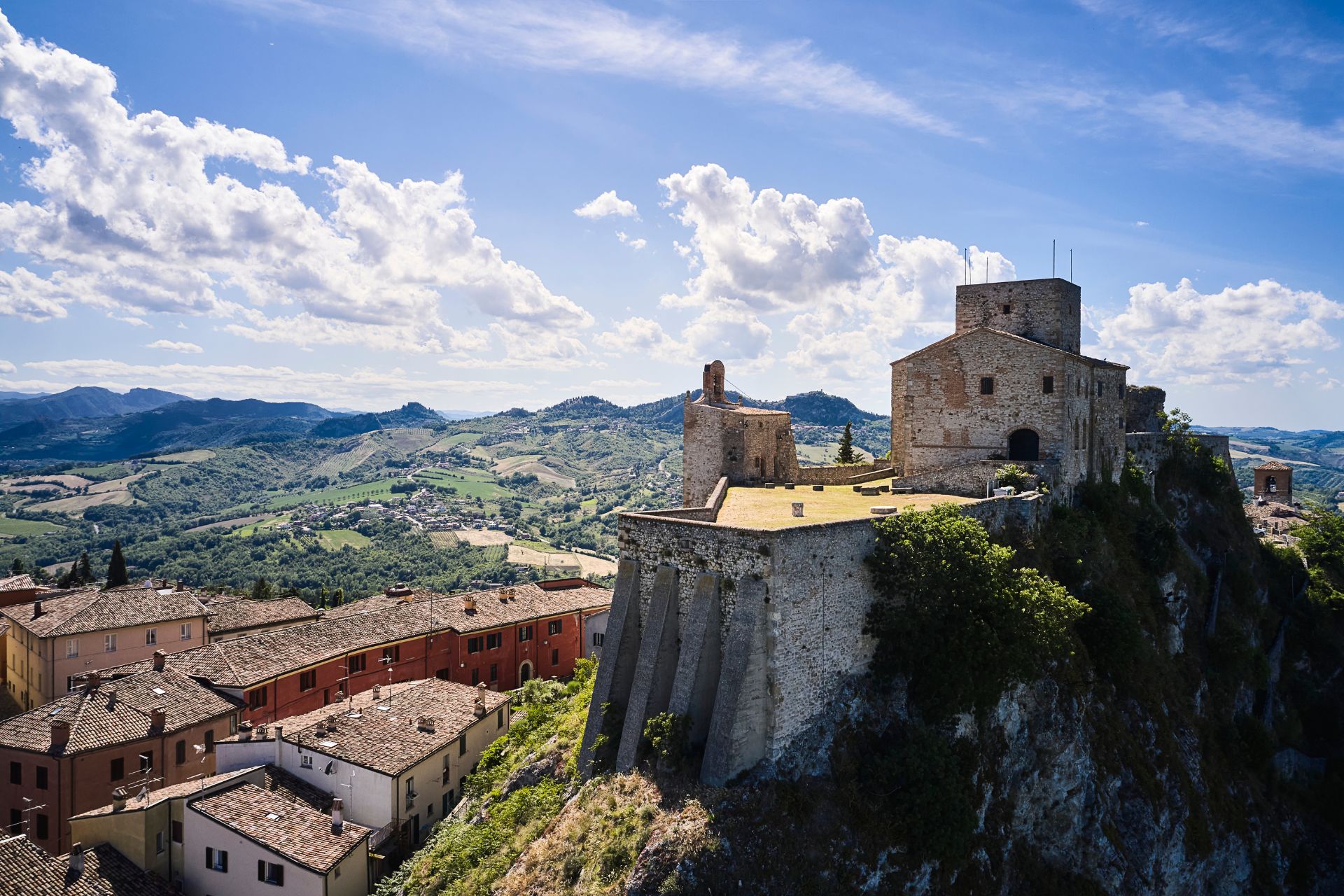
Roman Era and the Middle Ages
With the decline of the Etruscan civilisation, Verucchio lost its centrality to Ariminum (Rimini). However, the strategic position of the village made it a place of great importance during the barbarian invasions and the subsequent Byzantine rule. In 962the emperor Brass I donated the village to the Dukes of Carpegna, one of the first great noble families of the area.
In 12th century, Verucchio became a castrumor a fortified centre. It was during this period that the Malatesta familywhich transformed the village into a military and administrative stronghold of great importance. Dante Alighieri mentions Verucchio in the Divine Comedy (Inferno, Canto XXVII), recalling the Malatesta family as the protagonists of bloody events and dynastic conflicts.
Papal rule and the modern era
In 1355, the cardinal Egidio Albornoz He recaptured the territories of Romagna on behalf of the Church, bringing Verucchio under papal rule. However, the village remained firmly in the hands of the Malatesta family until 1462, when it was conquered by Federico da Montefeltro. From that moment on, Verucchio came under various rulers: from the Visconti at Borgia, to the Venetians, until it finally came back under the control of the Holy See in the 16th century.
In 1518, Pope Leo X He granted Verucchio the status of a town, recognising its historical and strategic importance.
The 20th Century and the Second World War
In the 20th century, Verucchio was caught up in the tragic events of the World War II. The village was situated along the Gothic Line, the scene of fierce fighting between the German army and the Allied forces. One of the most dramatic incidents was the massacre of the “The Nine Martyrs of Verucchio”, shot in retaliation on 21 September 1944.
After the war, Verucchio embarked on a process of reconstruction and development, becoming a much-loved tourist and cultural destination.
Symbols and traditions
The town coat of arms, granted by a decree of the President of the Republic on 3 January 1989, depicts two green hills, surmounted by two crenellated towers, symbolising the ancient fortifications. The Latin motto Veruculum, the ancestral home of the Malatesta family emphasises the importance of Verucchio as the birthplace of the Malatesta family.
Monuments and places of interest
Verucchio is a charming village steeped in history. Among its main monuments, the following stand out:
- The Malatesta Fortress (or ‘Rocca del Sasso’), one of the most imposing and best-preserved in Romagna. Built in the 12th century, it offers a breathtaking panoramic view of the Marecchia valley.
- The Passarello Fortress, which in the past formed part of the village’s defences.
- The Collegiate Church of St Martin, built in 1863, which houses important works of art, including a 14th-century wooden crucifix attributed to the Master of Verucchio.
- The Convent of St Francis in Villa Verucchio, famous for its monumental cypress tree, which, according to tradition, is said to have been planted by St Francis of Assisi himself.
Culture and folk traditions
Verucchio is a vibrant cultural centre, with numerous events celebrating its history and traditions. Among the most important events are:
- The Verucchio Festival, a summer music festival that attracts internationally renowned artists.
- The Feast of St Martin, the town’s patron saint, celebrated every year in November with religious and culinary events.
Nature and landscapes
Nature lovers can explore the surrounding area via walking trails that wind their way through hills, woods and cultivated fields. A must-see is theWWF Ca’ Brigida Nature Reserve, a protected area where you can see various species of local flora and fauna.
Economy and local development
Verucchio’s economy is based on a balanced mix of traditional and modern sectors.
- Agriculture: the area is characterised by high-quality agriculture, producing extra virgin olive oil, wine and fruit and vegetables typical of the Romagna region. Among the most renowned products is theBrisighella PDO olive oil and the Sangiovese from Romagna, which are highly regarded both nationally and internationally.
- Crafts: The village has a long tradition of craftsmanship, particularly in woodwork and pottery. Even today, you can still find workshops that keep this heritage alive.
- Industry: Villa Verucchio is at the heart of modern economic activity. It is home to a concentration of companies in the manufacturing, technology and services sectors.
- Tourism: one of the mainstays of the local economy. Every year, Verucchio attracts thousands of visitors thanks to its historical heritage, cultural events and the natural beauty of the Marecchia Valley. Food and wine tourism has grown significantly in recent years, showcasing the region’s finest local produce.
Local cuisine
Verucchio’s cuisine reflects the traditions of the Romagna region, with simple, authentic dishes prepared using local ingredients. Among the local specialities, the following stand out:
- The Piadina from Romagna, the undisputed star of the table, topped with cold cuts, cheeses (such as squacquerone) and seasonal vegetables.
- Passatelli in broth, a delicious pasta made from breadcrumbs, Parmesan and eggs, served in a hot, flavourful broth.
- Cappelletti, often stuffed with meat or cheese, served with rich, flavourful sauces.
- Roast rabbit, a traditional dish flavoured with wild fennel and cooked slowly in the oven.
- The Romagna doughnut, a traditional local dessert, best enjoyed with a glass of sweet Albana or Sangiovese.
Wine takes centre stage at the table. In addition to the aforementioned Sangiovese, you can enjoy the Trebbiano di Romagna, l'Albana and the Pagadebit, ideal for serving alongside traditional dishes.
Curiosities
- The Cypress of St Francis, situated in the convent at Villa Verucchio, is one of the oldest trees in Italy. It is estimated to be over 800 years old and, according to legend, was planted by St Francis of Assisi during his visit in 1213.
- The Malatesta Fortress, as well as being one of the best-preserved in the region, is shrouded in local legends that speak of secret passages and mysterious apparitions.
- A natural film set: Verucchio has been used as a filming location for several films and documentaries, thanks to its perfectly preserved medieval atmosphere.
- The Verucchio Festival It was founded in the 1980s by the renowned musician Ludovico Einaudi, who sought to bring singer-songwriter and experimental music to the heart of Romagna.