In the heart of the Lower Romagna, where the plain meets the water and the land becomes marshland, there stands a place that speaks of the quiet power of nature and human ingenuity: theEcomuseum of Marsh Herbs by Villanova di Bagnacavallo.
Not a museum in the traditional sense of the word, but a a living, open-air museum, capable of reflecting the identity of a region through its raw materials, traditional crafts and collective memory.
A land of waters and intertwining paths
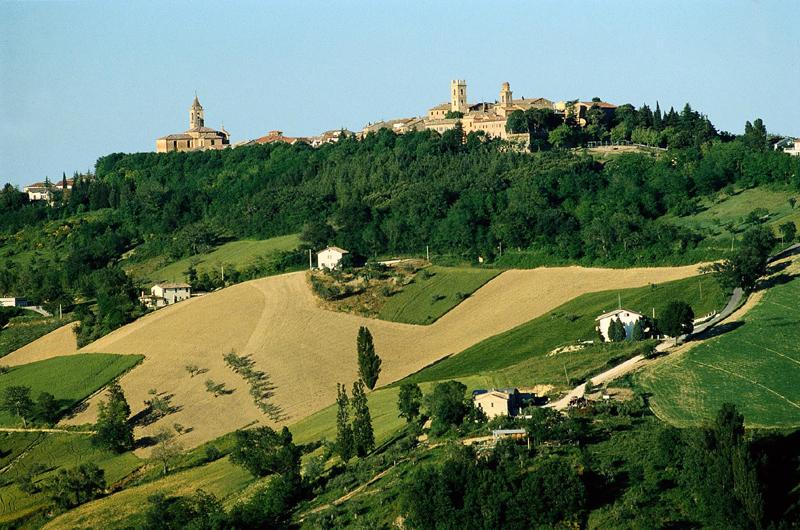
Villanova di Bagnacavallo is situated on the left bank of the the River Lamone, in a landscape that, until a century ago, was dominated by valleys, reed beds and wetlands. Here, daily life was shaped by water: the rhythms of work, the seasons, and even the locals’ language were all linked to the valley.
The region’s natural resources — reed, rush, sedge and cattail — provided flexible, durable and renewable materials. The inhabitants learnt to build with them sheds, chairs, mats, brooms and baskets, transforming what the land and water provided into the tools they needed for living and working.
As early as 14th century, archival documents attest to the existence of workshops and craftsmen specialising in “processing of marsh grasses”, confirming a tradition that has endured through the centuries right up to the present day.
The creation of an ecomuseum
In the 1980s, when agricultural and industrial modernisation had almost wiped out the valley’s culture, a group of Villanova residents decided to preserve the memory of that silent civilisation.
And so it came to be, in 1985, l'Civiltà delle Erbe Palustri Cultural Association, the starting point for the museum project. From a small group of volunteers, driven by a desire to preserve ancient knowledge, a a regionally and nationally recognised centre for environmental research and education.
The ecomuseum officially opened its doors in the 1990s, but it does not merely collect objects: it chooses to tell the story of a report — the relationship between humankind and the environment — and to make it an experiential one.
The term ‘ecomuseum’, coined in France in the 1970s, captures precisely this idea: an ‘expanded’ museum, which encompasses territory, community and intangible heritage. Villanova is one of the most authentic examples of this in Italy.
The exhibition itinerary: the civilisation of the valley
Stepping into the Ecomuseum of Marsh Herbs means entering a world of natural materials and traditional techniques.
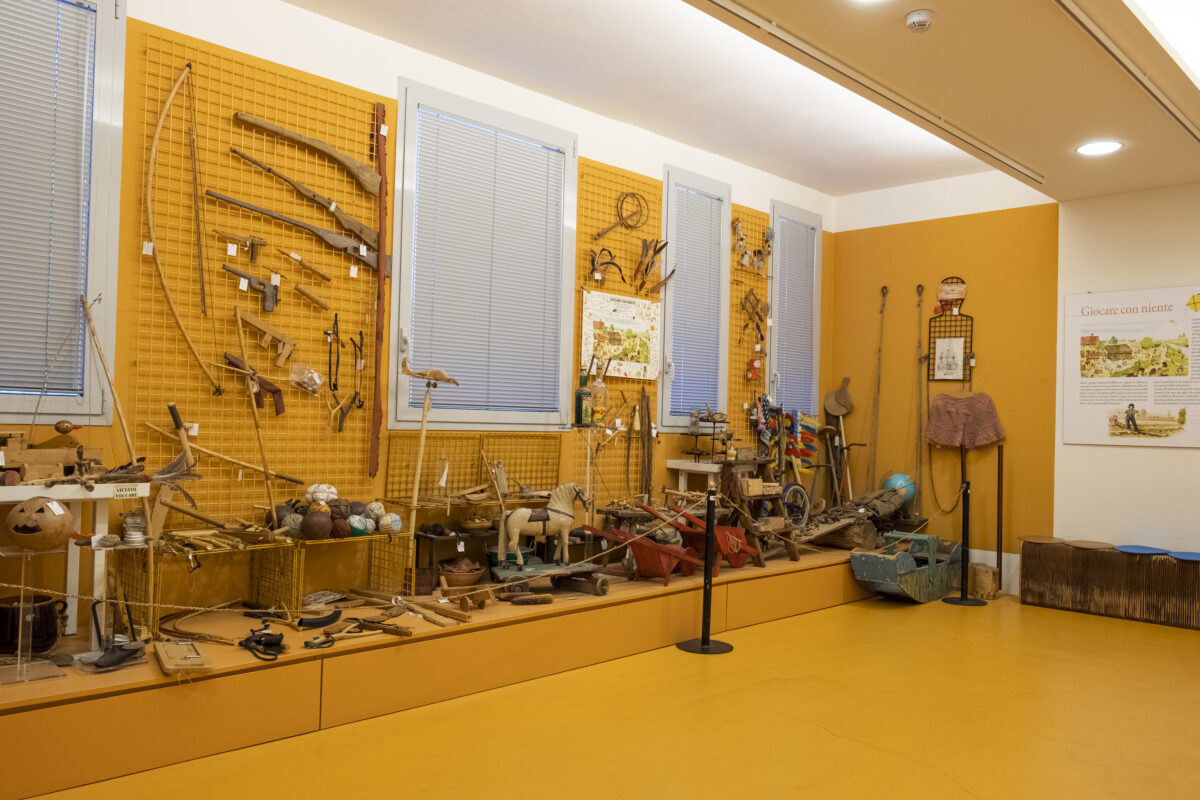
The museum tour, divided into various thematic sections, takes visitors on a journey through environmental reconstructions, tools of the trade and oral accounts.
-
The Marsh Civilisation and its environment: display panels and models illustrate the valley’s ecosystem and the lives of the communities that lived there, from fishermen to herb gatherers, from farmers to hut builders.
-
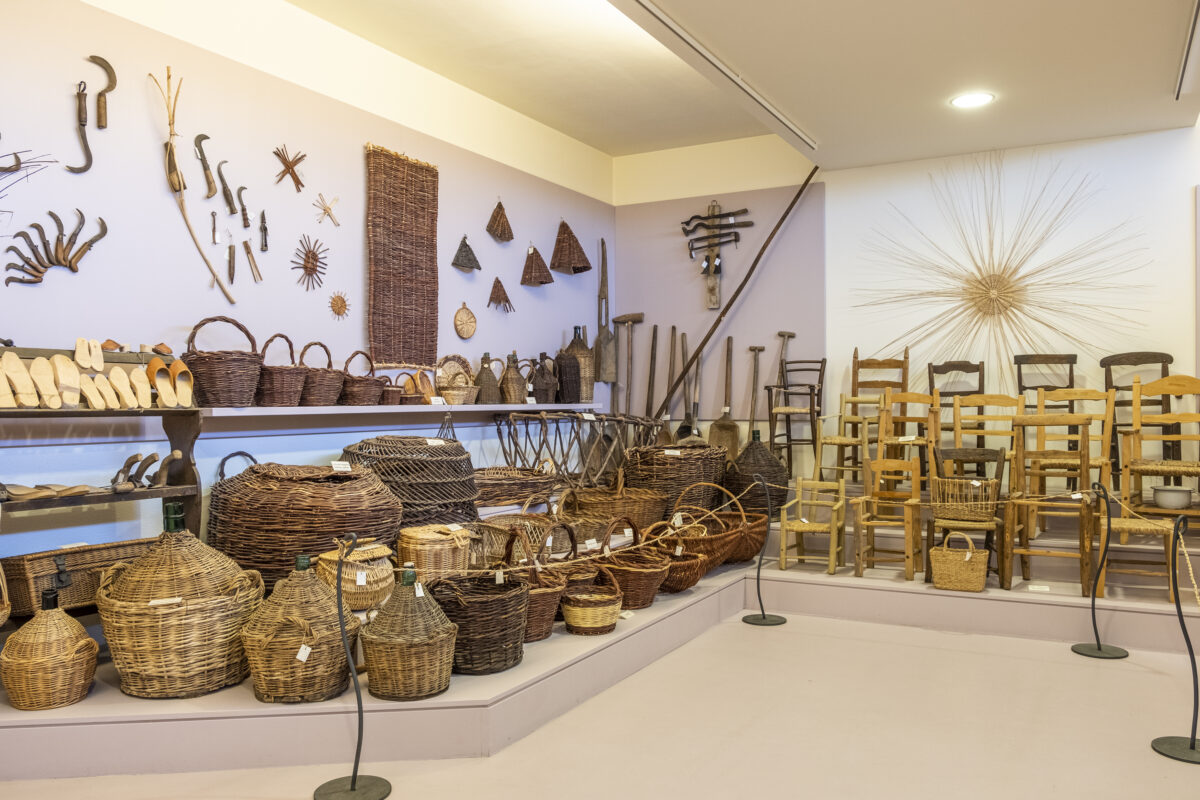
The five herbs: reed, rush, sedge, cattail and papyrus — the key ingredients in traditional craftsmanship. Each plant has its own harvesting cycle and a specific use: rush for weaving seats, reed for thatching roofs, and sedge for mats.
-
Tools and artefacts: ancient sickles, weaving needles, looms, ropes and wooden moulds bear witness to the skill of a craft that combined functionality and aesthetics.
-
Community life: photographs, videos and recordings bring to life the voices and faces of those who, for generations, have made their living from the valley and the water.
The “Villanova delle Capanne” Ethnological Park
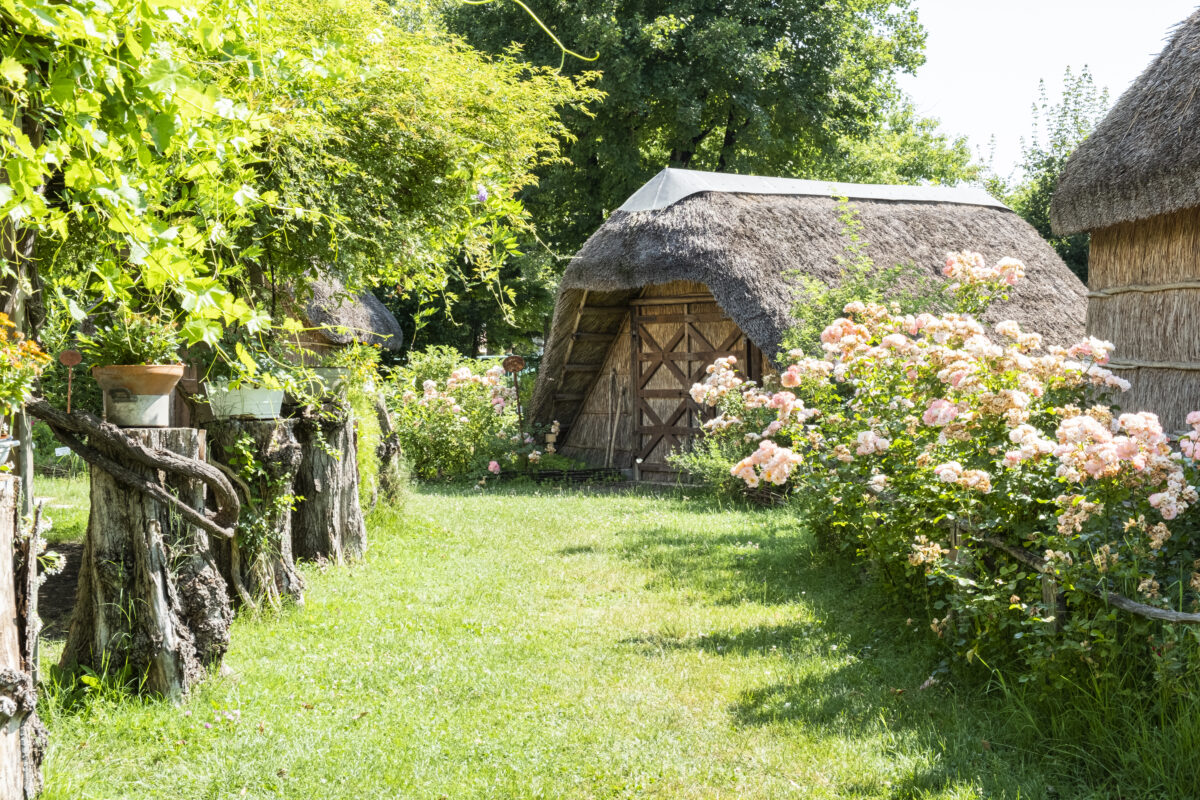
Next to the museum building is theVillanova delle Capanne Ethnological Park, an open-air area that faithfully recreates a traditional valley settlement.
Here you can visit huts made of marsh reeds created using traditional techniques: small vegetable gardens, boats, workspaces and animal shelters.
It is an immersive section that allows you to ‘step into’ the story, smell the freshly cut reeds and watch the wind rustling through them.
This is not a theatrical reconstruction, but a genuine Living Memory Workshop, where natural materials continue to be worked during demonstrations and activities.
Workshops, education and sustainable tourism
The Ecomuseum is also a environmental and craft education centre.
Every year, it welcomes hundreds of students from across Emilia-Romagna with workshops dedicated to wetland biology, the recycling of natural materials and weaving techniques.
Through direct contact with raw materials, children develop manual skills and a respect for nature, discovering that behind every object lies a story of patience and knowledge.
The teaching activities include:
-
workshops on weaving with natural herbs;
-
nature walks along the River Lamone;
-
guided tours with craft demonstrations;
-
sensory and creative experiences inspired by the colours and sounds of the valley.
The Ecomuseum also promotes slow tourism initiatives: walking, cycling or boating routes through the countryside and reed beds, in collaboration with the network My Lower Romagna and with the Po Delta Park.
A place of culture and community
Over the years, the Ecomuseum has become a a hub for events, exhibitions and festivals.
One of the best-known events is F@Mu – The Family Museum Festival, the days dedicated to biodiversity, and above all Festival of the Marsh Herbs, an annual event that brings together craftspeople, artists and researchers from across Europe to celebrate the cultures of water and weaving.
The Ecomuseum is, in fact, part of the European Network of Hemp and Reed Craftspeople, and hosts international conferences on sustainable craftsmanship and the passing on of knowledge.
It is not uncommon to see young designers working alongside master weavers, in a dialogue between tradition and innovation that breathes new life into natural materials.
The Herb Women
One section of the museum is devoted to the role of women in the valley’s civilisation.
Le herbalists, as they were known, were the true custodians of artisanal knowledge: they gathered, sorted and wove the rushes, often working in groups during the long summer days.
Their quiet, patient work supported the family’s livelihood and kept alive a material culture that is now recognised as part of the community’s intangible heritage.
A bridge between the past and the future
Today, the Ecomuseum of Marsh Herbs serves as a model of cultural and environmental sustainability.
In an age dominated by industrialisation and fast consumption, the Villanova museum reminds us that true modernity can spring from the past: from the mindful use of resources, from local craftsmanship, and from respect for the ecosystem.
Its day-to-day activities — from exhibitions to research, from workshops to training — demonstrate how tradition can be a tool for building the future.
As the curators like to say:
“We don’t just preserve objects, but relationships – between people, materials and the landscape.”
Visiting the Ecomuseum
The Ecomuseum of Marsh Herbs is situated in 1 Via Ungaretti, Villanova di Bagnacavallo (RA).
It is open Tuesday to Friday, 9 am to 1 pm, Saturday from 9 am to 1 pm and from 3 pm to 6 pm, Sundays from 10 am to 1 pm and from 3 pm to 6 pm.
Admission is free, with guided tours available for groups and school parties by prior booking.
It is accessible to people with disabilities and has car parks, a bookshop and a refreshment area.
For further information:
📞 0545 280920
📧 erbepalustri@comune.bagnacavallo.ra.it
🌐 www.ecomuseoerbepalustri.it
An experience not to be missed
Visiting the Ecomuseum of Marsh Plants is not just about admiring artefacts or listening to ancient tales: it is an invitation to to touch the living substance of the earth and water, to rediscover the value of taking things slowly, to realise that even the simplest of actions can hold great beauty.
It is a place that speaks to the present with the voice of the past, that teaches sustainability through first-hand experience, and that shows how the memory of the landscape may continue to inspire the future of communities.
A small, precious treasure trove in the heart of Romagna, where The reed becomes culture and the marsh becomes poetry.