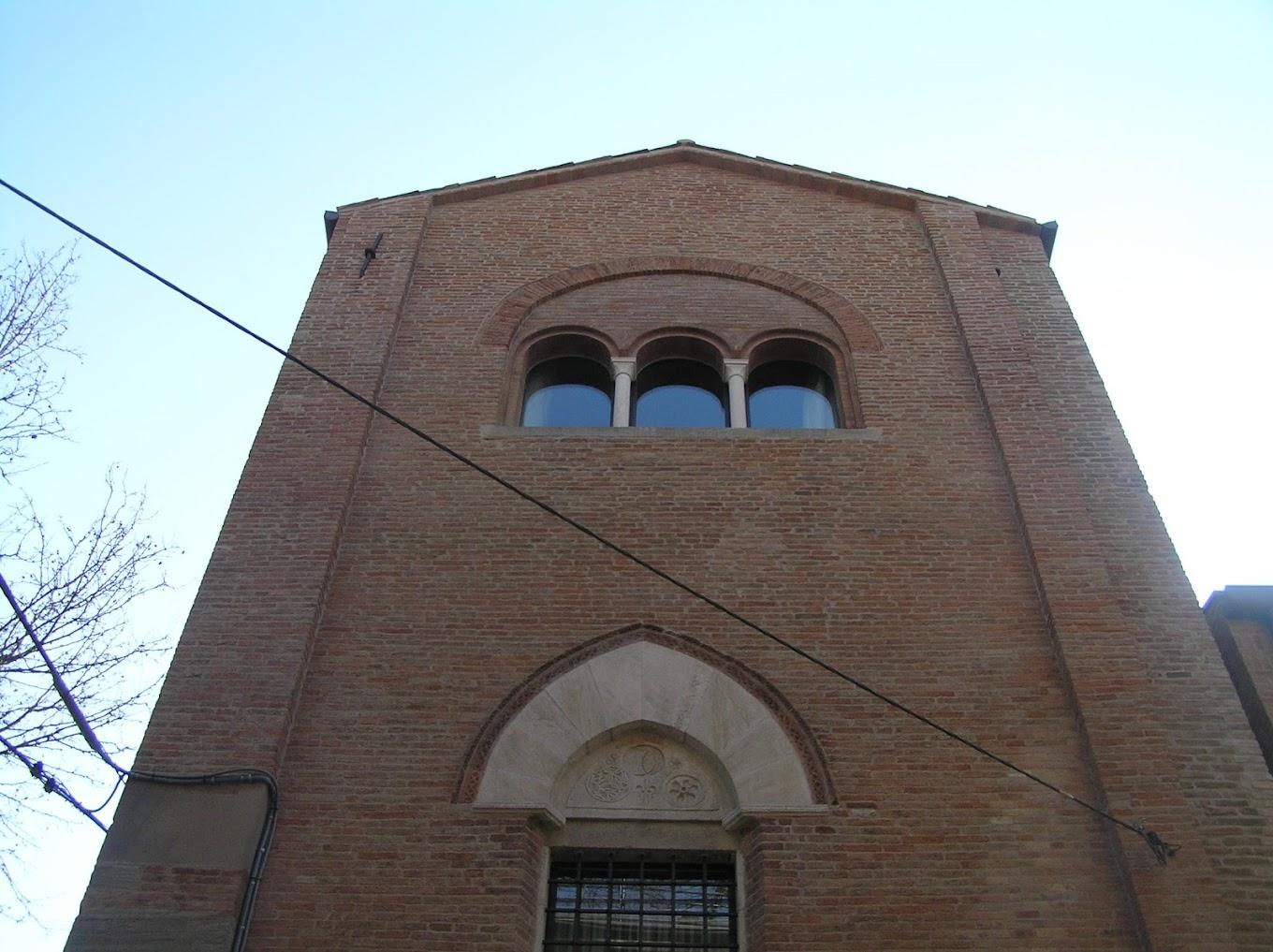
A ceramic narrative blending history, memory and poetry
On the slopes of the hamlet of Bascio, in the municipality of Pennabilli, at the foot of the striking medieval tower that overlooks the valley, stands one of the most evocative art installations in the Montefeltro region: The Seven Ceramic Rugs.
These works were inspired by an idea from the poet and screenwriter Tonino Guerra and created by the potter Giovanni Urbinati, with the aim of paying tribute to historical and legendary figures who, in different ways, have passed through or left their mark on the history of these places. Each rug tells a story, a fragment of life or a vision, straddling reality and imagination, through a poetic and symbolic composition.
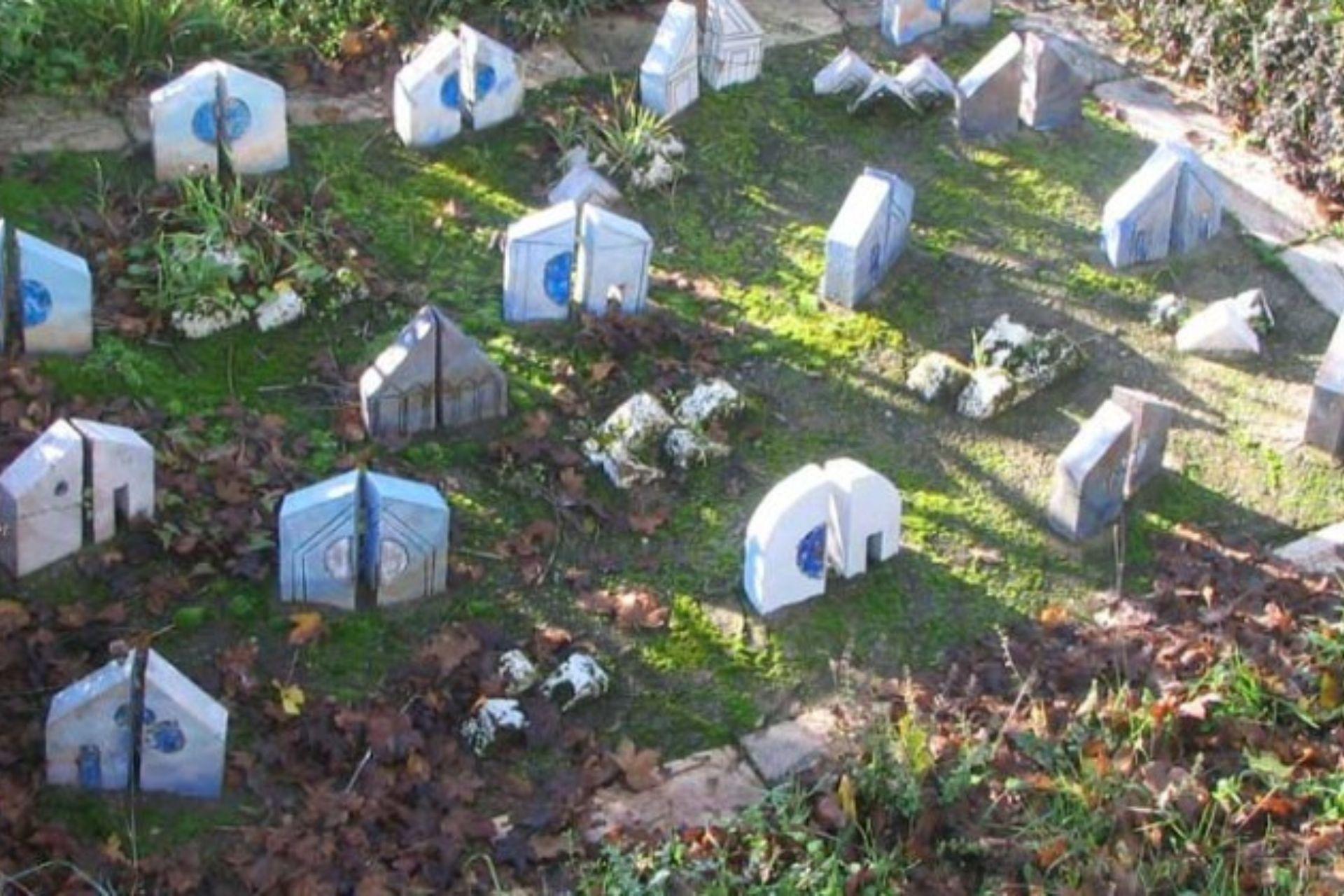
Set amongst the lawn surrounding the tower, the rugs — made of glazed, coloured and moulded ceramic — appear like pages from a story suspended between heaven and earth. Each title is a small visual poem and each description an echo of intertwined memories.
The Seven Rugs
-
The Blue-necked Duck Rug
Dedicated to the Countess Fanina of the House of Bourbon of France, who married a captain of the Carpegna family. Left alone amongst these hills, her mind eventually became lost in solitude. The carpet evokes her delicate, melancholic figure, like a duck with a sky-blue neck. -
The carpet of calm waves
In honour of Giotto, who — according to legend — caught his first glimpse of the Adriatic from these heights, taking in “the first blue glimmers of the sea” and drawing inspiration for his art from the vastness of the landscape. -
The carpet of the pyramids of dreams
Dedicated to Bonconte of Montefeltro, a valiant commander who went missing in action. The tapestry depicts ‘thirty-five pyramids’ as ideal tombs for his body, which was never found, having been carried away by the river after the battle. -
The carpet of the abandoned cathedrals
Referred to Father Matteo of Bascio, founder of the Capuchin Order. He travelled the world calling for repentance and redemption, crying out, ‘To hell, to hell, sinners!’. The tapestry reflects his fervent faith and his detachment from the trappings of ecclesiastical power. -
The carpet of mountain shells
Dedicated to Faggiola’s Warbler, a captain who gazed out over Italy from these hills. He was so greatly admired by Dante that the latter immortalised him in *Inferno*. The ‘mountain shells’ evoke his sweeping vision and the contrast between his rise and the harshness of his fate. -
The carpet of clear thoughts
A tribute to Dante Alighieri, who, according to legend, passed by this tower on his way to Ravenna whilst fleeing from Florence. It was here that he is said to have heard, for the first time, ‘the sound of the sea’, a sign of new hope. -
The Carpet of Dark Thoughts
Remember Ezra Pound, a controversial poet who lived for many years in Pennabilli. Here, the carpet reflects his tormented soul with the phrase ‘where the mud is full of stones’, a metaphor for his inner turmoil and the harshness of the times.
A journey through art, poetry and silence
Bascio’s rugs are not just works of art: they are narrative fragments, poetic evocations, echoes of the past which take shape in the present. Walking amongst them means crossing the boundary between reality and legend, allowing oneself to be guided by words and colours through a suspended landscape, where memory takes on a tangible form.