Russi (Ròss in the Romagnolo dialect) is an Italian municipality situated in the province of Ravenna, with a population of 12,243 inhabitants. It is situated in Emilia-Romagna, in a strategic location between major urban centres: it is situated 17 km from Ravenna, 17 km from Faenza, 20 km from Forlì e 40 km from Cesena.
Physical geography
Russi lies on a fertile plain, in the heart of the Lower Romagna, well connected to neighbouring towns and crossed by the the River Lamone, which has helped to shape its landscape and agricultural character over the centuries.
History
Antiquity
The Russi area boasts a two-thousand-year history, as evidenced by the presence of the Roman Villa, an important archaeological site dating back to the 2nd century AD, where the remains of a rural settlement dedicated to intensive farming. Following the barbarian invasions, the area was gradually abandoned, and the lack of water management led to the return of marshes and swamps.
The Middle Ages and the Modern Era
During the Early Middle Ages, Faenza and Ravenna They fought over the area because of its strategic location. The people of Ravenna established military garrisons at Raffanara e Cortina in defence of the local area. In the 1234, the people of Faenza captured both fortresses. Russi was officially founded in 1371, at the behest of Guido da Polenta, Lord of Ravenna, who built a castrum.
During the 16th century, Russi went through some dramatic moments, enduring besieged e looting by the troops of the Borgia, from the League of Cambrai and the army of Gastone of Foix at 1512. Further disasters followed, such as the devastating advance of the troops from Charles of Bourbon at 1527. In 1568, Russi returned to Faenza, in Papal State, but he retained administrative autonomy. It was almost entirely destroyed by the the 1688 earthquake.
The Risorgimento and the Unification of Italy
Until 1859, Russi was a member of the State of the Church. It distinguished itself during the Risorgimento period through figures such as the Farini and the Baccarini, key players in the field of political, social e industrial. In 1831, Russi was the first town in Romagna to to arise; in the 1834, Domenico Antonio Farini He was killed in an ambush. Since then, 367 citizens took part in the wars of independence. The Farini family’s political legacy continued with Luigi Carlo Farini e Domenico Farini, key figures in the political life of the Kingdom of Italy. The country’s economy began to move towards industry and commerce.
The 20th and 21st centuries
During thethe floods of May 2023, part of the municipal area was hit by floods.
Symbols
The coat of arms The municipal licence was granted in 1878 from Umberto I, when the City title, in honour of Luigi Carlo Farini.
‘Azure, a golden tower, single-storey, with Ghibelline-style crenellated battlements, featuring a single turret and black windows, rising from a green base. Exterior ornamentation in the ‘Città’ style.’
The banner It is a blue cloth. The tower recalls the Rocca and it already appears in a coat of arms dating from before the 1520.
Monuments and places of interest
Religious architecture
- Church of St Apollinaris, dating from the 18th century, dedicated to the patron saint.
- Parish Church of St Stephen in Tegurio, a hamlet of Godo, of origin Lombard.
- Parish Church of San Pancrazio, 4 km from the centre, in Romanesque style.
- Church of Our Lady of Sorrows, with a focus on Our Lady of Seven Sorrows and linked to the Servite friars. The traditional ‘’ is celebratedThe Fair of the Seven Sorrows".
Other churches: “of the Servites“, Carmine, St Francis.
Civil and military architecture
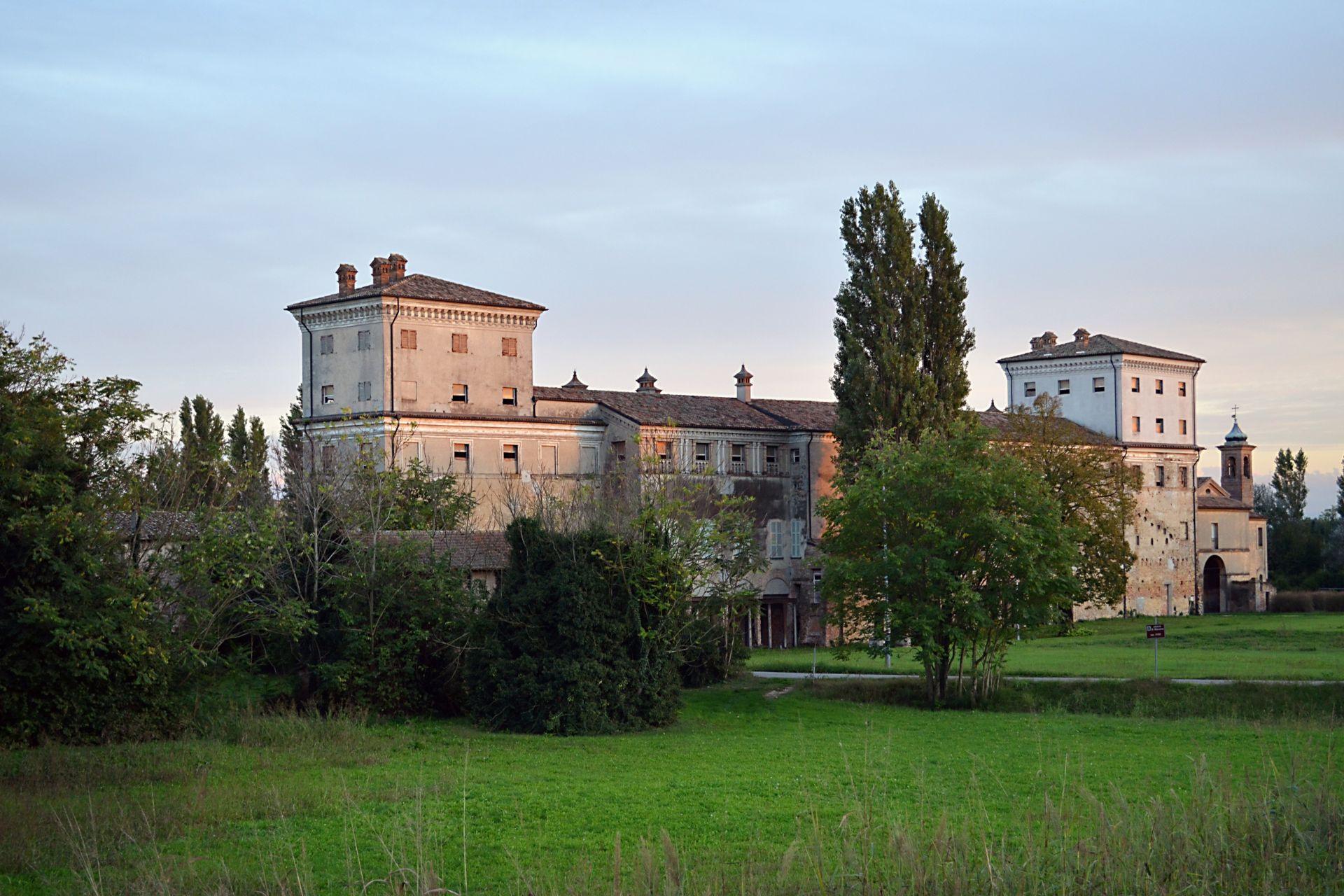
- Palazzo San Giacomo (or Rasponi), a 17th-century residence featuring frescoes mythological.
- Rocca, a 14th-century fortress which now serves as the headquarters museum-related.
- Torrioni medieval features still visible today, including the one donated by the family Farini and that of the company Babini Brothers.
Archaeological sites
- Roman villadating back to 1st century BC, valid until 4th century AD, discovered in 1939. The following remain mosaics e foundations, the artefacts are in the Civic Museum.
Natural areas
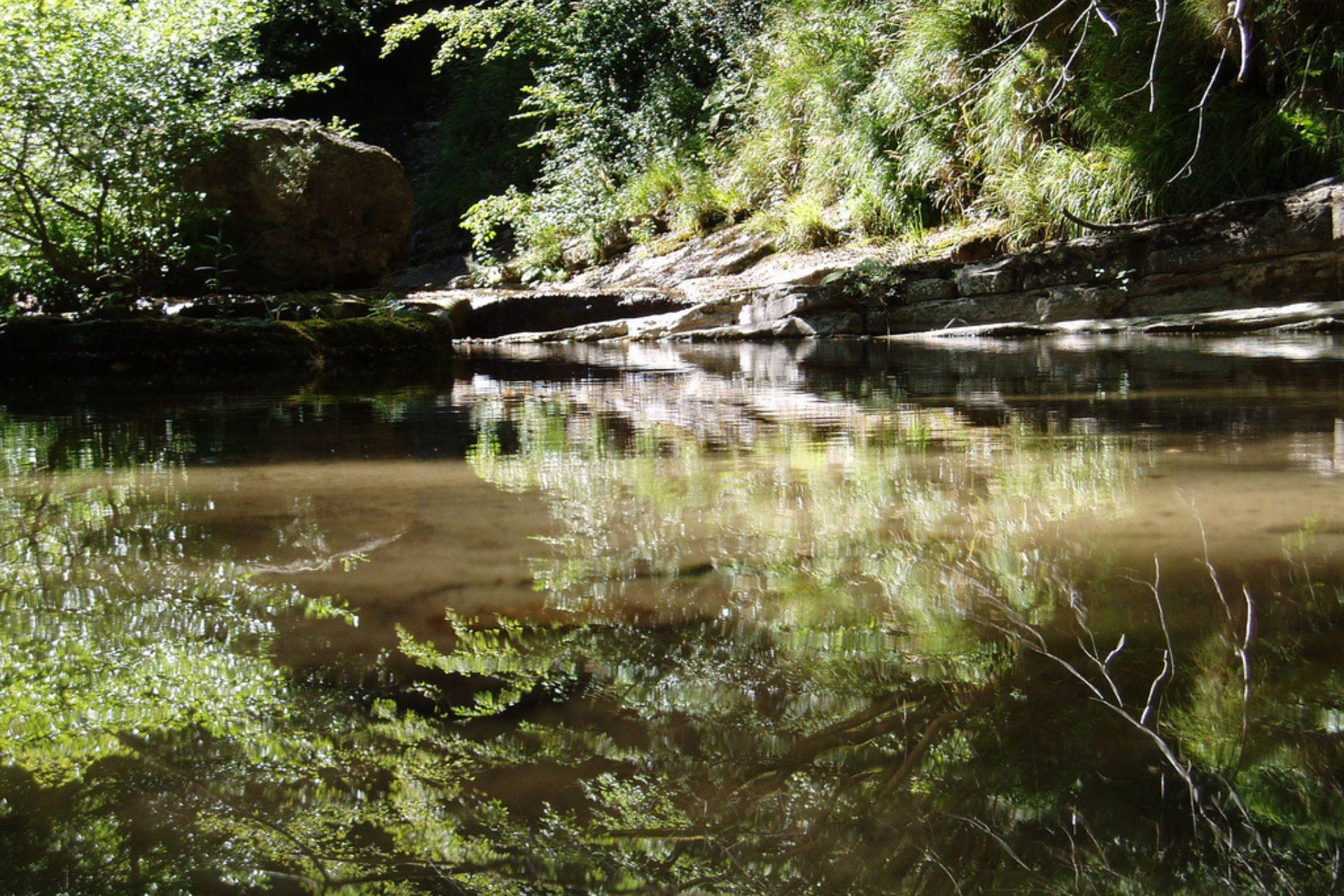
- The Russi and Lamone River basins, covering 132 hectares, include woods, wet grasslands, ponds and agricultural areas. A typical landscape of the the low-lying Romagna plain.
Culture
Museums
- Civic Museum, in the Rocca, featuring an archaeological collection, art gallery e Baccarini Archive.
- Museum of Rural Life, in San Pancrazio.
- Museum of Contemporary Furniture, on Strada San Vitale.
- Collections of rustic ceramics e ethnology of the Romagna region.
Gastronomy
- Bel and Cot: a traditional dish made with boiled pork, flavoured with spices.
- Canèna: new wine, slightly tart, traditionally produced in the the cellars of Palazzo San Giacomo.
Twin towns
- Saluggia (Italy, 1995)
- Bopfingen (Germany, 1996)
- Beaumont (France, 2004)
- Podbořany (Czech Republic, friendship treaty)
- Montescudo–Monte Colombo (Italy, 2023)
In 2008, Russi received from the European Community the Flag of Honour.