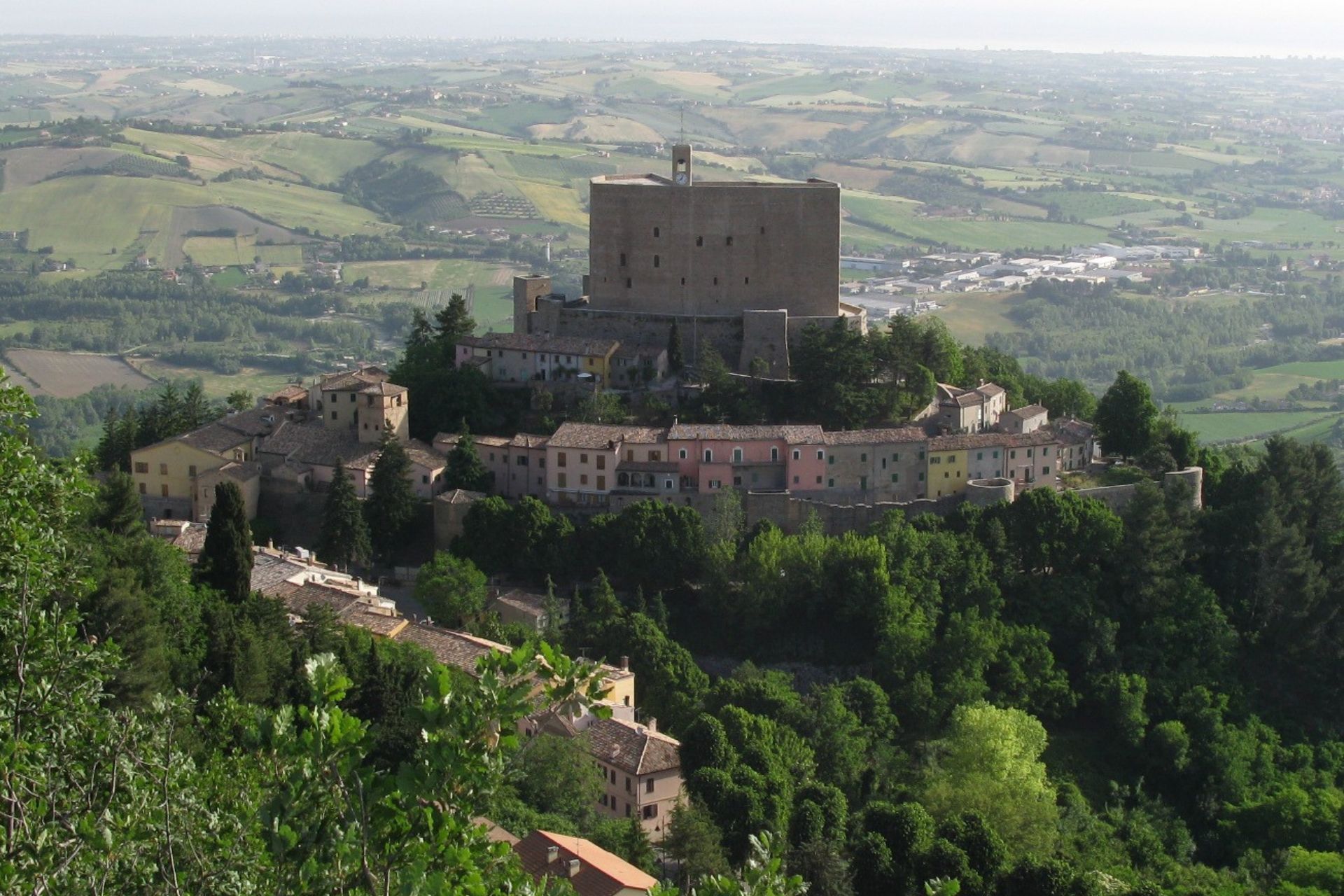
Pennabilli (La Pénna in the Romagna dialect) is an Italian municipality with a population of 2,635, situated in the province of Rimini, in Emilia-Romagna.
Physical geography
The municipal area lies within the Sasso Simone and Simoncello Regional Nature Park and forms part of the Alta Valmarecchia Mountain Community. Pennabilli stands out as the second highest municipality in the province of Rimini – after Montecopiolo – and the second southernmost municipality in Emilia-Romagna, after Casteldelci.
History
The earliest evidence of human settlement in the Pennabilli area dates back to thethe Etruscan and Roman periods. During the barbarian invasions, the two hilltops now known as ‘Roccione’ and ‘Rupe’ provided refuge for the local people. This led to the formation of the the communities of ‘Penna’ and ‘Billi’, whose names derive, respectively, from Latin fin (“summit”, “peak”) and by bilia (“the top of the trees”).
Penna developed as a village, whilst Billi became a stronghold of the Malatesta family. As early as 962, Emperor Otto granted the fief to the Counts of Carpegna. The two villages came under the jurisdiction of Massa Trabaria and, in 1350, were formally united with the laying of the ‘stone of peace’ in the market square. The The new town centre was protected by a single set of walls, and the current municipal coat of arms depicts an eagle perched on two fortresses, symbolising their union. A monastery was subsequently built on the ruins of the fortress of Billi.
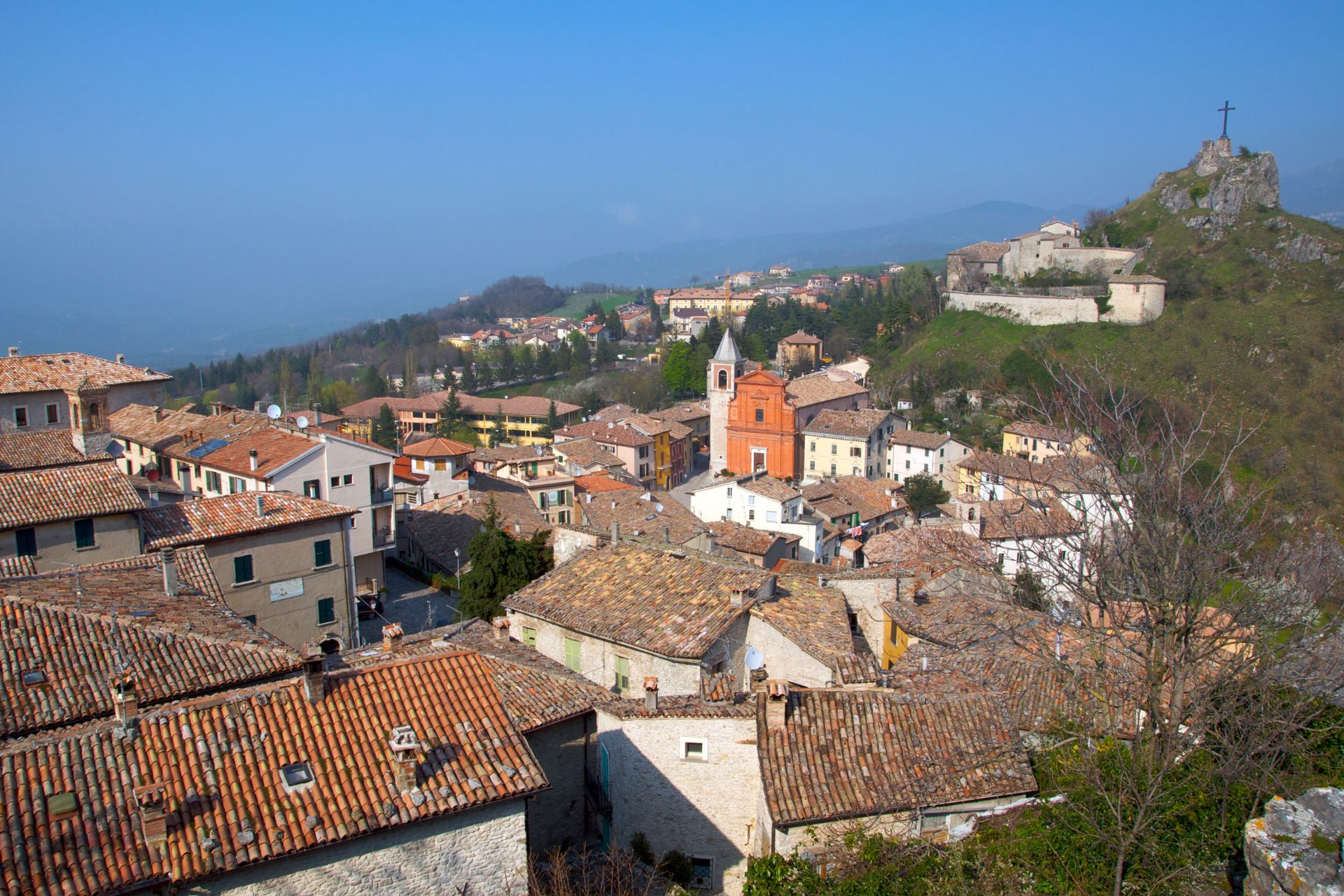
Throughout history, Pennabilli came under the control by the Malatesta, the Montefeltro, the Medici and the Papal States. In 1572, when the bishop’s seat was moved from San Leo, Pope Gregory XIII granted it the status of a town. Today, it is home to the Diocese of San Marino-Montefeltro.
Until 15 August 2009, the municipality belonged to the province of Pesaro and Urbino, in the Marche region, before being annexed to Emilia-Romagna following a referendum. An appeal lodged by the Marche region against this change was dismissed by the Constitutional Court.
Since 20 May 2010, Pennabilli is part of the Orange Flags scheme. In February 2012, an exceptional snowfall blanketed the area with over three metres of snow in the town centre. On 19 June 2011, Pope Benedict XVI visited Pennabilli as part of a pastoral visit.
Symbols
The municipality uses a coat of arms which, although it lacks an official decree of approval, symbolises the union of Penna and Billi with two towers surmounted by the Feltre eagle. The banner is divided into two colours: light blue and white.
Monuments and places of interest
Religious architecture
- Cathedral in Pennabilli, the cathedral of the Diocese of San Marino-Montefeltro.
- Shrine of the Blessed Virgin of Grace (12th–16th centuries).
- Hermitage of Our Lady of the Beech, with the church of St Lawrence the Deacon and Martyr.
Civil architecture
Pennabilli is home to the Open-air museum: Places of the Soul, conceived by Tonino Guerra, comprising seven artistic and cultural installations, including the Garden of Forgotten Fruits, the Path of Sundials and the Petrified Garden. Other notable buildings include:
- Bargello Palace.
- Palazzo della Ragione (known as The Lodges).
- Former Town Hall with a distinctive portico.
- Baronial palace of the Carpegna estates (ruins).
- The ancient village of Molino di Bascio.
Military architecture
- Malatesta walls on Via della Vigna and Via dei Pensieri Sospesi.
- Penna Castle, part of the Malatesta walls.
- Maciano Tower.
- Bascio Tower.
Culture
Pennabilli and Tibet
Pennabilli has a historical ties with Tibet thanks to the mission of Father Orazio Olivieri, who, in the 18th century, brought the first movable-type printing press to Lhasa and compiled the first Italian-Tibetan dictionary.
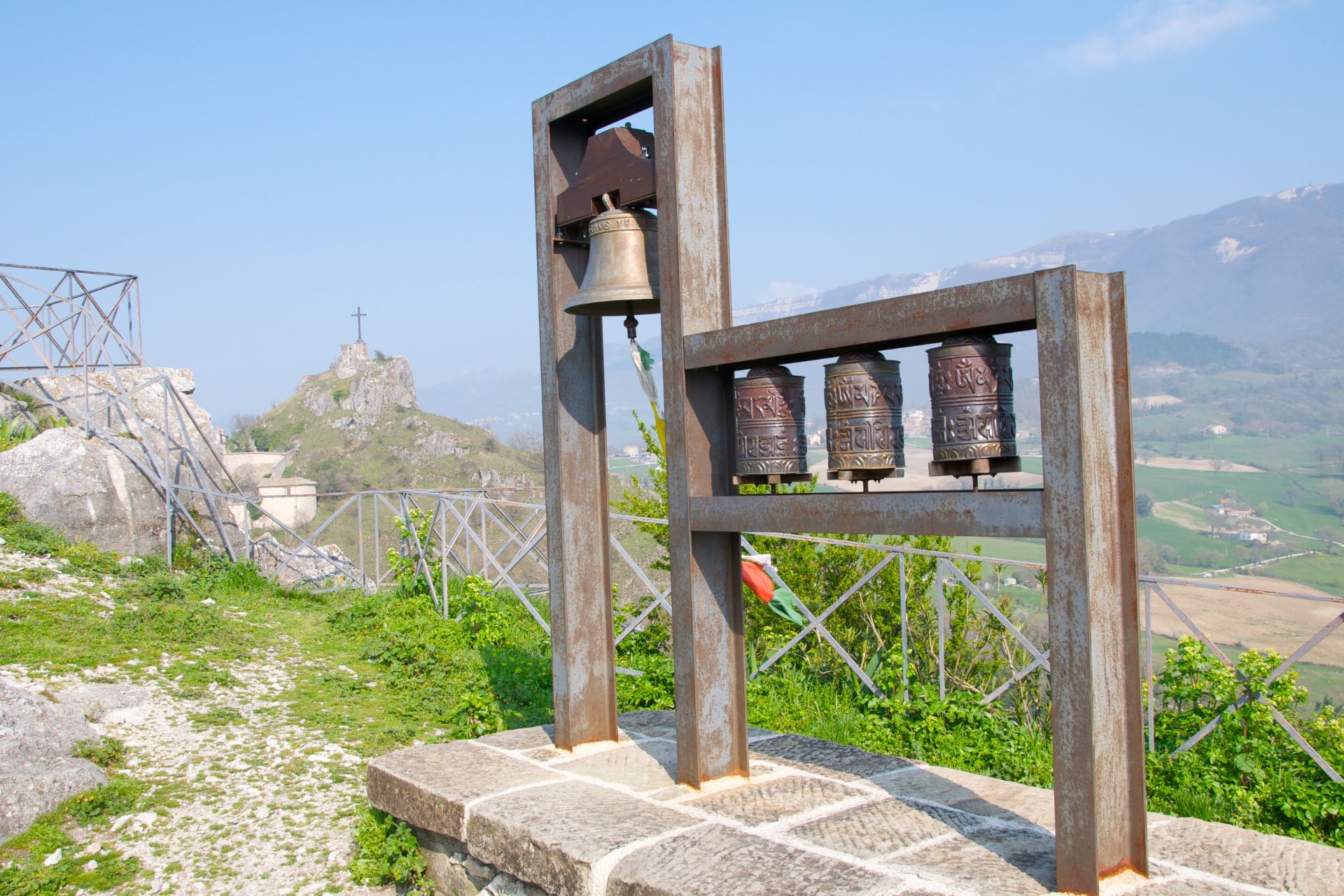
In 1994, the 14th The Dalai Lama visited Pennabilli to mark the 250th anniversary of the missionary’s death and, in 2005, unveiled a memorial on the hill overlooking the village, featuring a bell and three Tibetan prayer wheels.
Museums
Pennabilli is home to several museums, including:
- Mateureka Museum of Computing, devoted to the history of mathematics.
- The “A. Bergamaschi” Diocesan Museum of Montefeltro.
- Natural History Museum.
- The World of Tonino Guerra, situated in the former Church of the Misericordia.
Theatres
- Vittoria Theatre.
Events
Every year, Pennabilli hosts a number of major events:
- Procession of the Jews, a re-enactment of the Stations of the Cross held on Good Friday.
- Artists in the square, an international performing arts festival, which has been running since 1997.
- National Antiques Fair and Market, an exhibition of ancient art held every July.
Economy
Pennabilli is known for its craft traditions linked to weaving and the embroidery, with the the production of woolly rugs and blankets featuring pastoral motifs. There is a major pharmaceutical plant in the hamlet of Ponte Messa.