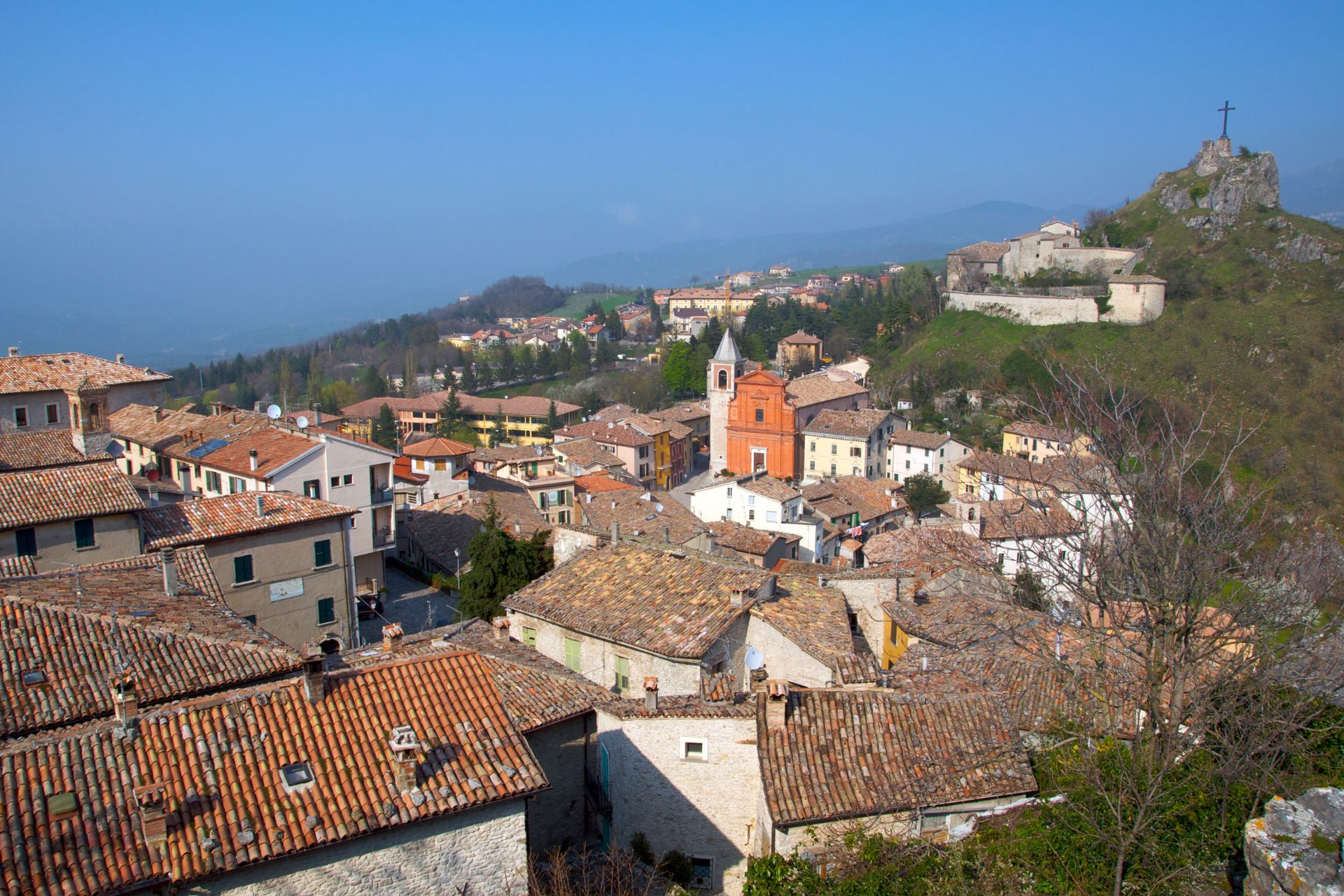
Montegridolfo (Munt Gridòlf (in the Romagna dialect) is a Italian municipality with a population of 993, situated in the Province of Rimini, in Emilia-Romagna. This ancient medieval village, perfectly preserved, stands on the border between Romagna and Marche, between the Conca Valley and the Foglia Valley.
Physical geography
Montegridolfo is situated on a hill ridge which separates two regions: the Romagna, including the Conca Valley, and the Brands, including the Foglia Valley. The municipal area comprises five hamlets: Trebbio, San Pietro, Pozze, Ca’ Fornaci and Ca’ Baldo.
The fortified village is 38 km from Rimini and only 24 km from Pesaro, occupying a strategic position along the regional border.
History
In medieval times, the area was known as Monte Lauro, due to the presence of numerous plants of laurel. The current place name is thought to derive from an ancient Germanic word (Hrodulfus o Ridulfus) derived from Latin terms referring to a type of soil filthy e wooded.
The earliest records date back to 1033, when the Church of St Peter was listed amongst the estates of theAbbey of St Peter in Rimini. The name of Montegridolfo appears for the first time in a document from the 10 January 1148, which confirms that it belongs to the abbey’s territory.
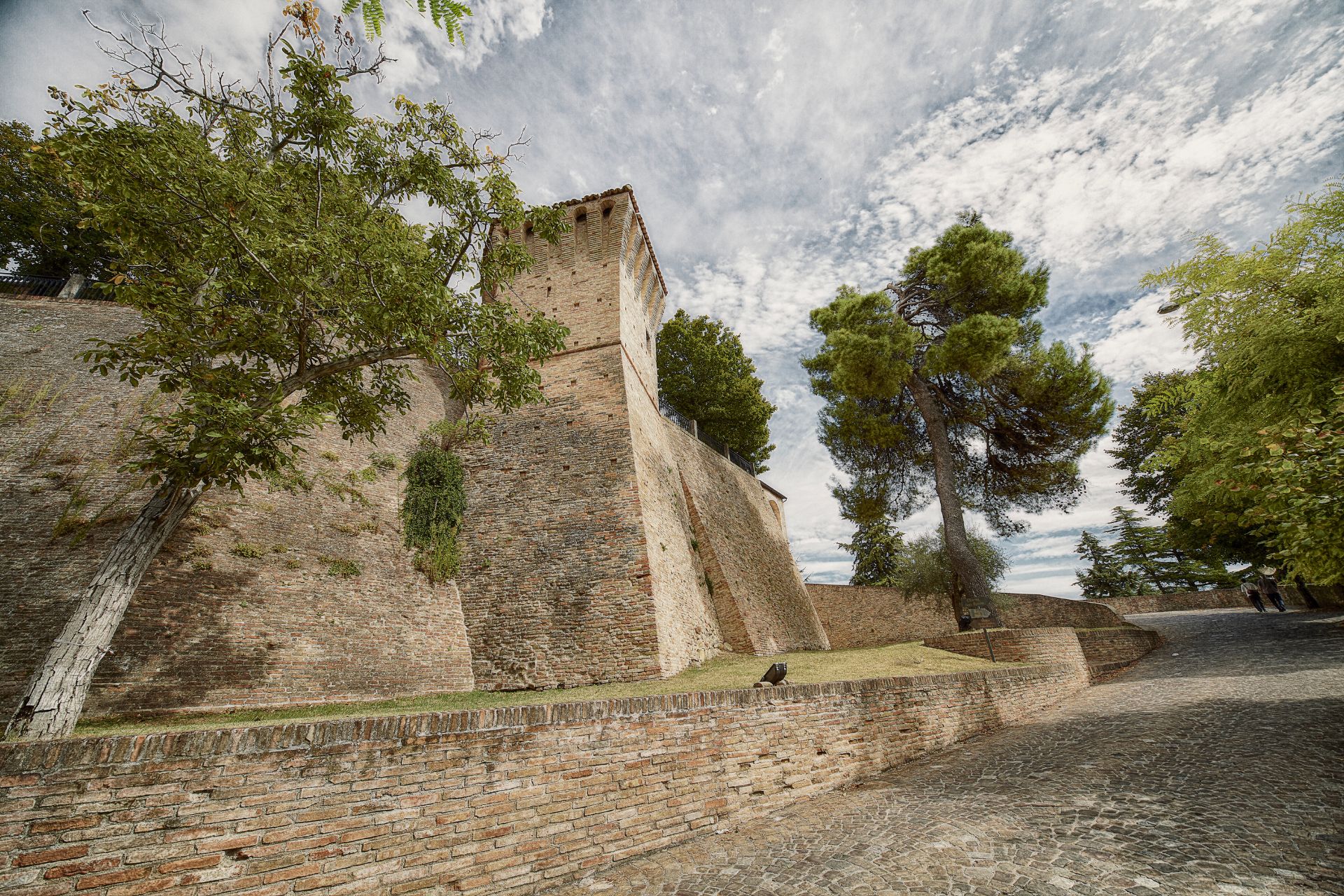
As a borderland, For centuries, Montegridolfo was contested between the Duchy of Urbino and the The Malatesta family of Rimini. His Malatesta-style formwork It was at the centre of numerous military clashes. In the 1336, during a campaign led by the commander Ferrantino Novellothe castrum was destroyed. However, the fortress It was rebuilt between 1337 and 1339 by the will of Malatesta, the Family Wrecker, with a solid brick city walls and four defensive towers.
In 1500, Montegridolfo came under the rule of Cesare Borgia, only to be recaptured by the Malatesta. In 1503, was sold to Venice, who sold it to the Papal State.
During the The Second World War, Montegridolfo was situated along the Gothic Line and was the scene of violent clashes between the Germans and the Allied forces. The 31 August 1944, the village was liberated from theBritish Eighth Army, and the lieutenant Gerard Ross Norton he earned the Victoria Cross, Britain’s highest military honour.
Today, Montegridolfo is an example of conservative restoration, with perfectly preserved medieval architecture.
Monuments and places of interest
- Montegridolfo Castle: one of the most well-preserved fortified villages in the Rimini area, built in 14th century from Galeotto Malatesta. It currently houses the Town Hall.
- Church of San Rocco: situated outside the city walls, it houses two 15th-century frescoes depicting the Madonna and Child and a work by Guido Cagnacci.
- Shrine of the Blessed Virgin of Graces: situated in the hamlet of Trebbio, houses a painting by the 1549 by Pompeo Morganti.
- Church of St Peter: built after the World War II, retains a 15th-century fresco.
Culture and traditions
Montegridolfo is the birthplace of Pope Clement XIV (Giovanni Vincenzo Antonio Ganganelli), Pope from 1769 to 1774.
Among the main cultural events:
- The Liberation of Montegridolfo: historical re-enactment of the the battle of 31 August 1944.
- Film Festival: ‘From the Landscape of Montegridolfo to the Landscapes of the World’: a review of open-air cinema.
- Concerts at the Castle: music festival featuring classical and folk music from the Romagna region.
- The Village of the New Olive Oil: celebration of thelocal extra virgin olive oil, in collaboration with “Il Novello di Romagna”.
Museums
- Museum of the Gothic Line: compiles weapons, artefacts and historical documents related to the Battle of World War II.
Sport and outdoor activities
Montegridolfo offers ideal routes for hiking and cycle touring, with scenic walks amongst hills and olive groves.
A village rich in history, culture and traditions, Montegridolfo is the perfect destination for fans of historical and scenic tourism.