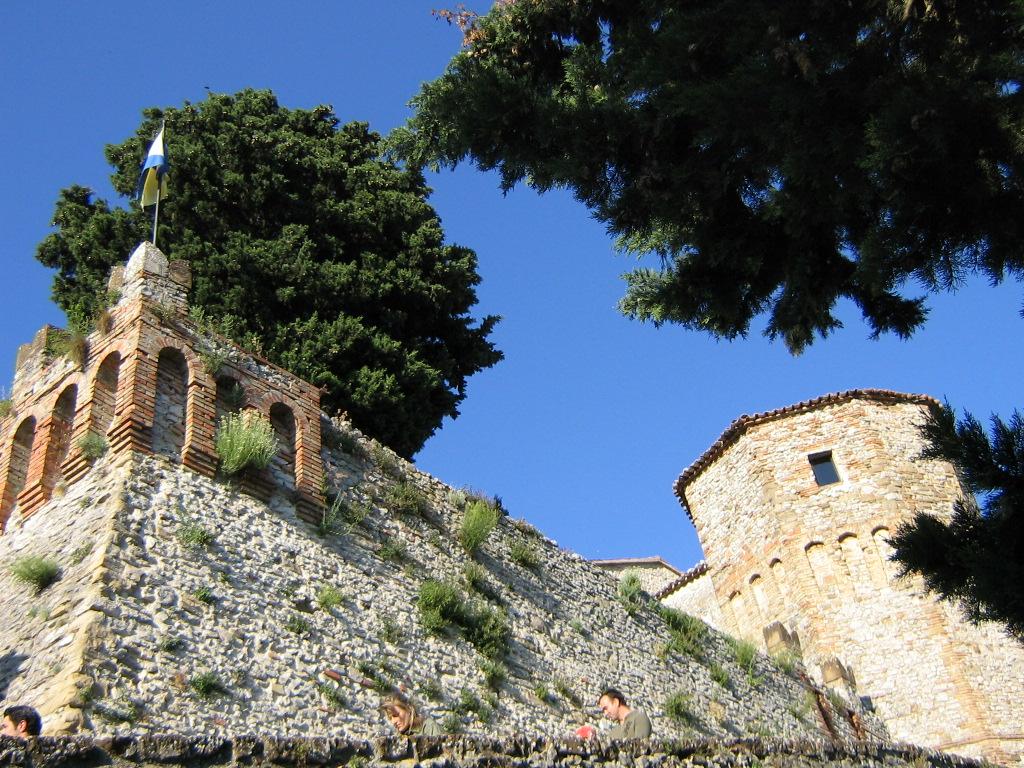
San Leo and Verucchio: their history and what to see
San Leo and Verucchio are two charming little towns situated in the Italian region of Emilia-Romagna, in the province of Rimini.
San Leo is an ancient medieval village situated on a high limestone cliff. Its history dates back to Roman times, but its fame is linked above all to the medieval period.
The main attraction in San Leo is its imposing fortress, one of the largest in Europe, which offers a spectacular panoramic view of the Marecchia Valley and the Montefeltro region.
Inside the fortress stands the charming Parish Church of San Leo, a church dating back to the 10th century, as well as a prison where Count Giuseppe Balsamo, better known as the Count of Cagliostro, was held. Other attractions include San Leo Cathedral and the Museum of History and Archaeology.
Verucchio, on the other hand, is a small medieval village situated on a hill on the outskirts of Rimini. Its history dates back to Etruscan times, but it was also inhabited by the Romans and the Byzantines.
Verucchio’s main attraction is the Rocca del Sasso, an ancient fortress which overlooks the village and offers a panoramic view of the Marecchia Valley and the Romagna plain.
Other places worth visiting include the Church of San Martino, the National Archaeological Museum of Verucchio, which houses interesting Etruscan and medieval artefacts, and the Malatestiano Theatre, where plays and musicals are performed.
Both towns also boast a rich culinary tradition, with excellent restaurants serving local specialities such as truffles, olive oil and local wines.
Furthermore, both are easily accessible from Rimini and make for an interesting stop on a cultural tour of the area.
Marecchia and Montefeltro their history and what to visit
The Marecchia and Montefeltro are two regions in central Italy steeped in history and full of interesting places to visit.
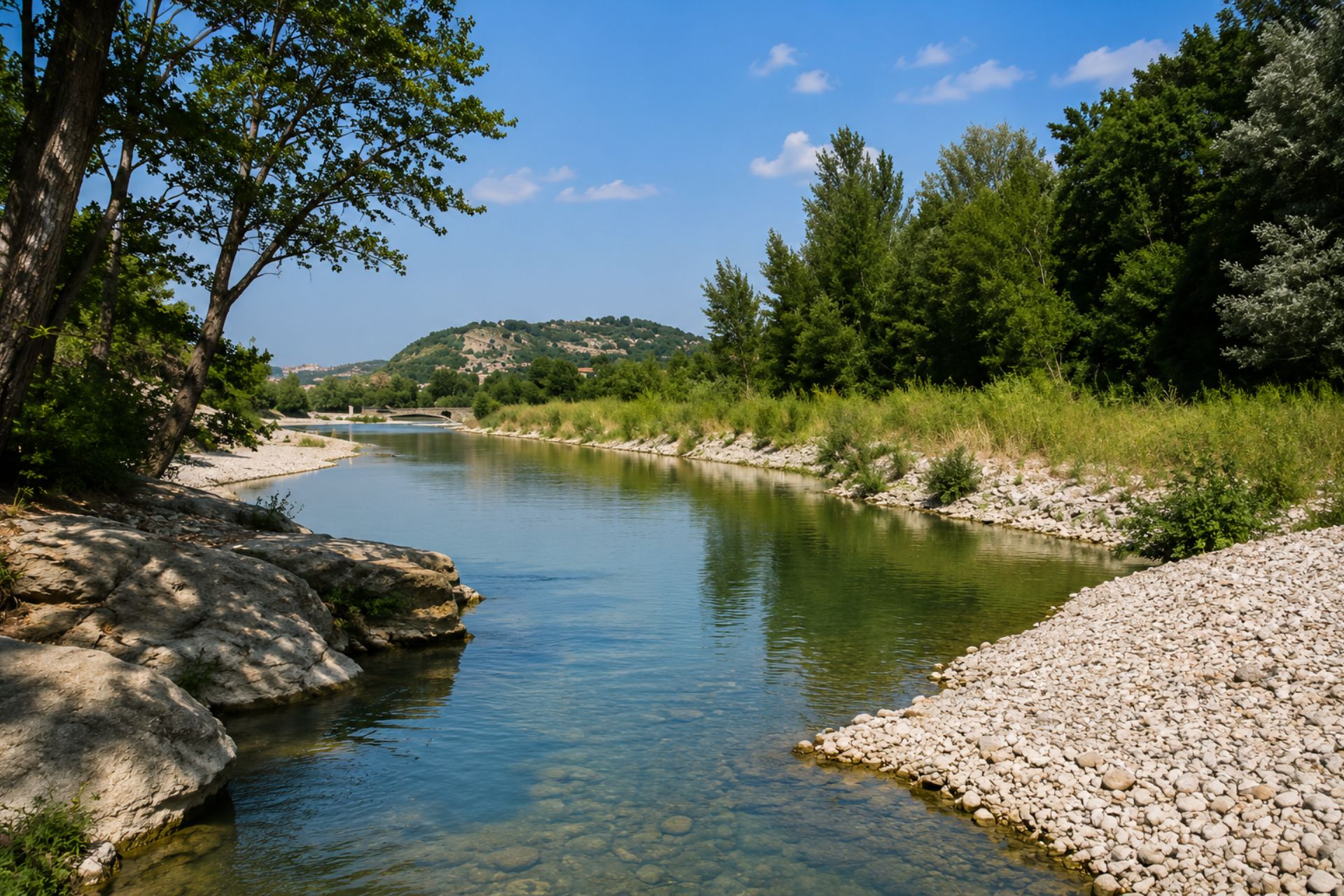
The Marecchia is a river that flows mainly through the Emilia-Romagna region, but also flows through parts of Tuscany and the Marche.
The valley has been inhabited since ancient times, as evidenced by the numerous archaeological sites in the area. During the Roman period, the Marecchia was an important trading centre and was subsequently ruled by the Byzantines, the Goths and the Lombards.
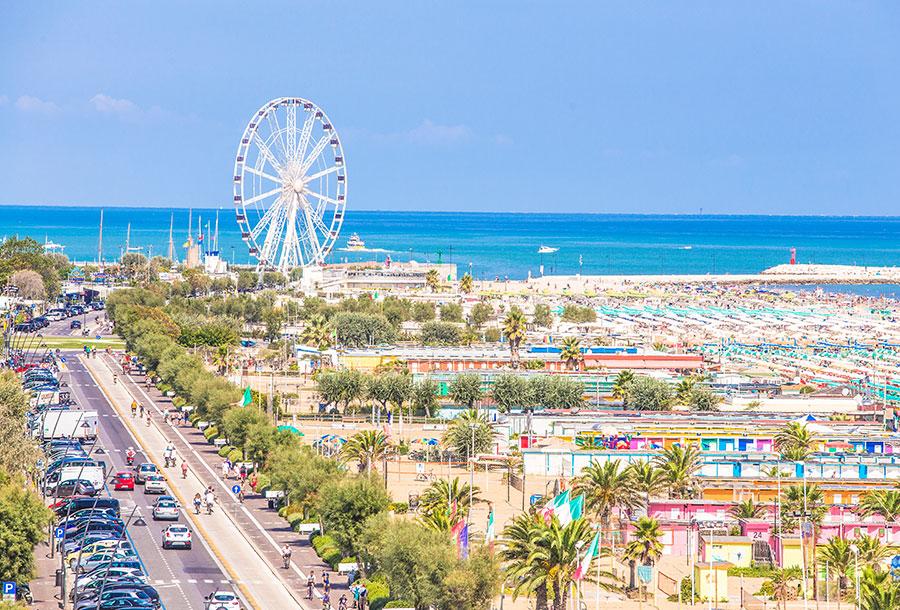
In the Marecchia Valley, you can visit places such as the city of Rimini, famous for its beaches and its historical heritage, including the Arch of Augustus and the Malatesta Temple.
You can also visit the town of San Leo, perched on a rock overlooking the valley, with its picturesque fortress and cathedral. Other places of interest include Montebello Castle, famous for its legends about the ghost of Azzurrina, and the Marecchia Regional Park, which is ideal for nature walks.
Montefeltro is a hilly region situated between Emilia-Romagna and the Marche. This area has a rich and ancient history, featuring numerous fortified medieval towns. During the Middle Ages, Montefeltro was ruled by the Montefeltro family, who transformed it into an important cultural and military centre.
Among the main towns to visit in the Montefeltro region are Urbino, famous for its splendid historic centre and the Ducal Palace – a UNESCO World Heritage Site – and Gradara, with its imposing castle. Other places of interest include Sansepolcro, the birthplace of Piero della Francesca, and Sant’Agata Feltria, with its castle and charming medieval village.
In both regions, you can enjoy the delicious local cuisine, which includes meat-based dishes such as ‘cappelletta alla marecchiese’ and ‘crescia marchigiana’. There is also no shortage of excellent local wines to sample, such as Sangiovese di Romagna and Bianchello del Metauro.
Montebello Castle, famous for its legends about the ghost of Azzurrina
Montebello Castle is an ancient medieval castle situated in the Emilia-Romagna region of Italy. It is famous for the many legends and stories surrounding the ghost of Azzurrina.
The best-known legend concerns a young girl named Azzurrina, who is said to have mysteriously disappeared inside the castle in 1375. It is said that Azzurrina was an albino girl with blue hair, hence her name. Because of her condition, the little girl could not be exposed to sunlight, so she was kept locked away in a dark room in the castle.
Legend has it that one day, whilst playing with a ball, Azzurrina lost control and the ball rolled down a secret staircase. The little girl decided to follow the ball into the darkness and vanished completely. Azzurrina’s parents, in despair, searched everywhere but found no clue as to her disappearance.
Ever since then, it is said that Azzurrina’s spirit haunts the castle, appearing as a little girl with blue hair and red eyes, who makes herself known on nights when there is a full moon. Some visitors to the castle claim to have heard children’s voices or seen shadows moving in the dark rooms.
Montebello Castle attracts many tourists and folklore enthusiasts hoping to capture an incredible photograph or catch a glimpse of Azzurrina’s ghost. The castle is open to the public and also houses a museum dedicated to its history and legends, where visitors can learn more about Azzurrina’s story and discover other tales linked to the castle.
Urbino: its history and what to visit
Urbino is a small town situated in the Marche region of Italy, famous for its rich historical and artistic heritage. Founded by the Romans in the 3rd century BC, Urbino became an important centre of the Renaissance during the 15th century, under the rule of the Montefeltro family.
The town is renowned for its well-preserved medieval architecture, its castle and its university. One of Urbino’s main attractions is the Palazzo Ducale, one of the finest examples of Renaissance architecture in Italy. The palace was once the residence of the Dukes of Urbino and now houses the Galleria Nazionale delle Marche, which contains a vast collection of works of art, including paintings by Raphael and Piero della Francesca.
Another attraction not to be missed is Urbino Cathedral, dedicated to Santa Maria Assunta. The cathedral dates back to the 13th century and features a Gothic façade adorned with a series of sculptures and a slender bell tower.
The historic centre of Urbino is a labyrinth of cobbled streets, with picturesque squares and ancient buildings. As you stroll through the streets, you can admire various churches, historic palaces and medieval towers. Also not to be missed is the birthplace of Raphael, the famous Renaissance painter, where you can visit a permanent exhibition dedicated to his life and work.
Finally, a visit to Urbino would not be complete without a stroll along its ancient ramparts, which offer panoramic views of the town and the surrounding countryside.
Overall, Urbino offers visitors a rich cultural and artistic experience, thanks to its significant historical heritage and its splendid Renaissance architecture.