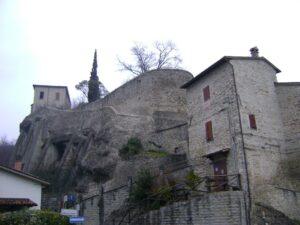
In the heart of the Forlì Apennines, along the banks of the River Bidente, lies Cusercoli, a hamlet in the municipality of Civitella di Romagna which boasts a remarkable historical and cultural heritage. Perched on a rocky outcrop, the village is dominated by its imposing medieval castle and the picturesque Church of St Boniface, symbols of a noble past that has left an indelible mark on the architecture and identity of the place.
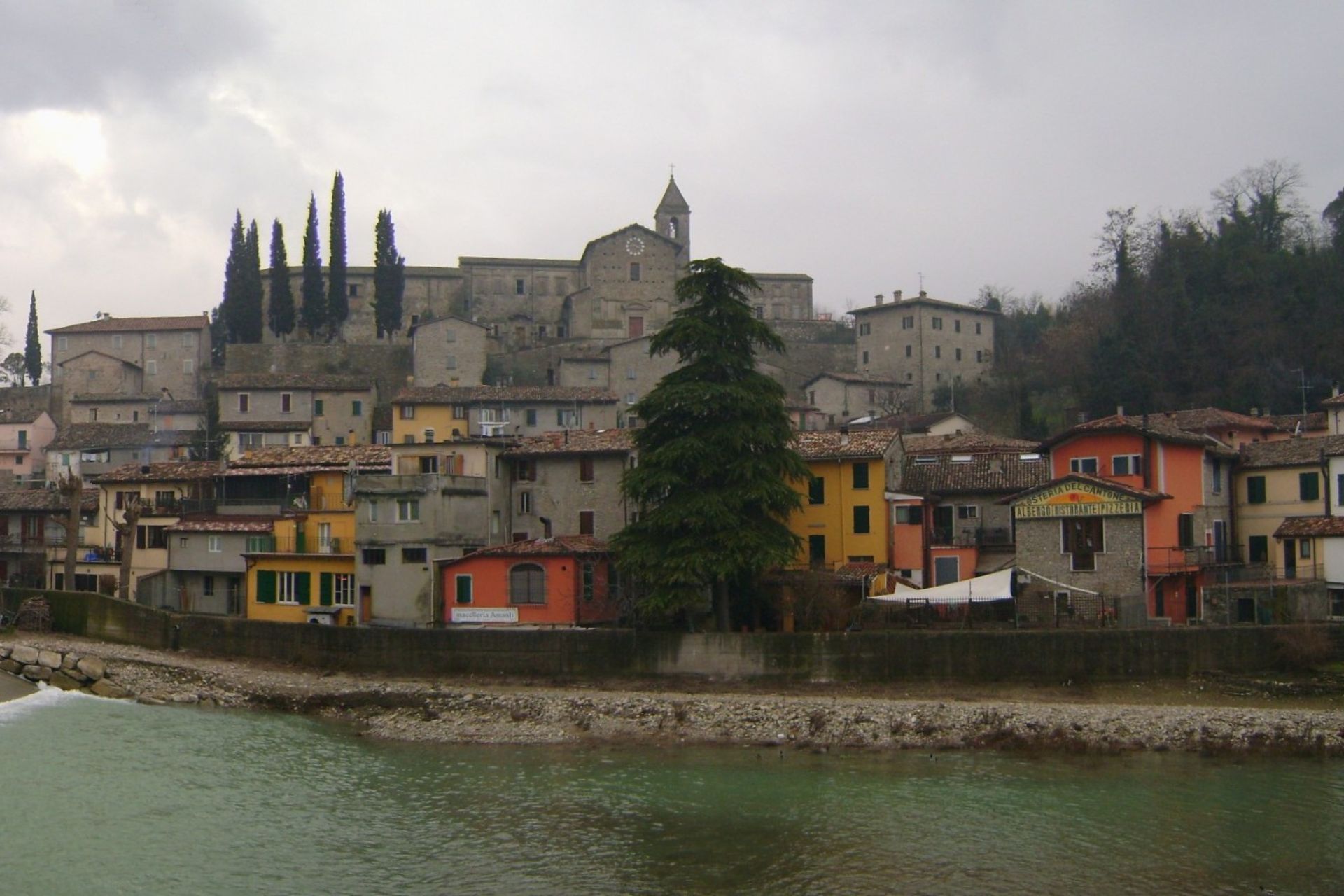
Cusercoli is a little treasure trove of history, nestled in a captivating natural landscape, where the Bidente valleys wind their way through rolling hills and lush woodlands. A place off the beaten track, yet full of charm, perfect for those who love authentic villages, spirituality and craftsmanship.
A landscape shaped by nature and history
Situated between Meldola e Civitella di Romagna, on the right bank of the Bidente, Cusercoli owes much to its geographical location. The village is built on a limestone outcrop that forces the river to take a natural detour: a strategic location for human settlement since ancient times, but also a setting of great scenic beauty.
The coat of arms The town’s coat of arms reflects its feudal origins: it combines the heraldic symbols of the Conti Guidi and the The Severi Counts of Giaggiolo, lords of the ancient County of Romanula. It is a visual legacy that tells the story of the intertwining of noble families, alliances and power.
A castle that tells the story of centuries of rule
The historic centre of the village is centred around the castle, which stands proudly on the promontory. The fortified settlement is built on top of an older structure, probably dating from the late Roman period, of which a massive dry-stone wall remains visible.
The first reliable records of the fortress date back to the 12th century. At that time, it was under the jurisdiction of the Archbishops of Ravenna and theAbbey of Sant’Ellero, within the Giaggiolo County. For centuries it was owned by the The Severi family, until, in 1269, following the marriage of Orabile (or Beatrice) Severi to Paolo il Bello Malatesti, the County of Romanula passed to the Malatesta, who made it one of their strongholds.
In the 14th century, the Malatesta family transformed the fortress by building a fortified building next to the existing building, a stately residence featuring new rooms and a second ring of walls that enclosed the entire village. In the centuries that followed, the property passed to various families: the Manfredi, i Bagno Guides, i Gottifredi of Cesena, until finally returning to the Conti Guidi.
In the 18th century, the fortress underwent further alterations, including the addition of the roof gardens and the new Church of St Boniface, to replace the previous church of Santa Maria de Saxo, which had been damaged by a devastating flood in 1750.
The Guidi family’s gradual abandonment of the fortress led to a long period of neglect: in 1937, part of the fortress tragically collapsed onto the houses below, killing 21 people. The Municipality of Civitella di Romagna He acquired ownership of it in 1973 and began restoration work, although this was not always sufficient to counteract the state of disrepair.
A widespread religious heritage
Religion has always played a central role in the life of the village, as evidenced by the numerous religious buildings:
-
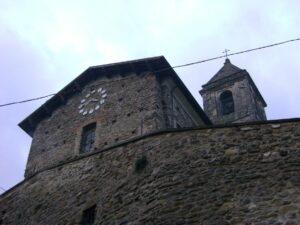
Church of St Boniface, built at the Countess’s behest Maria Polissena Albicini, widow of Count Ferdinando dei Guidi di Bagno. Forming part of the noble estate, the church is in the Baroque style with Neoclassical influences, although today it shows signs of deterioration due to damp and the passage of time.
-
Former Church of San Biagio, built in 1702 along the ramp leading up to the castle, was decommissioned in 1951 and converted into a dwelling. A statue of the saint and a commemorative plaque can still be seen there.
-
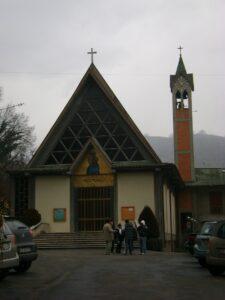
Church of Santa Maria del Sasso, the present-day parish church of Cusercoli, built in 1972 in a modern style. Inside, the following is venerated Saint Blaise, the town’s patron saint.
-
Oratory of Sant’Emidio, built in 1782 and consecrated in 1788, now attached to the cemetery. The external walls once featured 14 majolica panels depicting the Stations of the Cross: some have been stolen, whilst others are currently being restored.
Civil architecture and symbols of identity
Among the notable civil buildings, the following is worth mentioning: paper mill, built in 1637 by the Guidi di Bagno counts along the Bidentina road. It is the the oldest documented paper mill in Romagna, which ceased trading in 1904.
Another iconic feature is the Portaccia, one of the two original entrances to the village. Its arch still bears the noble coat of arms, bearing witness to the defensive and symbolic importance of this entrance.
Economy: a blend of devotion and flavours
Cusercoli is internationally renowned for a truly unique range of handcrafted products: rosaries and chaplets, made from a variety of materials such as wood, plant seeds, phosphorescent plastic or beads, and exported all over the world. A devotional art form that combines faith, creativity and craftsmanship.
The region is also closely linked to high-quality agriculture. Several farms e farm stays These premises are part of the The Forlì-Cesena Hills Wine and Food Trail, offering visitors authentic experiences centred on food and wine, rural traditions and a warm, welcoming atmosphere in the countryside.
A village to savour at a leisurely pace
Visiting Cusercoli means immersing yourself in a timeless atmosphere, characterised by tranquillity, ancient stone buildings and lush green landscapes. It is the ideal place for those seeking authenticity, far from the hustle and bustle of the city. Visitors can stroll along the cobbled streets, climb up to the castle to admire the valley, pop into the churches, sample local specialities or simply listen to the sound of the river flowing.
A small village, but with a big heart: Cusercoli is a living testament to the heart of Romagna, where history is not just found in books, but in the walls, the gestures and the smiles of those who still live there today.